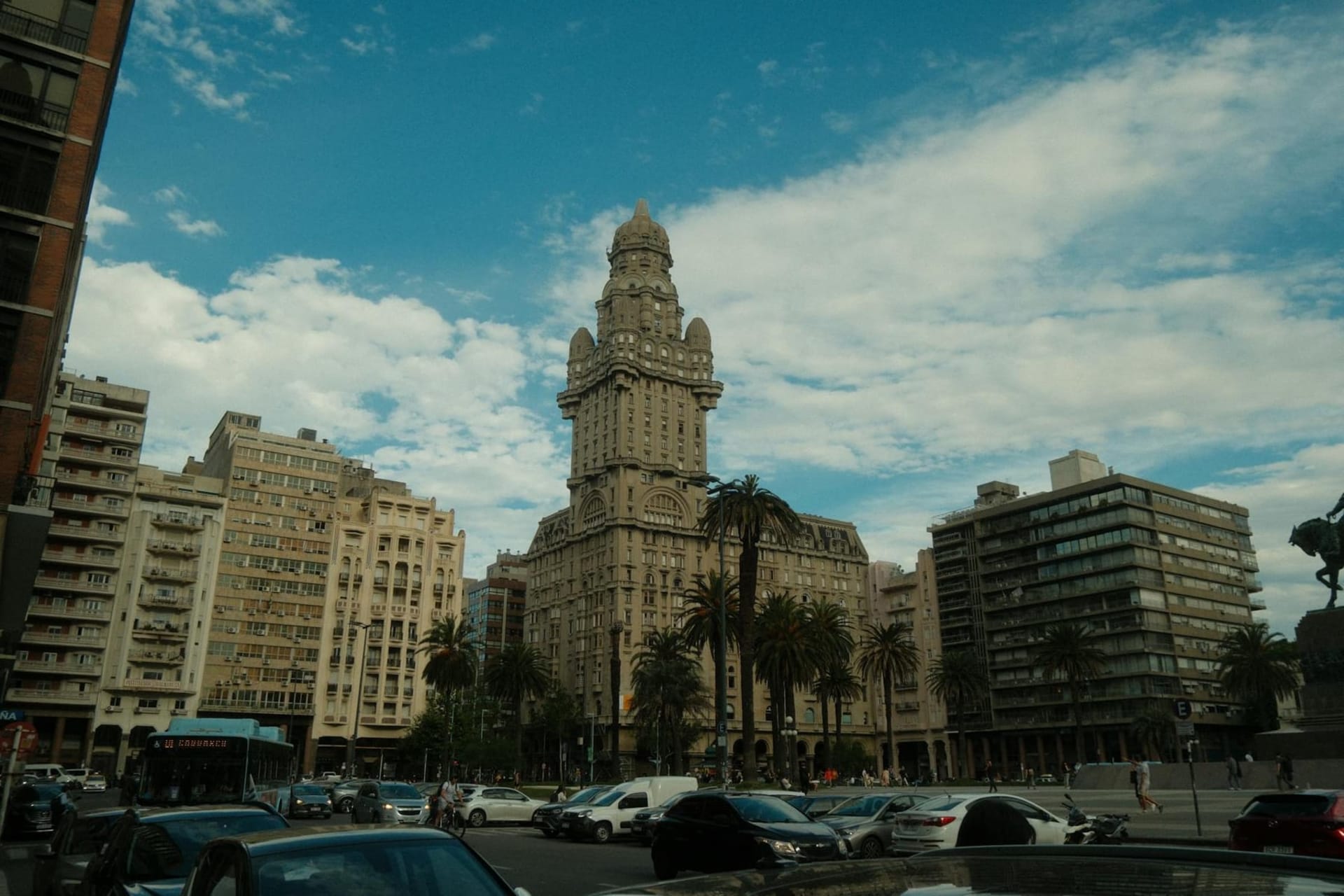
Montevideo
"Montevideo is the quiet confidence of a place that doesn't need to prove anything to anyone."
South America's most liveable city spreads along a rambla where Uruguayans share mate and watch the Rio de la Plata.
There is a city in the southern cone that nobody seems to be rushing to tell you about, and that is precisely what makes it worth going to. Montevideo does not perform for visitors. It simply exists — unhurried, a little worn at the edges, and deeply itself.
The Rambla
We arrived on a Tuesday in April and walked the Rambla before we had even checked into the apartment. The Rambla de Montevideo is not a promenade in the European sense — no boutiques, no curated café terraces. It is a 22-kilometer ribbon of concrete and breeze where the entire city comes to do nothing in particular. Couples sat on the low stone wall with their thermos tucked under one arm and the mate gourd in the other, eyes on the Río de la Plata, which at that latitude is so wide it refuses to look like a river. It just looks like sea. Flat, brown, enormous, indifferent.
Lia pointed out that almost no one was on their phone. At first I thought she was being romantic about it. Then I looked again and she was right.
Ciudad Vieja
The old city is compact enough to walk twice before lunch. I kept returning to Calle Sarandí, where the light in the late morning falls at a low angle through the buildings and everything looks like it belongs to an earlier century that took better care of itself. The Mercado del Puerto is the obvious stop — I ate chivito al plato at one of the parrillas inside, the steak arriving under a buried layer of ham, egg, and olives — but what surprised me was the Mercado Agrícola de Montevideo, farther inland in the Villa del Cerro direction. I had expected a tourist market. What I found was a neighborhood one: stalls of dried herbs, bins of almonds, a man selling handmade pasta out of plastic containers with masking-tape labels. I bought a bag of yerba mate I had no way to prepare and carried it home anyway.
Light and Slowness
There is a specific quality to the light in Montevideo in autumn — softer than Buenos Aires across the water, less urgent. The city is smaller, quieter, poorer in some respects, but there is none of the anxious energy I sometimes feel in larger South American capitals. People move as though they have agreed collectively not to hurry. I found myself doing the same by the third day.
When to go: March through May offers the best weather — warm without the coastal humidity of summer, and the city feels more local than touristic. The Carnival period in February is extraordinary if crowds are not a concern.