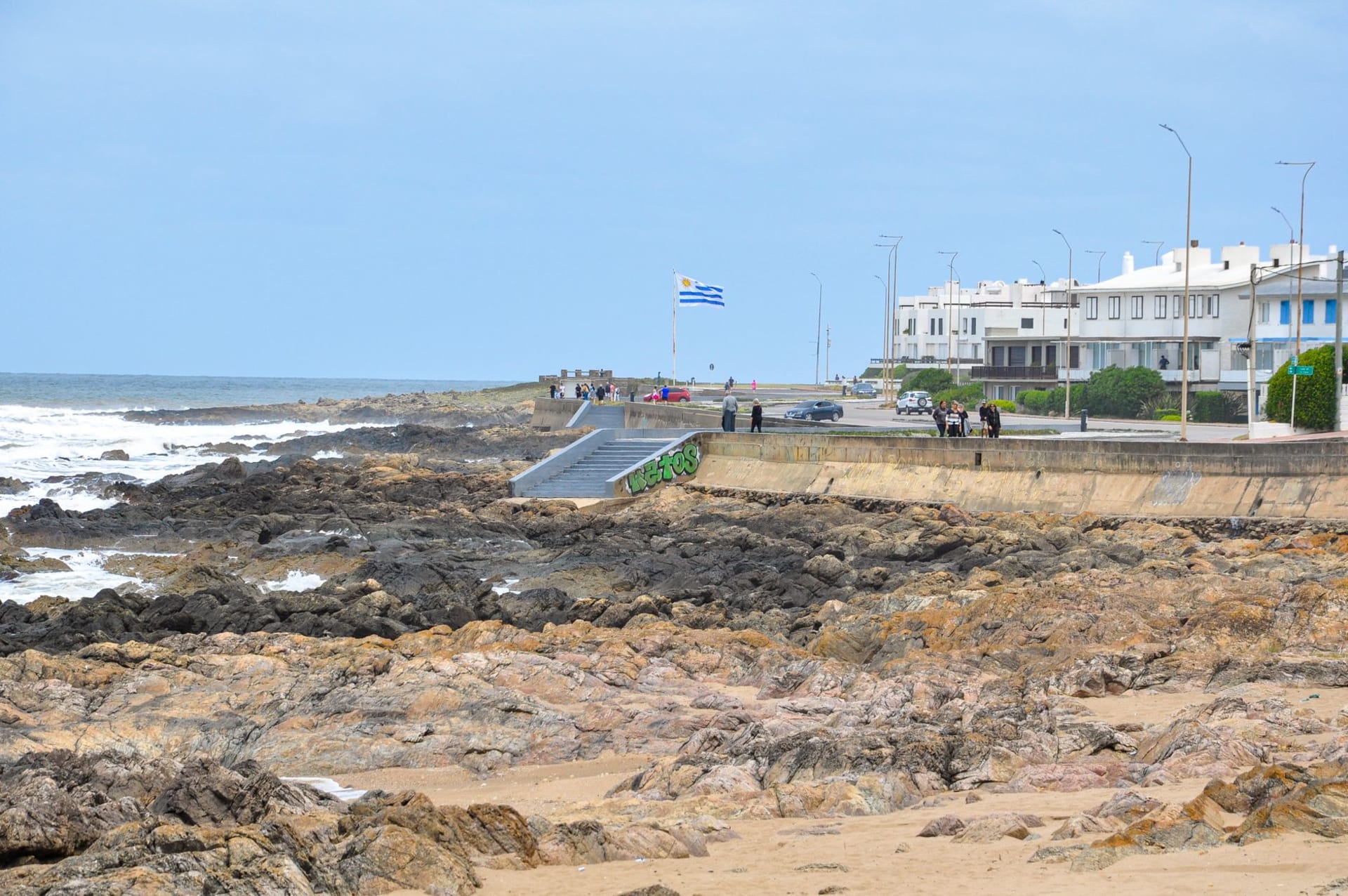
La Paloma occupies a small peninsula that juts into the Atlantic at the point where navigators historically started paying closer attention. The lighthouse here, built in 1874, is one of the most photographed things in the Rocha department, which still puts it at a manageable number of photographs. The town below it is a few streets of restaurants and surf shops, a bus terminal, some decent supermarkets, and several thousand reasons to stay longer than your original plan.
This is not Punta del Este. The comparison comes up often in Uruguay and is always meant as a recommendation. In La Paloma, nobody is performing wealth at you. The beach bars open when the people who run them feel ready. The boards for rent are a little dinged up and completely functional.
The Point and the Lighthouse
The lighthouse sits on Cabo Santa María, a rocky headland at the tip of the peninsula, and the walk out to it takes maybe fifteen minutes from the main street. What changes as you go is the sound — the town drops away and the Atlantic gets progressively louder. At the point, the wind comes from directions simultaneously and the spray reaches you even when you think you’re standing far enough back.
The lighthouse itself opens for tours on an irregular schedule that I eventually stopped trying to predict and simply checked each morning. When it did open, the view from the top: water in three directions, the peninsula below looking improbably green, a container ship far out on the horizon moving with the patience of something very large.
Surfing and the Rocha Coast
La Paloma has consistent swells and two main breaks that function in different swell directions, which means there’s usually something rideable somewhere. The surf school on the main beach takes beginners and is appropriately patient with people who spend forty minutes failing to stand up. I watched this from a safe distance.
The Rocha coast in general — extending east toward Cabo Polonio and west toward Punta del Diablo — is a stretch of mostly undeveloped Atlantic shoreline with lagoons cutting behind the beaches. Laguna de Rocha is a UNESCO biosphere reserve where flamingos appear in groups that would look improbable if you hadn’t grown up expecting flamingos to be reasonable. A local birder I met at a guesthouse breakfast offered to drive me out. We saw fifty-something flamingos and a roseate spoonbill and he seemed personally delighted by the spoonbill, which made me feel the same way.
Eating and the Off-Season Logic
In January and February, La Paloma fills with Uruguayan families and Argentine vacationers and the restaurants are all open and loud and booked. In November, March, or April, half those restaurants are closed and the other half are entirely yours. The fish is the same — dorado, corvina, lenguado — and the price is lower and the owner is more likely to sit down and explain the catch.
I had a chivito at a small place on the main street that bore almost no resemblance to anything I’d encountered under that name elsewhere. A full construction of beef, ham, egg, cheese, lettuce, tomato, olives, and condiments on bread, served with fries and the kind of quiet confidence that says: this is the version. I didn’t argue.
The Evening Pace
Sunsets in La Paloma hit the lighthouse from the west and light the water up in directions you don’t expect. The main bar district on Avenida Nicolás Solari gets going around nine or ten, which is early by Uruguayan standards, and the crowd skews younger than much of the Uruguayan coast. Someone was always playing guitar at the place on the corner. Whether it was the same person each night I couldn’t say.
When to go: November and April are the sweet spots — warm enough for swimming on good days, empty enough to feel like yours. January brings bigger surf and more energy if that’s the calculation you want to make.