Kungur Ice Cave
"The cave is colder in summer than in winter. That should tell you something about what's down there."
The town of Kungur is small and unhurried, sitting where the Sylva River makes a wide bend through the western Ural foothills. I arrived by elektrichka from Perm on a grey July morning, forty minutes of flat birch forest and then the first limestone outcrops appearing above the river. The cave entrance is a twenty-minute walk from the station, past merchant houses from the eighteenth century when Kungur was a trading post on the Great Siberian Route.
How Cold Is It Actually
The cave maintains a temperature of around minus five to minus two Celsius in the deeper frozen sections, year-round. In summer this creates the slightly surreal situation where visitors arrive in shorts and t-shirts — it was twenty-six degrees outside the day I went — and immediately need the loaner jackets the ticket office keeps in a pile by the entrance. I’ve been in cold places, but there’s something specific about walking out of a warm Russian summer into a room where your breath becomes visible within three steps.
The cave is a karst system formed in gypsum and limestone, and water seeping through the rock over millennia created the chambers. The frozen sections formed when cold air trapped in the cave interior never fully warmed between winters. It’s been going on for thousands of years. The ice is old enough to be genuinely opaque — white rather than clear, compressed and dense.
The Grotto Sequence
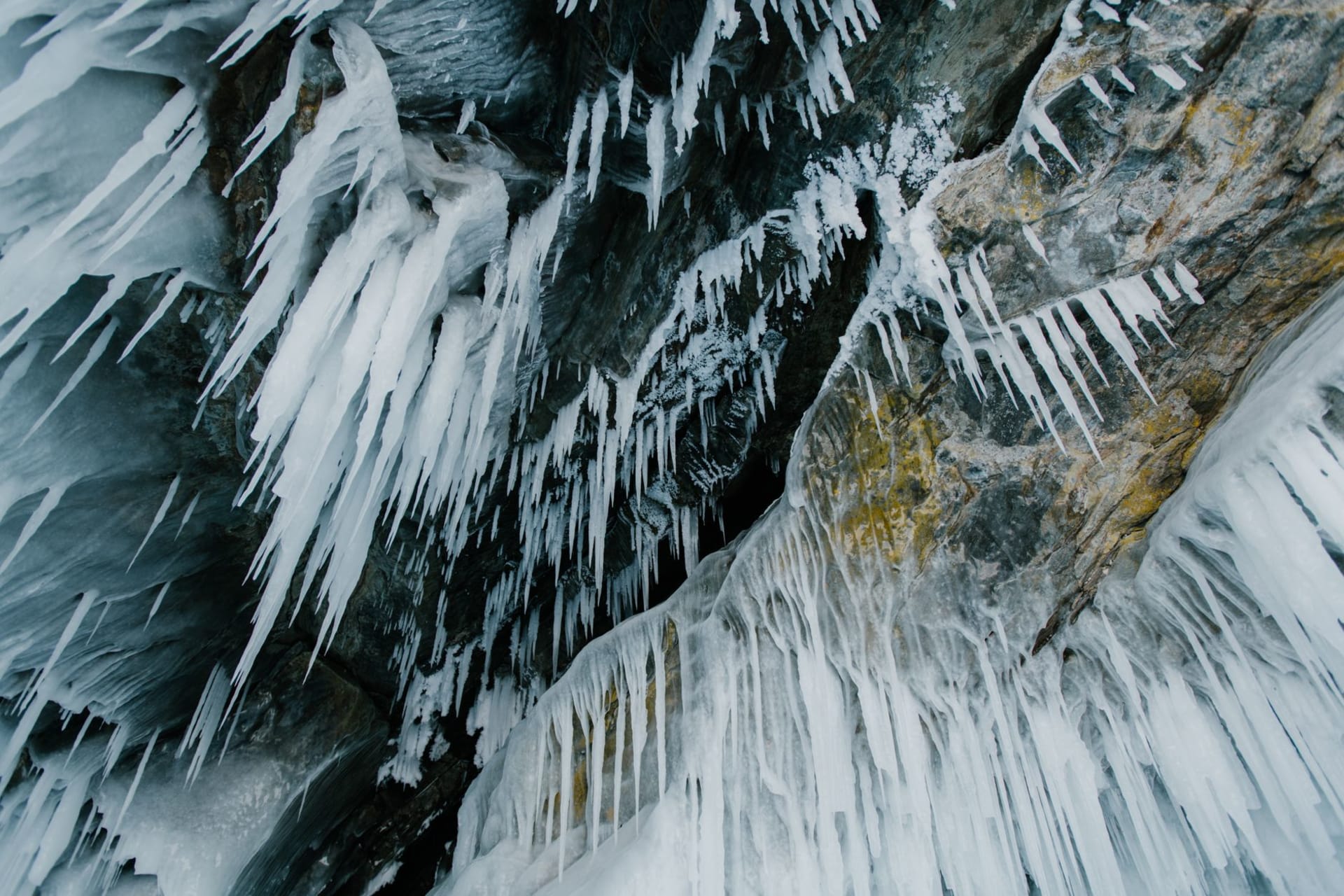
The tour follows a route through eleven named grottos. The Diamond Grotto comes first in the frozen section and it’s the one that stops people: ice stalactites hanging from a vaulted ceiling about eight meters high, catching the colored lighting installed for tours in a way that makes the room flicker. I know the colored lights are theatrical. I still found myself just standing there with my mouth open.
The Polar Grotto has ice columns growing up from the floor, some of them over a meter tall, formed where water drips from the ceiling and freezes before it can spread. They’re irregular, lumpy, nothing like the perfect stalactites of limestone caves — more like something that grew than something sculpted.
The Underground Lakes
Several grottos contain lakes that are liquid year-round despite the cold — the water temperature stays just above freezing. You look down into them from raised walkways and the water is so still and clear it takes a moment to confirm there’s water there at all rather than just more floor. The reflections of the cave ceiling double the visual depth.
Lia is not someone who loves enclosed spaces, so I did this one solo. She spent the morning walking along the Sylva River and found a tea house run by an old woman who gave her sour cream with jam on dark bread. By the time I emerged, two hours later, blinking in the sunlight and thoroughly chilled, Lia had a whole conversation’s worth of information about the town.
The Museum and the Merchant Town
Kungur is worth half a day even without the cave. The old trading quarter has a handful of well-preserved merchant mansions and a regional museum with a room dedicated to the Great Siberian Route — the road along which goods and exiles both traveled east for centuries. The connection to the cave is older than tourism: early documents from the 1700s mention locals using the cave as a cold storage cellar.
When to go: Summer (June through August) for the maximum contrast between outside heat and cave cold, and for the most spectacular ice formations before any seasonal melting begins. The cave is open year-round; winter visits are quieter. The town itself is pleasant in early September when the river valley turns golden.