Europe
Ural Mountains
"I crossed into Asia on foot and felt nothing shift — yet everything had changed."
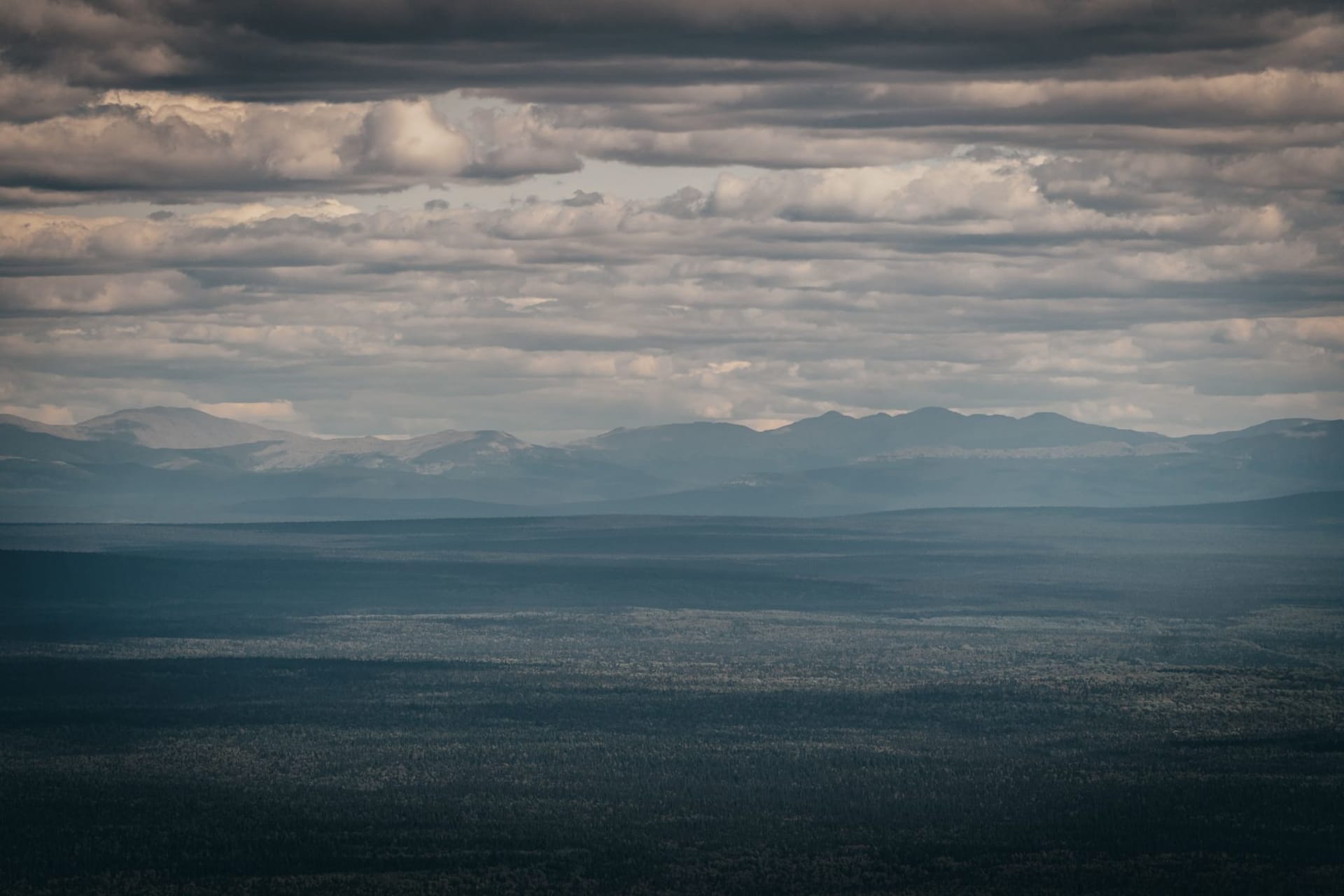
The first thing that strikes you about the Ural Mountains is how unhurried they are. These are not the Alps, not the Dolomites — no sheer drama, no postcard silhouette. The Urals are old in a way that shows: rounded shoulders worn smooth by hundreds of millions of years, covered in taiga so dense and continuous you could walk for days without seeing a road. I came in from Yekaterinburg heading north, and somewhere on a muddy track in Sverdlovsk Oblast, I crossed the boundary between Europe and Asia marked by a rusted obelisk that a few tourists photograph each year and most locals ignore completely. I stood there alone with pine resin in the air and tried to feel something cosmological. Mostly I just felt hungry.
The northern Urals — around Perm Krai and the Republic of Komi — are a different world from the industrial middle. Here the rivers run dark with tannins, the sky is enormous and frequently threatening, and the old Permian cultures have left traces in cave paintings at Kapova Cave that are 17,000 years old and almost entirely unvisited. The southern Urals shift into the Ural steppe near Orenburg, where Bashkir honey is sold from roadside stands and the food becomes unmistakably Central Asian: chak-chak soaked in honey, beshbarmak, kazy sausage that smells like the steppe after rain. This is Russia’s interior at its most real — not a place performing its identity for visitors, but a place simply being itself, indifferent to your presence.
What I kept coming back to was the silence. The Ural wilderness is not the aggressive silence of high altitude or desert; it is the patient silence of deep forest. The Vishera Nature Reserve in Perm Krai protects one of the last untouched river systems in Russia, and rafting the Vishera in late summer — when the water drops and the gravel bars appear and the grayling rise in the evenings — is one of those experiences that resets whatever stress you carried in. There are places in the Urals where you will go three days without a signal and where the nearest village is a two-hour boat ride. This is not inconvenience. This is the point.
When to go: Late June through early September for hiking, river rafting, and wildflowers in alpine meadows. Late March to April for cross-country skiing on empty trails when the snow is still firm and the days are long enough to move fast. Avoid October to May unless you are serious about winter travel — the cold is not hostile, but it demands preparation and experience.
What most guides get wrong: They treat the Urals as a geographic concept rather than a destination — the line between Europe and Asia — and miss what the range actually offers. The obelisk marker is a curiosity. The Vishera River, the Shulgan-Tash cave paintings, the Taganay ridge above Chelyabinsk, the Bashkir steppe in summer — these are the reasons to come. The Urals reward slow travel and discomfort tolerance more than any mountain range I know. You will not be comfortable here in the way you are comfortable in the Alps. You will be alive in a different way.