Chusovaya River
"The river doesn't care about the history that happened on it. That's actually what makes floating it feel historical."
The Chusovaya is not a famous river outside Russia, but it should be — it’s the river along which Yermak Timofeyevich led his Cossack expedition eastward in 1582, beginning the Russian conquest of Siberia with five hundred men in small boats. The limestone cliffs he passed are still there. The rapids he portaged around are still running. You can float the same stretch in an inflatable kayak, camping on the gravel bars, and the river doesn’t feel particularly tamed.
The Limestone Pillars
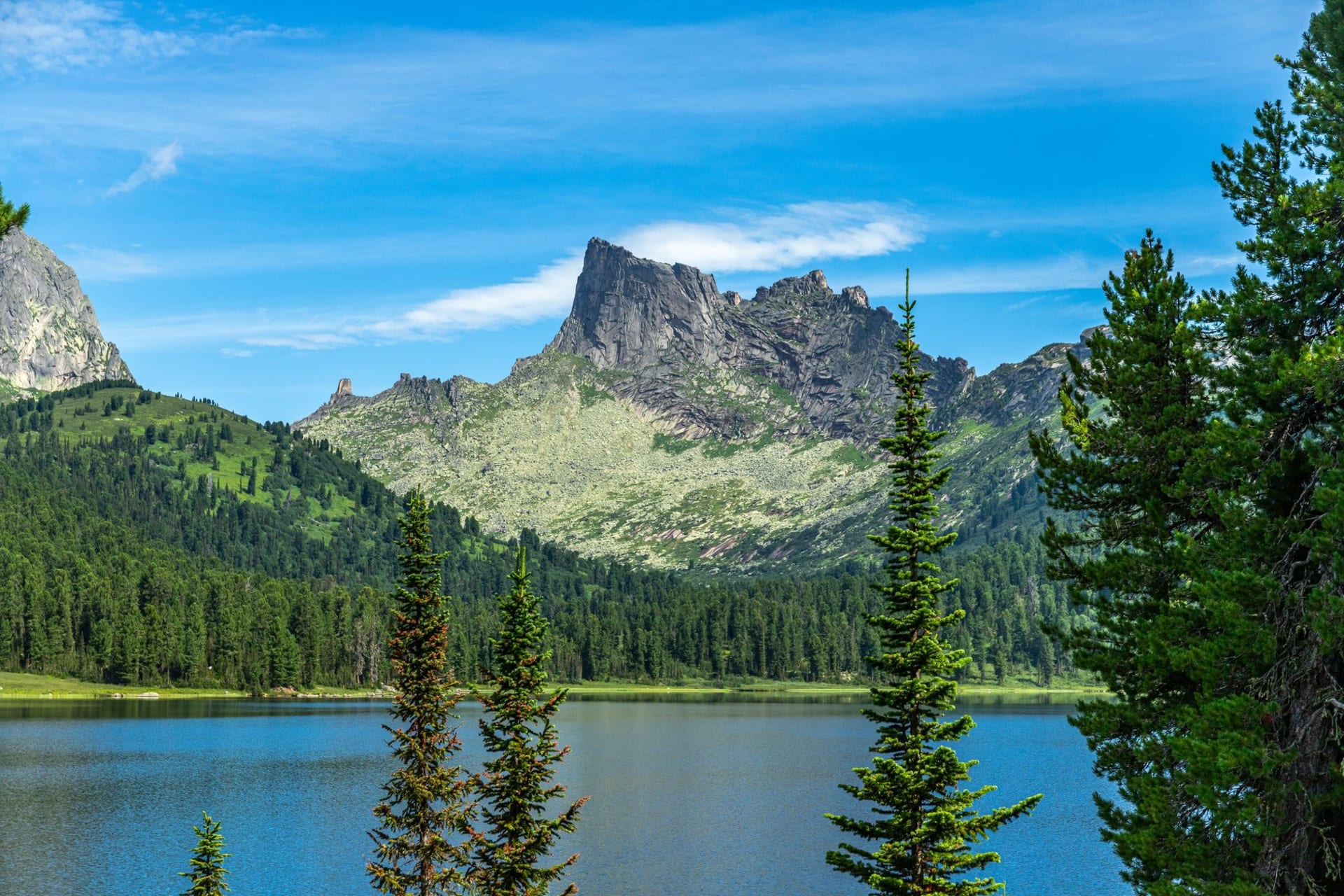
The Chusovaya’s most dramatic feature is the bortsy — the “fighters,” limestone pillars and cliffs that rise above the bends in the river, sometimes vertically from the waterline, sometimes set back in the forest and suddenly visible when the river curves. They’re numbered and named, and the naming reflects a very Russian sense of humor: Pugachev, named for the rebel, faces Razin’s Cliff, named for another. Skull Rock. The Coffin. Village Fool.
The tallest reach forty meters above the water. They’re composed of grey Devonian limestone with pockets of fossils — brachiopods, crinoid stems — visible in the rock face if you tie up and scramble up the base. The moss on the lower sections is so saturated green it looks painted.
I did the Chusovaya on a four-day float from the town of Chusovoy to the village of Sloboda. On the first evening, cooking over a fire on a gravel bar while the cliff above turned pink in the last sun, it was difficult to remember that Yekaterinburg was two hours by car.
The Floating Itself
The Chusovaya is a Grade II river for most of its navigable length — active water with some technical sections but nothing requiring serious skills. The current is steady, the navigation mostly straightforward. The main hazards are the large rocks in some of the rapids and the tree falls across narrower channels. I hired a guide for the first day to understand the rhythm of the river and then managed the rest solo.
The water is cold — even in July it stays around twelve to fifteen Celsius — and gin-clear in the upper reaches. You can see the bottom in three meters of water. Fish are visible: grayling in the fast sections, perch in the pools below bends. Locals fish with spinning rods from the bank.
Camping the Gravel Bars
Every evening involves choosing a gravel bar or a flat section above the bank. Firewood is not scarce — the banks are full of deadfall. The sounds at night: the river, always, and in the deeper quiet, owls. I woke twice to hear something large moving through the forest on the opposite bank. Probably elk, given the fresh tracks I’d seen in the mud.
Lia would have loved this part of the trip. She did not come because inflatable kayaks on cold rivers do not intersect with her interests, which I respect entirely. She spent the same four days in Yekaterinburg finding the Georgian restaurant she’d been tracking down, and by her account had an excellent time.
The Villages
The Chusovaya passes through small river villages that have been here since the seventeenth century, many of them founded as iron-working settlements when the Stroganov merchant family began developing the Ural region. A few have churches still standing from that era, small and unrestored, their log construction gone grey. You can pull up to a village, tie your boat, walk up the bank.
One old woman in the village of Usть-Utka gave me a jar of honey and would not accept payment. We had no shared language beyond smiles and pointing. I’m still not sure what I did to deserve the honey but I ate all of it over the following two days.
When to go: May and June for high water and fast current — the river is fullest and the floating quickest. August and September for lower, clearer water and warmer air temperatures, with excellent mushroom and berry picking on the banks. Avoid April when snowmelt makes the river cold and unpredictable. October is possible in dry years but nights drop to freezing and camping becomes a different proposition.