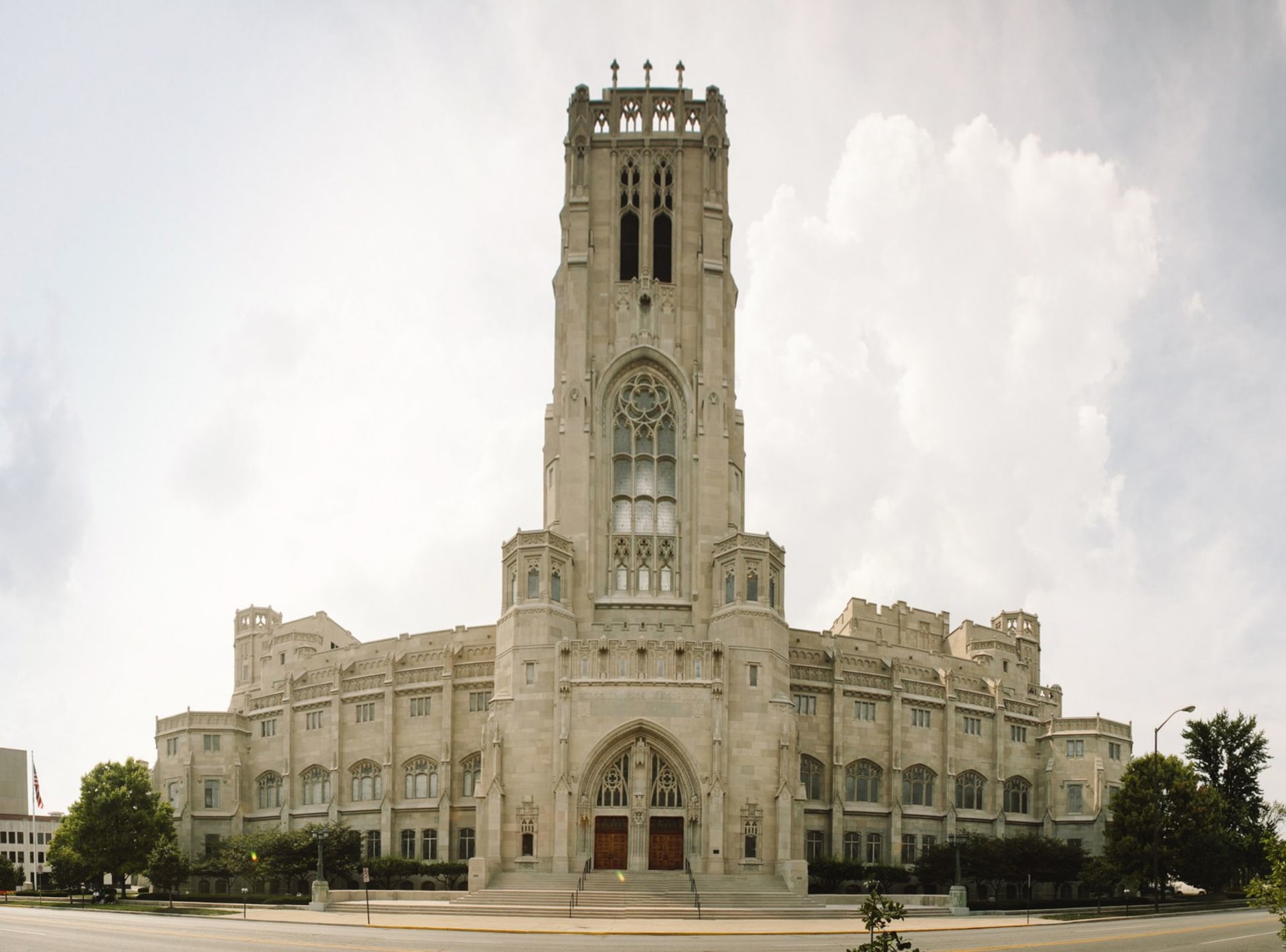
The birthplace of aviation and home ground of the Wright brothers, where hangar-sized museums sit beside a quietly reinventing Rust Belt downtown. Lia and I spent a whole day craning our necks at airplanes and left more moved than we expected by two bicycle mechanics who taught the world to fly.

Lia and I hadn’t planned much time for Dayton — it was meant to be a stopover between Cincinnati and Columbus — but we ended up staying two nights, pulled in by a city that quietly invented modern flight and never quite advertises the fact loudly enough. Orville and Wilbur Wright ran a bicycle shop here before they ever built an aircraft, testing early wing designs in the alleyways and open fields on the city’s edges, and that scrappy, workshop ingenuity still seems to run through the place, from its converted factory lofts to its unpretentious diners.
The National Museum of the U.S. Air Force
Nothing prepares you for the scale of the National Museum of the United States Air Force, a free, sprawling complex of hangars at Wright-Patterson Air Force Base holding hundreds of aircraft, from a fragile Wright Flyer replica to the presidential plane that carried JFK’s body home from Dallas to a full-scale space shuttle trainer. We budgeted two hours and stayed for five, wandering from the Early Years gallery into the Cold War hangar’s blacked-out room housing the SR-71 Blackbird, its long titanium body still looking like something from a future we haven’t reached yet. Lia, who claims no interest in aviation, admitted by the end that it was one of the best museums she’d ever walked through.

Wright-Dunbar and the birthplace of flight
Just west of downtown, the Wright-Dunbar Historic District preserves the neighborhood where it all started: a reconstructed version of the Wright Cycle Company shop, and Huffman Prairie Flying Field out near the base, the unassuming pasture where the brothers perfected sustained, controlled flight after their more famous but shorter Kitty Hawk hop. We stood in that flat, grassy field, now ringed by military runways, trying to picture 1904 and finding it strangely easy — it still looks like nowhere in particular, which is exactly the point. Nearby, the Paul Laurence Dunbar House honors Dayton’s other great local figure, the pioneering Black poet who was, fittingly, a childhood friend of the Wright brothers.

Downtown and the Oregon District
Dayton’s downtown wears its Rust Belt history openly — vacant factory floors converted into breweries and artist studios along East Fifth Street in the Oregon District, a compact grid of Victorian storefronts turned bars and restaurants. We had dinner at a Cajun spot recommended by our hotel clerk, then wandered past murals memorializing the district’s resilience after a 2019 mass shooting that the whole neighborhood still, visibly, carries with pride and grief in equal measure. It gave the evening a weight I hadn’t expected from what looked, at first, like just another gentrifying downtown strip.
Getting There
Dayton International Airport offers direct flights to major connecting hubs and sits about twenty minutes from downtown. By car, Dayton is roughly an hour from Cincinnati and Columbus via I-75 and I-70, making it an easy detour for anyone road-tripping through southwest Ohio. A car is genuinely useful here, since the Air Force Museum, Wright-Dunbar sites, and downtown are spread across different parts of the metro area rather than clustered together.
Keep exploring
More of Ohio
Keep exploring
More from Ohio
 united-states
Yellow Springs
A bohemian college village wrapped around a sulfur spring and miles of wooded gorge trails, where tie-dye storefronts and a famously progressive campus give the whole place an air of gentle, unhurried rebellion. Lia and I came for a hike and stayed for the buskers on Xenia Avenue.
Explore united-states
Cincinnati
An Ohio river city built on seven hills, where cast-iron staircases climb between brick tenements and grand suspension bridges leap the water to Kentucky. Cincinnati feels older and stranger than its size suggests, a place of chili on spaghetti and porches hung over ravines. We arrived skeptical and left quietly charmed.
Explore united-states
Columbus
Ohio's easygoing capital, where a huge university keeps the energy young, the food scene punches far above the city's reputation, and revived neighborhoods of brick and murals invite long unhurried afternoons. It is the kind of place nobody puts on a bucket list and everybody enjoys once they land.
Explore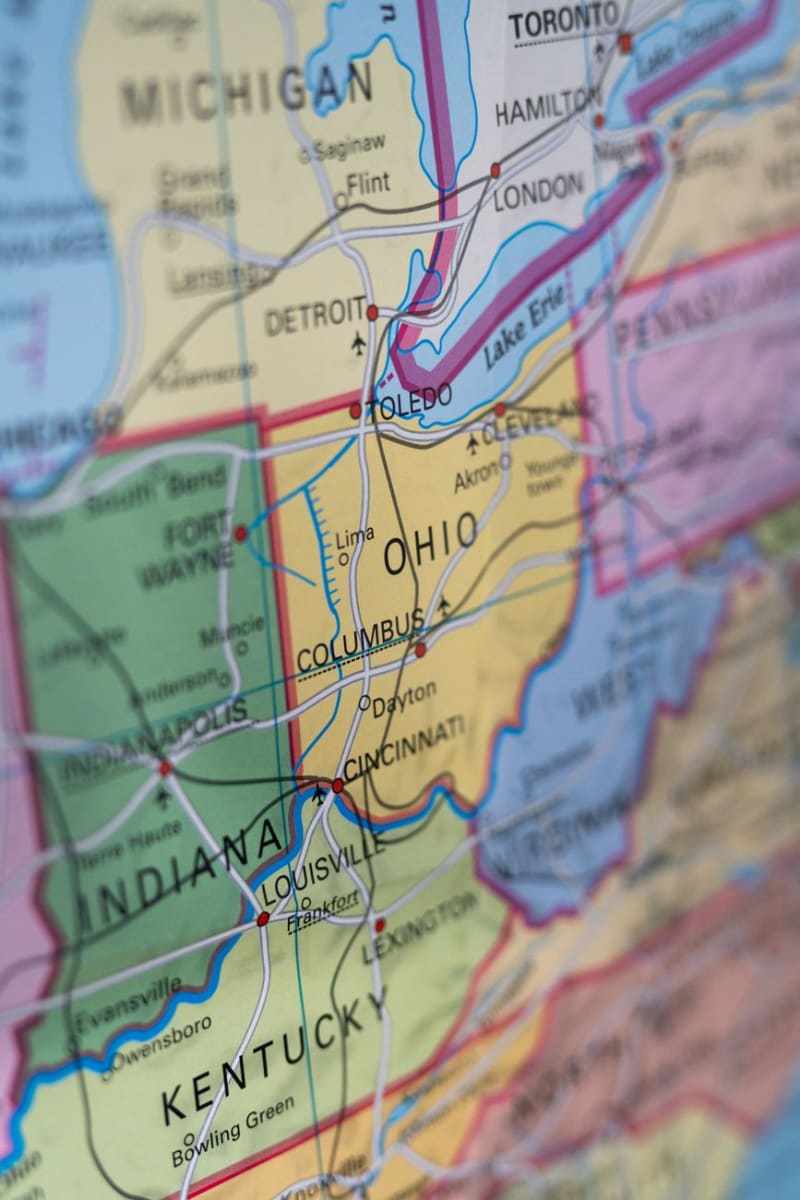 united-states
Chillicothe
Ohio's first state capital, ringed by earthworks the Hopewell culture raised two thousand years ago and still visible, silent and enormous, in the farmland outside town. Lia and I came to see ancient mounds and left with a new, humbling sense of how old this country actually is.
Explore united-states
Hocking Hills
A region of southeastern Ohio where the flat farmland gives way to deep hemlock gorges, dripping recessed cliffs and hidden waterfalls carved into soft sandstone. It's cool and green and cathedral-quiet down among the rocks, even in the heat of summer.
Explore united-states
Sandusky
A Lake Erie boardwalk town where roller coasters loom over the water and Victorian sea captains' houses line quiet streets nearby. Lia and I came for Cedar Point's steel and speed and stayed for the ferry horns, the perch dinners, and the wide grey lake stretching to a Canadian horizon we couldn't see.
Explore