
Dickinson
"Dickinson smells like diesel and cut wheat, and somehow that's not a complaint."
An oil-patch town on the edge of the badlands where pumpjacks nod alongside wheat fields and the Ukrainian churches still ring with the accents of homesteaders' great-grandchildren. Lia and I stopped for one night on the drive to Theodore Roosevelt National Park and ended up staying two, mostly because of the bison stew.
We came into Dickinson from the east on I-94, and the land changed before the town did — the flat wheat country buckling into the first soft folds of badlands, grass giving way to clay banded in gray and rust. Dickinson itself sits right at that seam, a working town of about twenty-five thousand that grew up around the Northern Pacific Railroad and got rich twice over, once from cattle and grain, once from the Bakken oil boom that filled its hotel parking lots with pickup trucks bearing plates from six different states. Lia kept pointing out the pumpjacks bobbing in fields between grain elevators, an image that felt more like Texas than the Dakotas I’d pictured.
Ukrainian roots and the Cultural Heritage Village
What surprised me most was how visibly Ukrainian this stretch of the state still is. Waves of Ukrainian and German-Russian homesteaders settled Stark County in the 1880s and 90s, and Dickinson’s Ukrainian Cultural Institute keeps that history in a small museum stacked with pysanky eggs, embroidered rushnyky, and photographs of sod houses that families lived in for their first hard winters. A short drive south, the Dakota Dinosaur Museum and the Prairie Outpost Park cluster a homestead cabin, a one-room schoolhouse, and an old rail depot together on the edge of town, and we wandered it slowly in the late afternoon with almost nobody else around, the prairie wind doing most of the talking.
Patterson Lake and the edge of the badlands
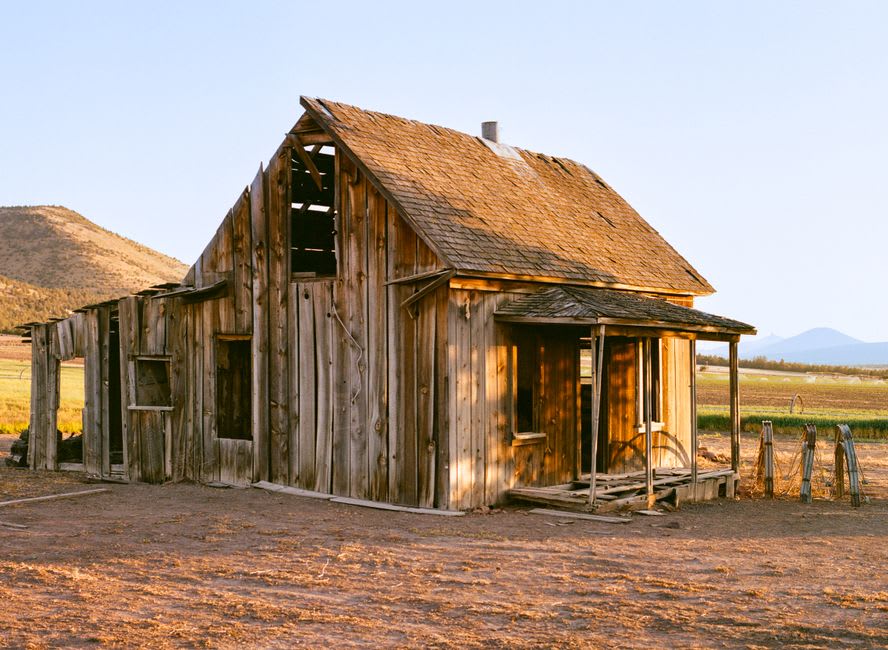
South of downtown, Patterson Lake spreads out behind a dam that locals treat as their backyard beach — kids jumping off a dock, retirees fishing for walleye, the whole scene startlingly normal for a town an hour from some of the strangest landscape in America. We drove the last twenty minutes out to where the badlands really start, low buttes striped in red scoria from ancient coal seams that burned underground, and stood there while the light went orange and Lia said it looked like Utah had been left out in the rain too long. It was the perfect preview for what waited at Theodore Roosevelt National Park the next morning.
Getting There
Dickinson Theodore Roosevelt Regional Airport (DIK) has limited connecting flights, but most visitors fly into Bismarck (BIS), about ninety minutes east on I-94, or Billings, Montana, roughly three and a half hours west. A car is essential — this is ranch country with no useful public transit, and the drive itself, through grain elevators and the first badland buttes, is really the start of the trip.
Keep exploring
More of North Dakota