
Devils Lake
"This is a lake that decided, decades ago, to reclaim the town's edges — and nobody's stopped it yet."
A lake town that has spent thirty years fighting its own rising water, where flooded shelterbelts stand like ghost forests just offshore and the walleye fishing is, improbably, some of the best in the country. Lia and I came for a weekend of fishing with a local guide and left slightly obsessed with a lake that keeps swallowing its own roads.
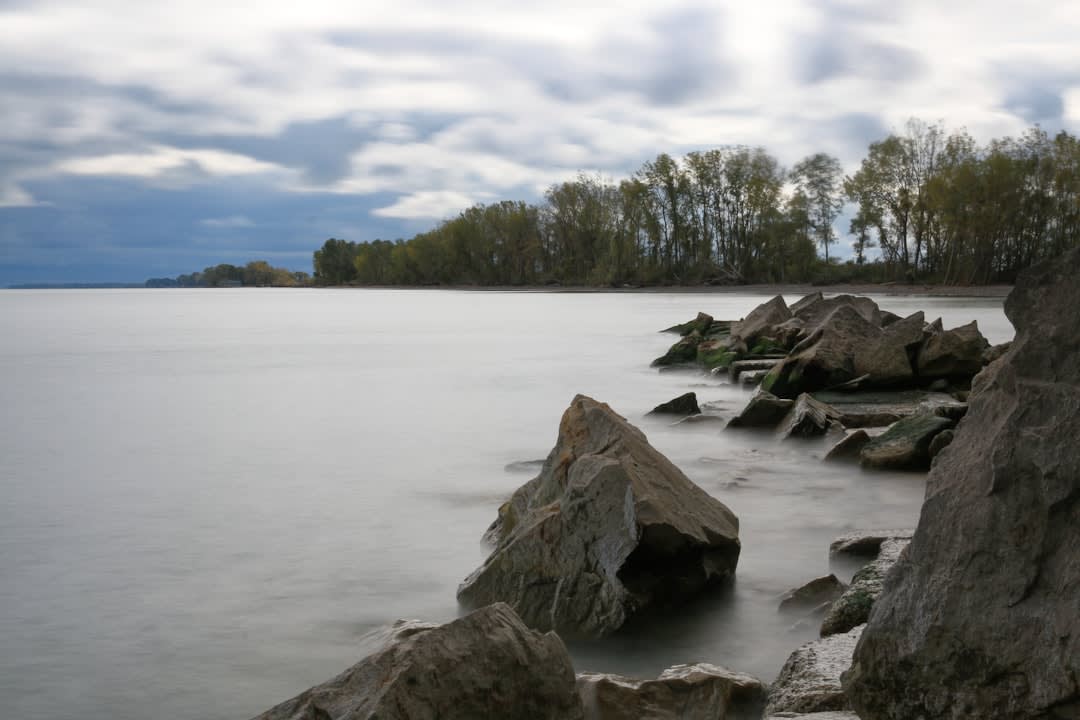
Devils Lake is the kind of place where the local news still leads with water levels, and once you’ve driven past a submerged grove of drowned cottonwoods standing gray and leafless in the middle of open water, you understand why. Since the early 1990s the lake, which has no natural outlet, has risen more than twenty-five feet, swallowing farmland, county roads, and whole shelterbelts that now poke up as eerie snags a mile from shore. Lia found it beautiful in a way I hadn’t expected — less a flood story than a strange, slow-motion wetland taking over a prairie town of about seven thousand people who’ve simply adapted, raising roads and building new ones as the water claims the old.
Fishing with the locals
We hired a guide out of a bait shop near the Grahams Island causeway, and within twenty minutes of dropping lines Lia had reeled in a two-pound walleye — the lake’s flooding turned out to be an accidental blessing for fish habitat, and Devils Lake is now routinely ranked among the top walleye fisheries in North America, ice-fishing shanty villages sprouting on the lake by the hundreds every winter. Our guide, a retired schoolteacher who’d fished the lake his whole life, pointed out where his uncle’s farmhouse used to stand, now marked only by a lone flooded windbreak of Russian olive trees a few hundred yards offshore.
Sullys Hill and Spirit Lake Nation
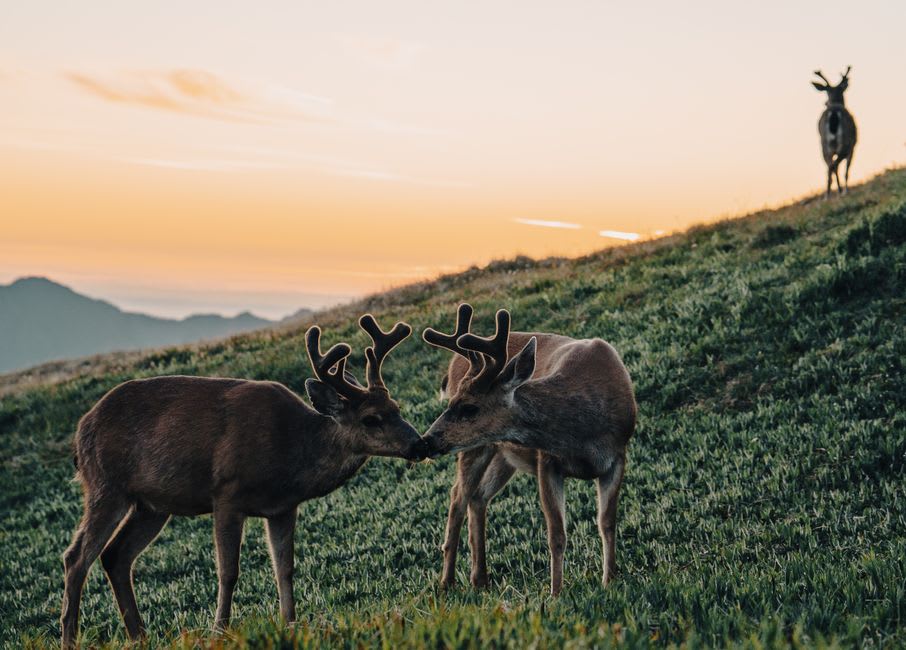
South of town, Sullys Hill National Game Preserve protects a pocket of rolling hardwood hills unusual for this flat part of the state, with a small bison and elk herd and a loop drive we took at dusk, watching a bull elk cross the road ahead of us without hurry. The preserve sits on the Spirit Lake Nation reservation, and the tribal casino and cultural center on the lake’s south shore gave us a fuller sense of the Dakota history here than any museum display could — this land has been Spirit Lake territory long before it was a fishing destination.
Getting There
Devils Lake Regional Airport (DVL) has limited commercial service; most visitors fly into Grand Forks (GFK) or Fargo (FAR) and drive, about ninety minutes and two and a half hours respectively via US-2. A car is necessary for reaching the lake’s fishing accesses and Sullys Hill, both spread well outside the compact downtown.
Keep exploring
More of North Dakota