Madrid
"Madrid died as a coal town and came back as something stranger and better: a street of artists who refused to let it disappear."
A near-abandoned coal camp on the Turquoise Trail, reborn as a strip of galleries and biker-bar saloons stacked along a single dusty street between the mountains. Lia and I wandered in for coffee and left three hours later with a hand-thrown mug and a whole new mental map of what a ghost town could become.

Madrid sits in a narrow canyon along the Turquoise Trail, the scenic back road linking Santa Fe and Albuquerque, and it announces itself with a jolt of color after miles of empty piñon-covered hills — tin-roofed miner’s cottages painted violet, teal, and rust-orange, strung along a single street barely wide enough for two trucks to pass. The town mined coal for the Santa Fe Railway for decades until the company shut it down in the 1950s and Madrid emptied out almost overnight, houses left standing for a token dollar to anyone willing to live in a ghost town. Artists eventually took the offer, and Lia and I spent an afternoon seeing exactly what they built out of the wreckage.
A street of galleries and bikers
We parked at one end of Madrid’s short main drag and simply walked its length, in and out of galleries selling raku pottery, hand-forged ironwork, and paintings of the surrounding Ortiz Mountains, the whole street smelling faintly of kiln smoke and green chile from a lunch counter someone had wedged between two studios. The Mine Shaft Tavern, a long wooden saloon with the longest stand-up bar in New Mexico, anchored the middle of town, and on the Sunday we visited its parking lot was solid with motorcycles, riders up from Albuquerque for the same green chile cheeseburgers everyone in town seemed to be eating. A potter working at her wheel in an open garage door told us Madrid’s year-round population barely tops a couple hundred people — meaning most of the street’s residents are also, at some point in the day, its shopkeepers.

Ghosts in the canyon
Above the main street, old coal tipple structures and mine tailings still cling to the hillside, rusted reminders of the boomtown that once shipped coal across the Southwest and even, for a while, strung up an elaborate Christmas light display visible from passing planes. We climbed a short trail behind the old ballpark, where company-league baseball games once drew crowds from across the region, and looked down on the painted rooftops glowing in the late sun, the whole canyon quiet except for wind chimes on someone’s porch. It struck us as one of the odder success stories in the Southwest: a town that survived by becoming almost entirely decorative, and somehow meaning it.

Getting There
Madrid sits on Highway 14, the Turquoise Trail, about 25 miles southeast of Santa Fe and roughly an hour northeast of Albuquerque’s Sunport airport, the nearest major airport in the region. There is no public transit to town, so the drive itself, winding past old mining ruins and desert vistas, is very much part of the experience. Parking is limited to a few small lots along the main street, so an early arrival on weekends saves considerable circling.
Keep exploring
More of New Mexico
Keep exploring
More from New Mexico
 united-states
New Mexico Taos
An ancient Pueblo, a community of artists, and the sacred Taos Mountain — all sharing the same high desert light.
Explore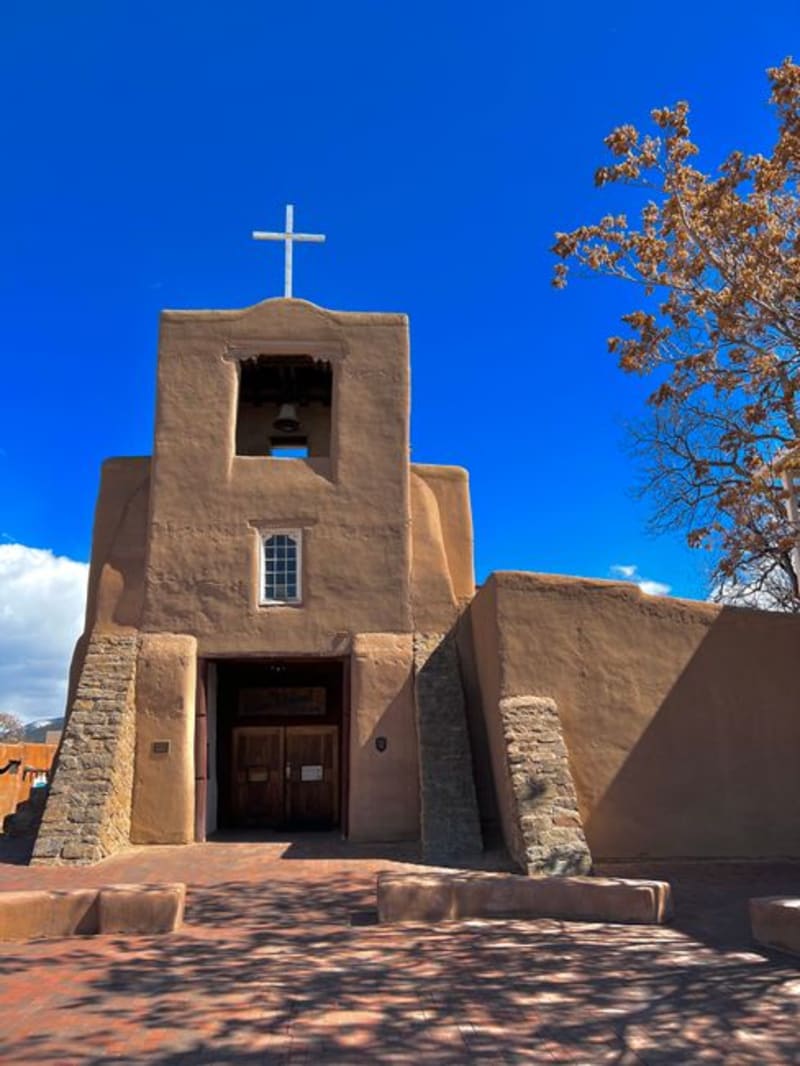 united-states
Santa Fe
A high-desert capital built of adobe and light, where four centuries of Spanish, Pueblo, and Anglo history sit close together and the whole city smells of piñon smoke and roasting chile. The oldest state capital in America, and one of the most quietly beautiful.
Explore united-states
Los Alamos
A high-mesa town born of wartime secrecy, where Manhattan Project history sits uneasily alongside pine forests and volcanic canyons. Lia and I came curious about the bomb and left more moved by the ancient cliff dwellings just down the road.
Explore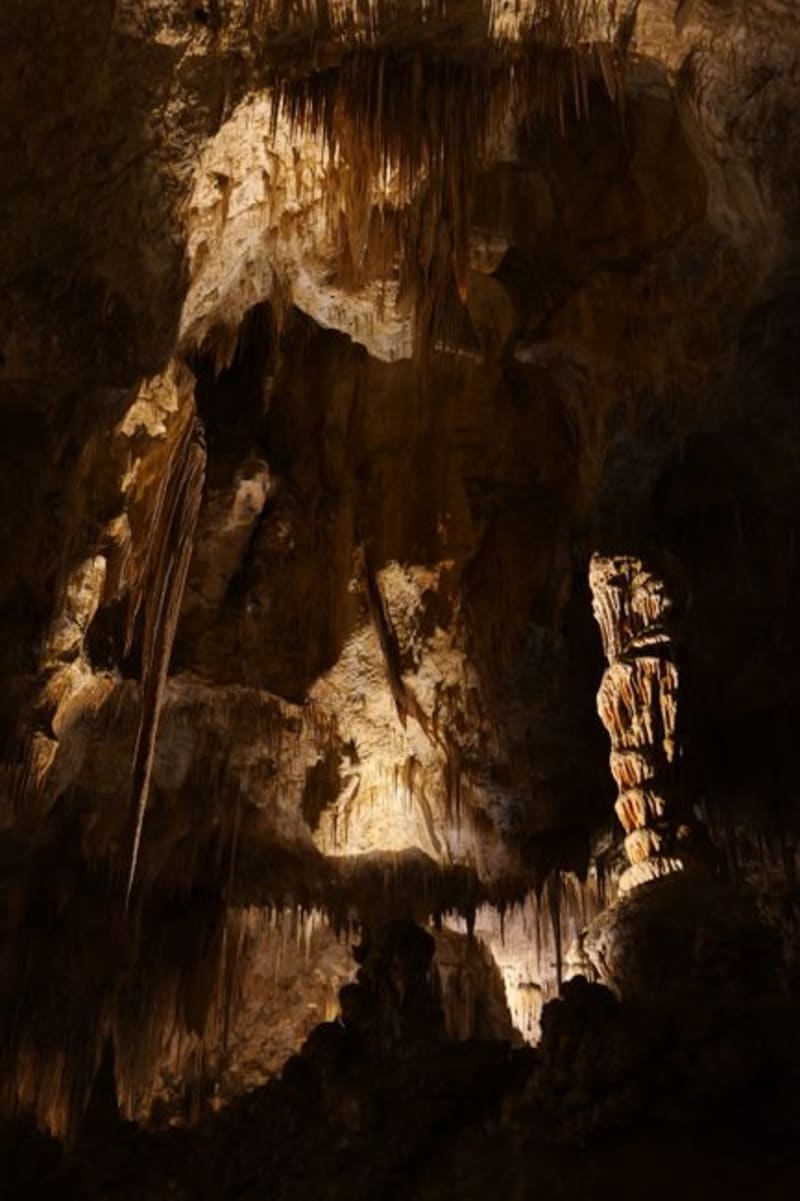 united-states
Carlsbad Caverns
Beneath the ordinary scrubland of southern New Mexico opens a staggering underground realm of chambers and stalactites, silent and cool and impossibly large. You descend into it out of the desert glare and the world simply changes. It is the strangest thing we have walked into on this continent.
Explore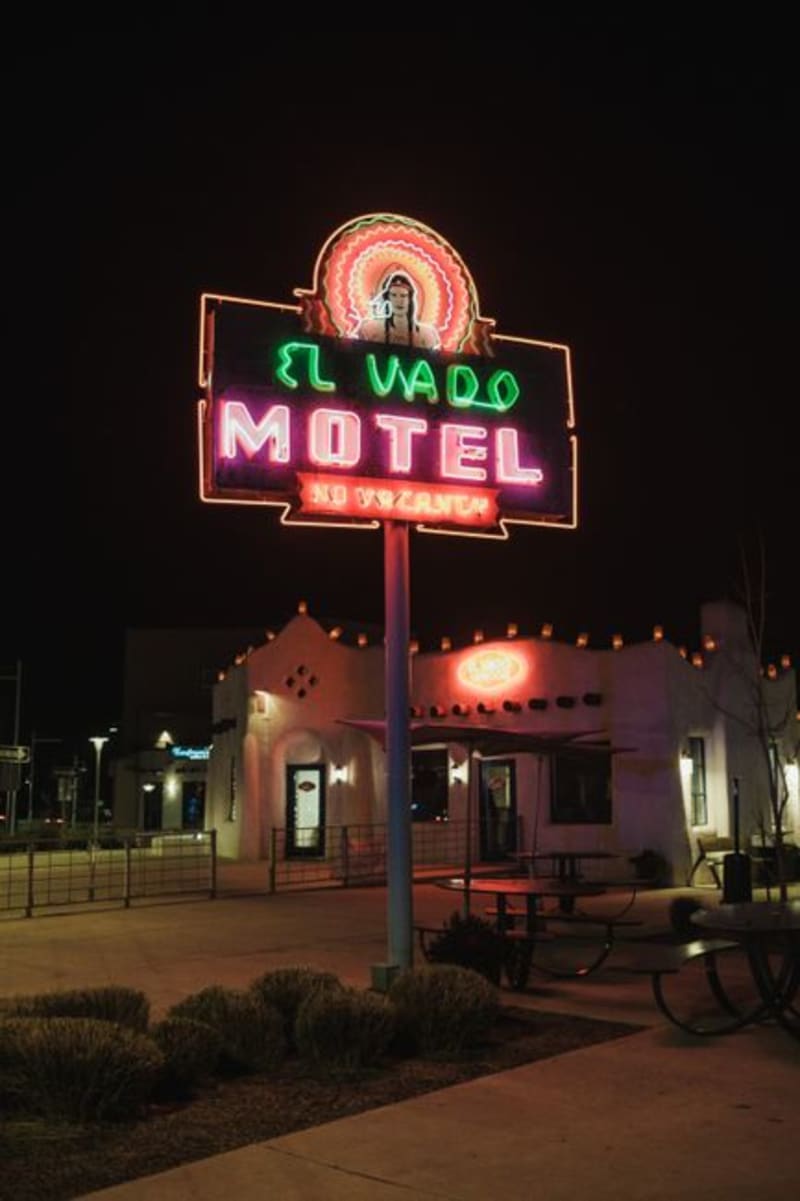 united-states
Albuquerque
A sprawling high-desert city on the Rio Grande, where hot-air balloons drift over the Sandia Mountains at dawn and old Route 66 neon still hums after dark. Grittier and more real than its polished neighbour to the north, and all the better for it.
Explore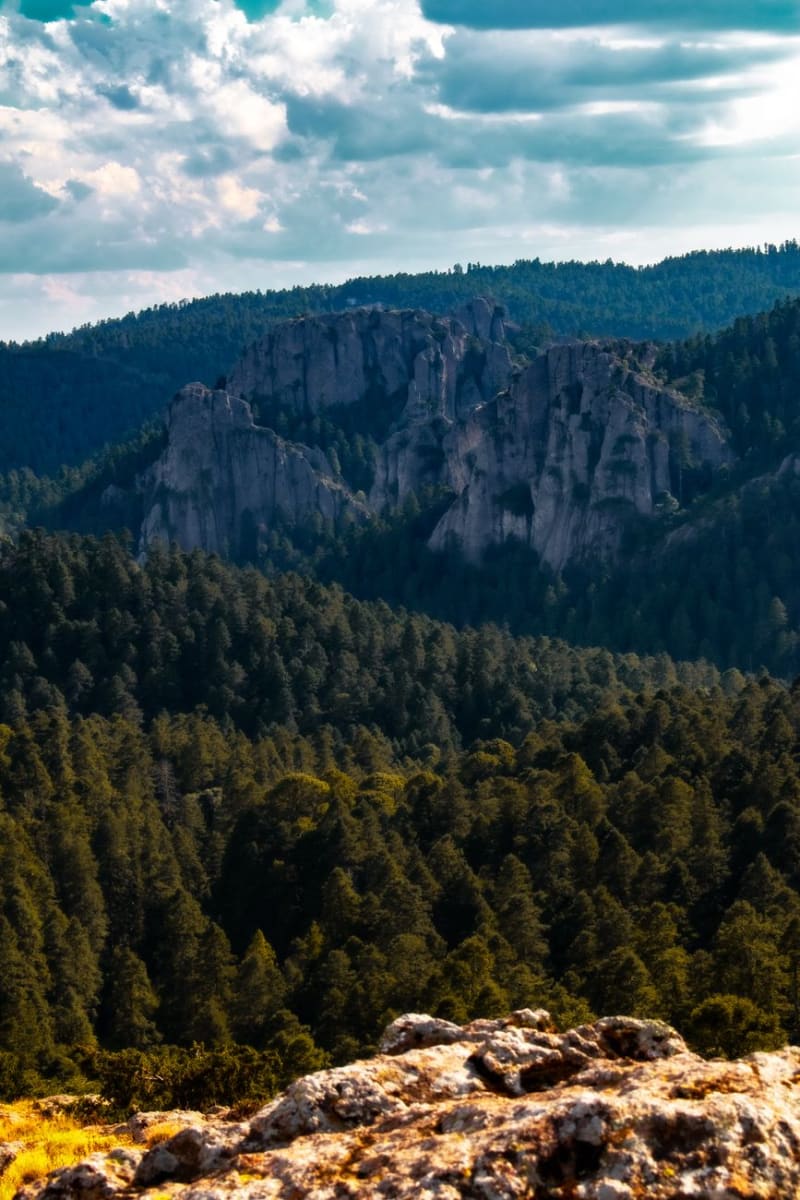 united-states
Ruidoso
A mountain village in the Sacramento Mountains where cool pine air and a noisy creek give the New Mexico desert a surprising alpine twist. Lia and I escaped the summer heat here, trading cactus for aspens and finding a slower, cooler version of the Southwest.
Explore