Los Alamos
"Los Alamos sits on a mesa built by volcanoes and remade by physicists, and neither history lets you forget the other."
A high-mesa town born of wartime secrecy, where Manhattan Project history sits uneasily alongside pine forests and volcanic canyons. Lia and I came curious about the bomb and left more moved by the ancient cliff dwellings just down the road.

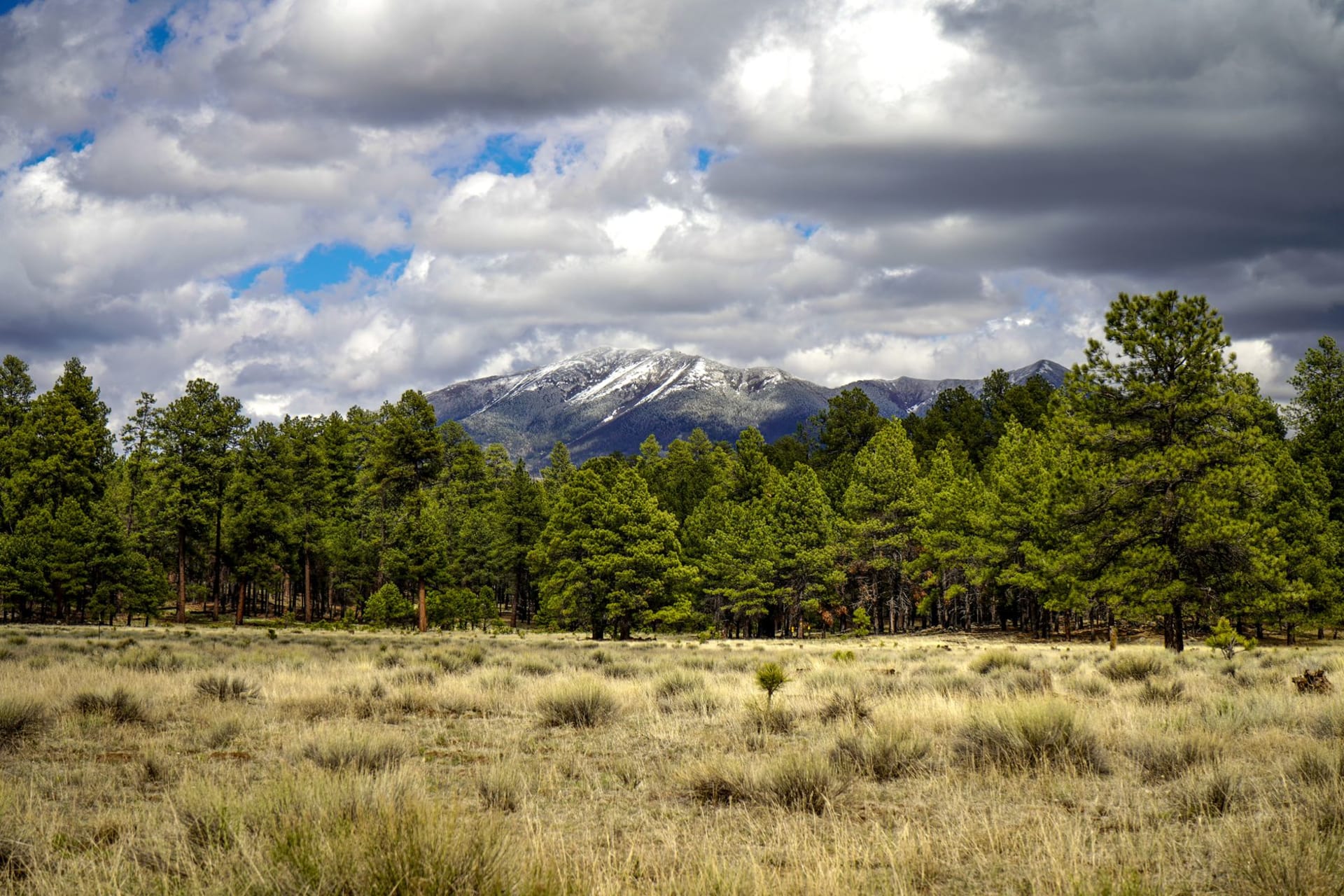
Lia and I drove up to Los Alamos on a switchbacking road that climbs nearly two thousand feet out of the Rio Grande valley, the piñon and juniper of the lowlands giving way to ponderosa pine as we gained elevation. The town itself sits scattered across a series of narrow, volcanic mesas separated by deep canyons, and it still carries the strange, purpose-built feel of the secret military installation it once was — street names like Trinity Drive and Oppenheimer Drive left over from the Manhattan Project years, when the entire town didn’t officially exist and mail simply went to a post office box in Santa Fe.
The Manhattan Project history
We spent a full morning at the Los Alamos History Museum and the Bradbury Science Museum, tracing the story of the scientists who arrived here in 1943 to a boys’ school on a mesa and left, two years later, having built the first atomic weapons. Lia lingered longest over the reconstructed lab spaces and the photographs of Oppenheimer walking these same streets, while I found myself unexpectedly moved by Fuller Lodge, the log-and-stone building that anchored the original ranch school and later hosted scientists debating physics over dinner. Walking past the modest ranch house where the Manhattan Project’s leadership lived, it was hard to reconcile the town’s quiet, pine-scented ordinariness with the weight of what was decided here.

Bandelier National Monument
Twenty minutes south, Bandelier National Monument turned out to be the trip’s real highlight. We hiked the main loop trail through Frijoles Canyon, its volcanic tuff walls pocked with cavates — small dwellings carved by Ancestral Puebloan people who lived here for centuries. Wooden ladders let us climb up into a few of the caves ourselves, and from inside one, looking out over the canyon floor and the cottonwoods lining a seasonal creek, Lia said it was the closest she’d felt to actually touching deep time. The contrast stuck with us for the rest of the day: a canyon inhabited peacefully for four hundred years, a few miles from a mesa where humanity built its most destructive weapon in under three.

Getting There
Los Alamos sits about thirty-five miles northwest of Santa Fe, a forty-five-minute drive along winding NM-502 that climbs steadily through canyon country. Santa Fe Regional Airport offers limited flights, but most visitors fly into Albuquerque International Sunport, roughly ninety minutes south by car. There’s no train or meaningful bus service up the mesa, so a rental car is essential — and useful, too, for the short onward drive to Bandelier and the Valles Caldera beyond.
Keep exploring
More of New Mexico
Keep exploring
More from New Mexico
 united-states
Santa Fe
A high-desert capital built of adobe and light, where four centuries of Spanish, Pueblo, and Anglo history sit close together and the whole city smells of piñon smoke and roasting chile. The oldest state capital in America, and one of the most quietly beautiful.
Explore united-states
Albuquerque
A sprawling high-desert city on the Rio Grande, where hot-air balloons drift over the Sandia Mountains at dawn and old Route 66 neon still hums after dark. Grittier and more real than its polished neighbour to the north, and all the better for it.
Explore united-states
New Mexico Taos
An ancient Pueblo, a community of artists, and the sacred Taos Mountain — all sharing the same high desert light.
Explore united-states
Gallup
A high-desert trading town wedged between red sandstone bluffs where Navajo, Zuni, and Hopi silverwork fills every storefront window along old Route 66. Lia and I came chasing turquoise and stayed for the pawn shops, the green chile, and a sunset over the mesas that turned the whole valley the color of a struck match.
Explore united-states
Ruidoso
A mountain village in the Sacramento Mountains where cool pine air and a noisy creek give the New Mexico desert a surprising alpine twist. Lia and I escaped the summer heat here, trading cactus for aspens and finding a slower, cooler version of the Southwest.
Explore united-states
Truth or Consequences
A quirky desert spa town along the Rio Grande that renamed itself after a 1950s radio game show and never looked back, its hot-spring bathhouses tucked behind adobe walls on quiet side streets. Lia and I came for a soak and left having befriended half the town over coffee at the counter of a diner that never seems to close.
Explore