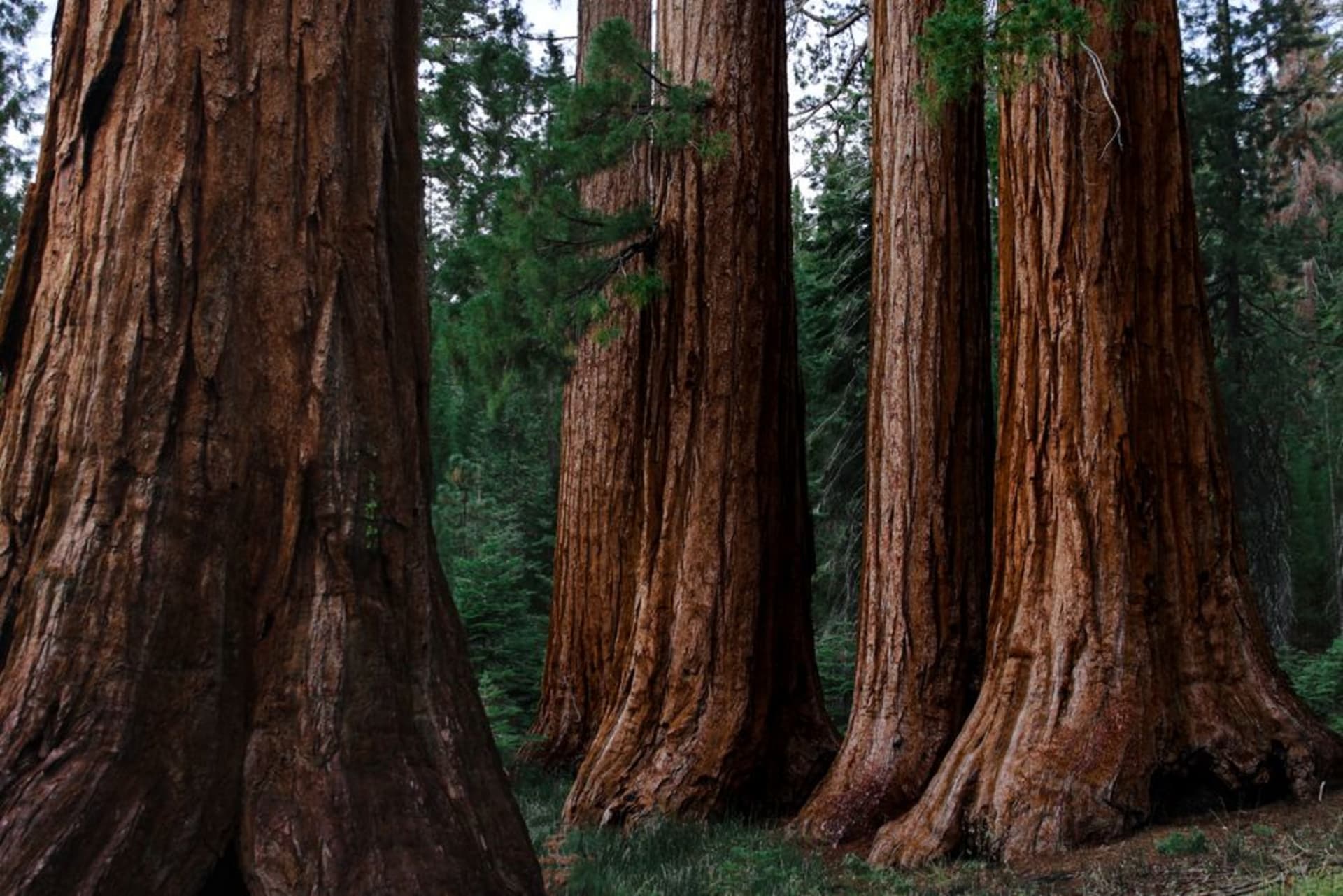
You think you understand how big a tree can be until you stand under a giant sequoia and feel your whole sense of scale quietly collapse. Beneath the high Sierra of California grow the largest living things on earth, and photographs prepare you for none of it.

I laughed when we walked into the Giant Forest. Not a polite laugh — a startled, involuntary one, the kind that comes out when your brain refuses to accept what your eyes are reporting. The trunks were simply too wide. Lia put her hand flat against the cinnamon-red bark of one and it looked like she was touching the side of a building. We had driven up the switchbacking road that morning from the hot brown foothills, ears popping, and stepped out into a cathedral of trees so old that some were already ancient when Rome was young. I am not a religious man but I lowered my voice without meaning to.
The General Sherman Tree
You go to see the General Sherman first because everyone does, and because it is, by volume, the largest single tree on the planet. There’s a paved path down to it, a little viewing area, a fence, and a modest sign — all of which feel almost comic next to the thing itself. It doesn’t taper the way trees are supposed to. It goes up and up and stays fat the whole way, a rust-red column disappearing into the canopy. Lia and I tried to take a photo that captured it and gave up; there is no angle. A ranger nearby told a family it weighs more than a fully loaded jumbo jet, and everyone went quiet doing the math. We stood there far longer than the tree needed us to.

Climbing Moro Rock
For a change of scale we climbed Moro Rock, a great granite dome with a stairway of some four hundred steps carved and bolted into its flank. It is not for anyone shaky about heights — the railing is all that stands between you and a very long drop — but the reward at the top is the whole Great Western Divide laid out in ragged blue-white ranks across the horizon. We caught our breath at the summit while a cold wind came up off the peaks and a raven rode it, showing off. Below us the green sea of the forest rolled away and you could just make out the crowns of the big sequoias poking above the rest. Lia gripped my sleeve on the way down. So did I, honestly.

Walking through Tunnel Log
There’s a fallen sequoia on the road with a hole cut through it big enough to drive a car through — Tunnel Log — and it is exactly the kind of gloriously silly thing you can’t resist. We didn’t drive through; we walked, and stood in the middle of the trunk looking up at the growth rings, thousands of them, a whole timeline of drought and fire and good years pressed into wood. What got me was the fire scars. These trees don’t just survive fire, they need it — the heat opens their cones. Lia said there was a lesson in that and I told her not to make it a metaphor, and then we both did anyway, quietly, walking back to the car through the ferns.

Getting There
Sequoia sits in California’s southern Sierra Nevada and is most easily reached by car from Visalia or Fresno, each roughly an hour to the entrance, with Fresno and the smaller Visalia airports being the nearest to fly into. The Generals Highway climbs steeply and twists hard, so take it slow and check that RVs and trailers are allowed on your stretch. The park pairs naturally with neighbouring Kings Canyon — they share a boundary and are managed together. Summer brings crowds and warm days in the Giant Forest; winter can close roads and require chains. There’s lodging at Wuksachi inside the park, or cheaper beds down in the foothill towns.
Keep exploring
More of California
Keep exploring
More from California
 united-states
Lone Pine
A single-street town on the floor of the Owens Valley, dwarfed by Mount Whitney — the highest peak in the Lower 48 — and fronted by the Alabama Hills, a jumble of golden boulders where half the Westerns you've ever seen were filmed. High desert light, granite, and old Hollywood ghosts.
Explore united-states
Bishop
The unofficial capital of the Eastern Sierra, a working town on the high desert floor with the tallest wall of mountains in the Lower 48 rising straight out of its backyard. Climbers, anglers, cattle ranchers and a legendary bakery, all under a sky that seems to go up forever.
Explore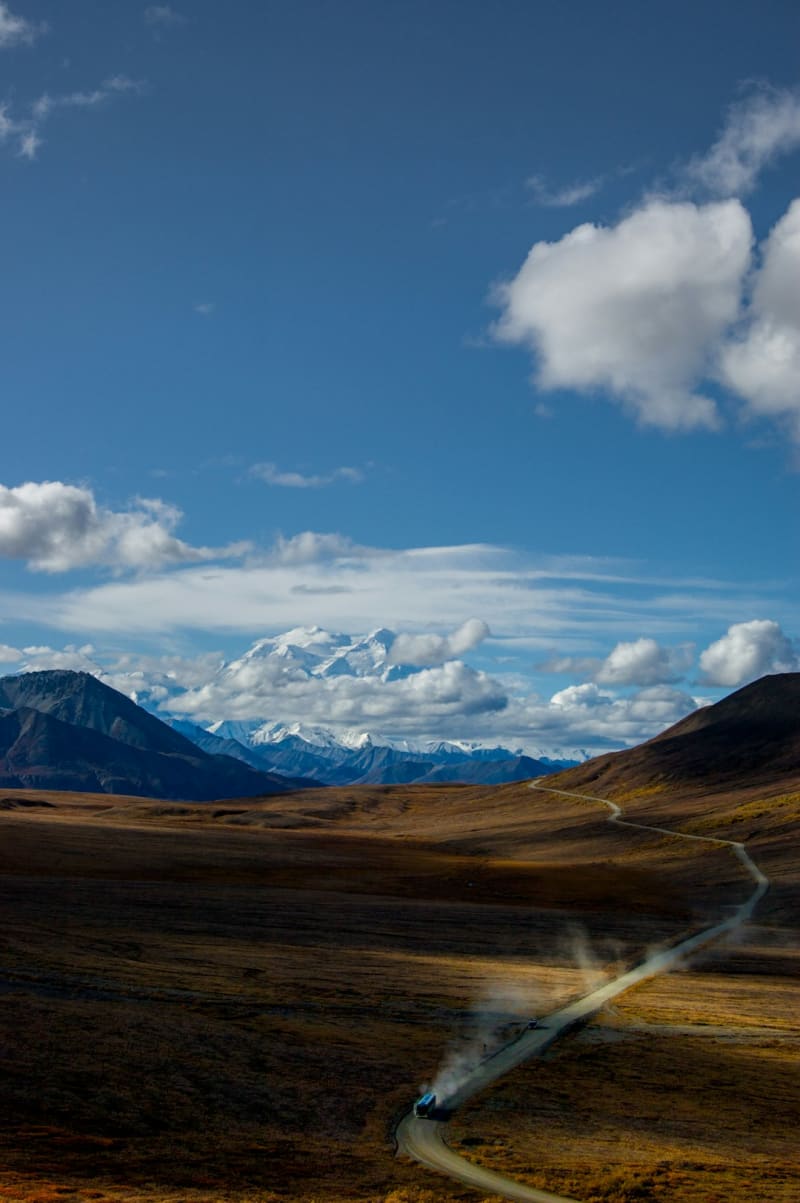 united-states
Mammoth Lakes
A high town on the eastern flank of the Sierra Nevada, where ski slopes give way to alpine lakes and steaming hot springs hidden in the sagebrush. Big sky, thin air, and a volcanic landscape that never fully cooled.
Explore united-states
Fresno
A working city in the heart of California's San Joaquin Valley, ringed by orchards and vineyards, and the natural gateway to three of the country's great national parks. It rarely makes the postcards, but the fruit here is the sweetest we found anywhere and the mountains are an hour away. Fresno is a doorway that happens to be a real place.
Explore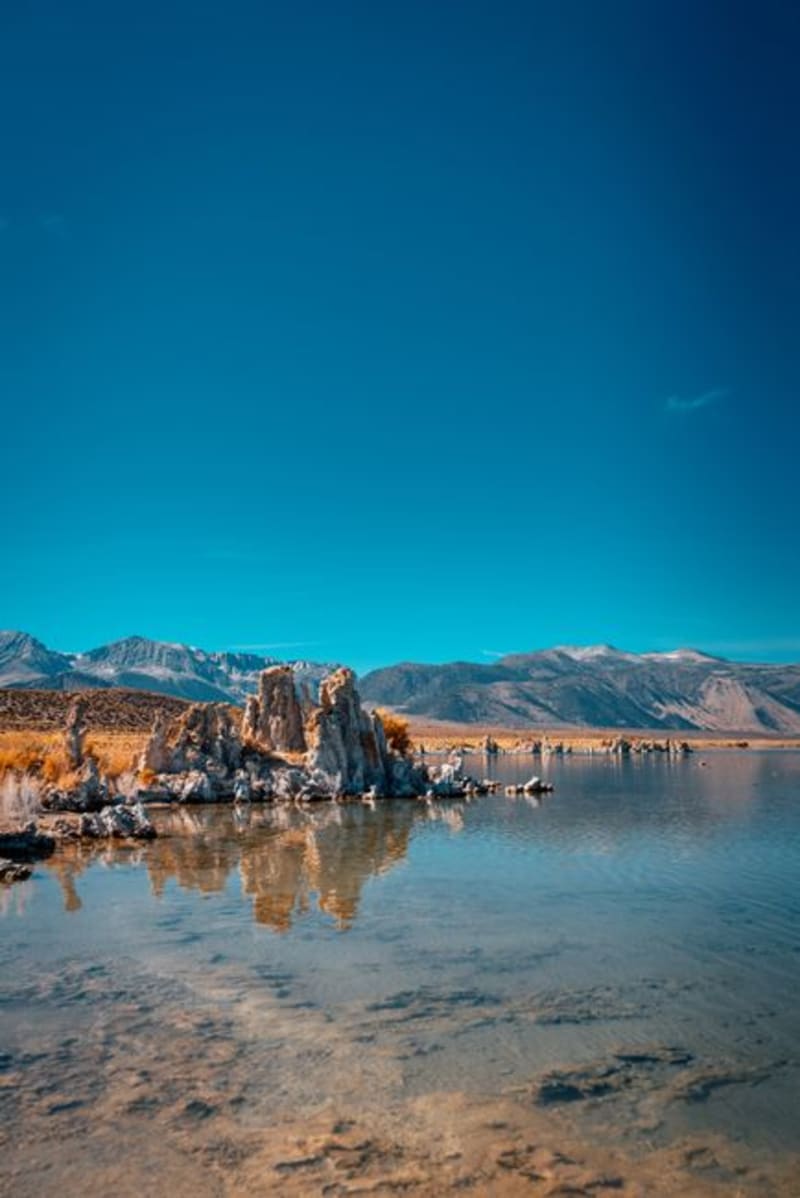 united-states
Mono Lake
An ancient, salt-heavy lake on the dry eastern flank of the Sierra Nevada, studded with eerie towers of limestone tufa that rise from the water like the ruins of a drowned city. Twice as salty as the sea and older than almost any lake in North America, it hums with brine flies and gulls and a strange, still beauty.
Explore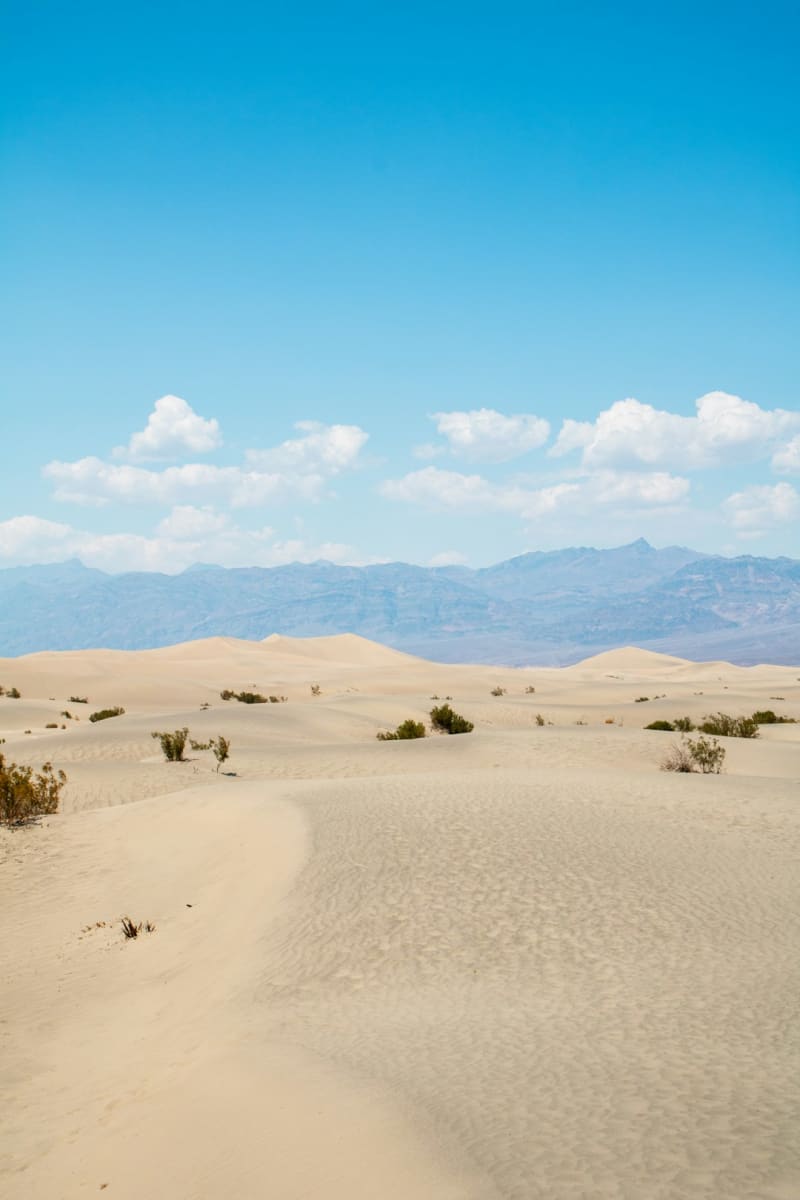 united-states
Death Valley
The hottest, lowest, driest place in North America sounds like a warning, and it is — but it's also one of the most beautiful landscapes we have ever driven into. Salt flats, sculpted dunes and hills painted in mineral colours, all under a sky that goes on forever.
Explore