Valnerina
"The Cascata delle Marmore is the most theatrical waterfall I've ever stood in front of, and I mean that without irony."
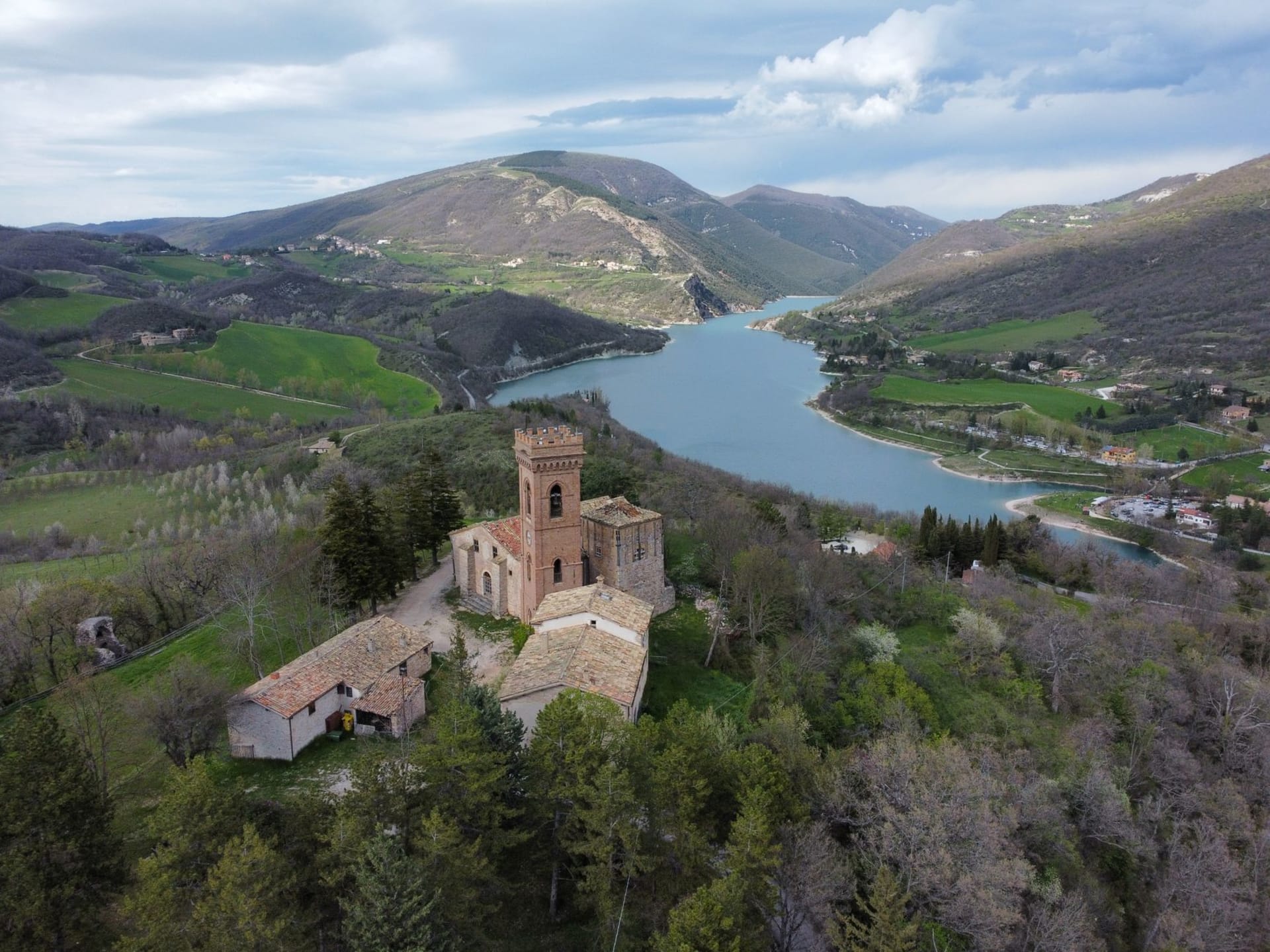
The Valnerina is Umbria’s other side. Where the western lowlands are soft and agricultural, the valley of the Nera river is gorge-cut and vertical, the stone grey rather than pink, the villages perched at heights that made strategic sense in the 12th century and now simply make parking complicated. The road follows the river through increasingly narrow limestone walls, passing abbeys and hilltowns that appear briefly and then are swallowed by the next curve. I drove it end to end one day and then spent three more days going back to things I’d only caught the edge of.
The Cascata delle Marmore
The waterfall is absurd. Three tiered drops totaling 165 meters, the water running white over limestone cliffs into the Nera below — except that the entire thing was engineered by the Romans in 271 BC to drain the swampy Rieti plain, and the flow is now controlled by a hydroelectric company that turns it on and off on a schedule published online. You check the website before you go, which is the most contemporary way to experience a waterfall. When it’s on, the spray reaches the viewing platforms and the sound is substantial enough to interrupt conversation. When it’s off, the cliff is damp and green and the absence is almost as impressive.
Abbazia di San Pietro in Valle
Fourteen kilometers up the valley from the waterfall, a Lombard abbey founded in the 8th century occupies a ledge above the river with the calm authority of a building that has had twelve centuries to settle into its surroundings. The frescoes inside are some of the earliest surviving Romanesque paintings in Italy — narrative scenes from the Old and New Testaments, painted with a directness that predates the Byzantine sophistication of later medieval work. The cloister is quiet in the way that only genuinely old places get quiet: not managed tranquility, but actual absence. I had it to myself on a Tuesday morning in late September.
The Truffle Villages
Scheggino and Vallo di Nera, small medieval villages up the gorge, have organized themselves around the black truffle trade that the surrounding oak forests support. The restaurants here are not polished for tourism — they are practical places where local people eat truffle because it grows nearby, at prices that reflect this. I ate truffled eggs, then truffled pasta, then a plate of grilled meats that arrived with a truffle sauce nobody mentioned was coming. It was October and the season was just opening; the truffle seller in the market square had that particular energy of someone who knows they have something you want.
Cascia and the Upper Valley
Above Norcia the valley narrows further and climbs toward the Sibillini. Cascia is a pilgrimage town built around the relics of Santa Rita — patroness of impossible causes — and the basilica is a 20th-century construction that sits oddly in the medieval streetscape. But the drive up to Cascia through the Corno valley is something else: meadows, beech forests, the mountains closing in from both sides. In autumn the beeches go gold and the combination with the grey limestone walls is so picturesque it seems deliberate. No one told the beeches, but there it is.
When to go: September and October for truffle season and the best light in the gorge. The Cascata delle Marmore runs at full power on summer weekends and holiday periods — check the schedule at marmorewaterfalls.it. April and May are excellent: the river is high from snowmelt and the valley floor is vivid green. Avoid peak August on the waterfall road, where the single-lane sections create traffic that the Romans, who designed the drainage, did not anticipate.