Montefalco
"They call it the balcony of Umbria. After the third glass of Sagrantino, I'd have called it almost anything."
We came to Montefalco for the wine and stayed for the view, which is the opposite of how I’d planned it. I’m usually suspicious of towns that sell themselves on a single product — it tends to mean the product is mediocre and the marketing is good. But Montefalco earns its reputation twice over, once on the plate and once from the ramparts, and by the end of our two days there I’d stopped taking notes and just started enjoying myself, which is the highest compliment I give a place.
The Balcony and the Church
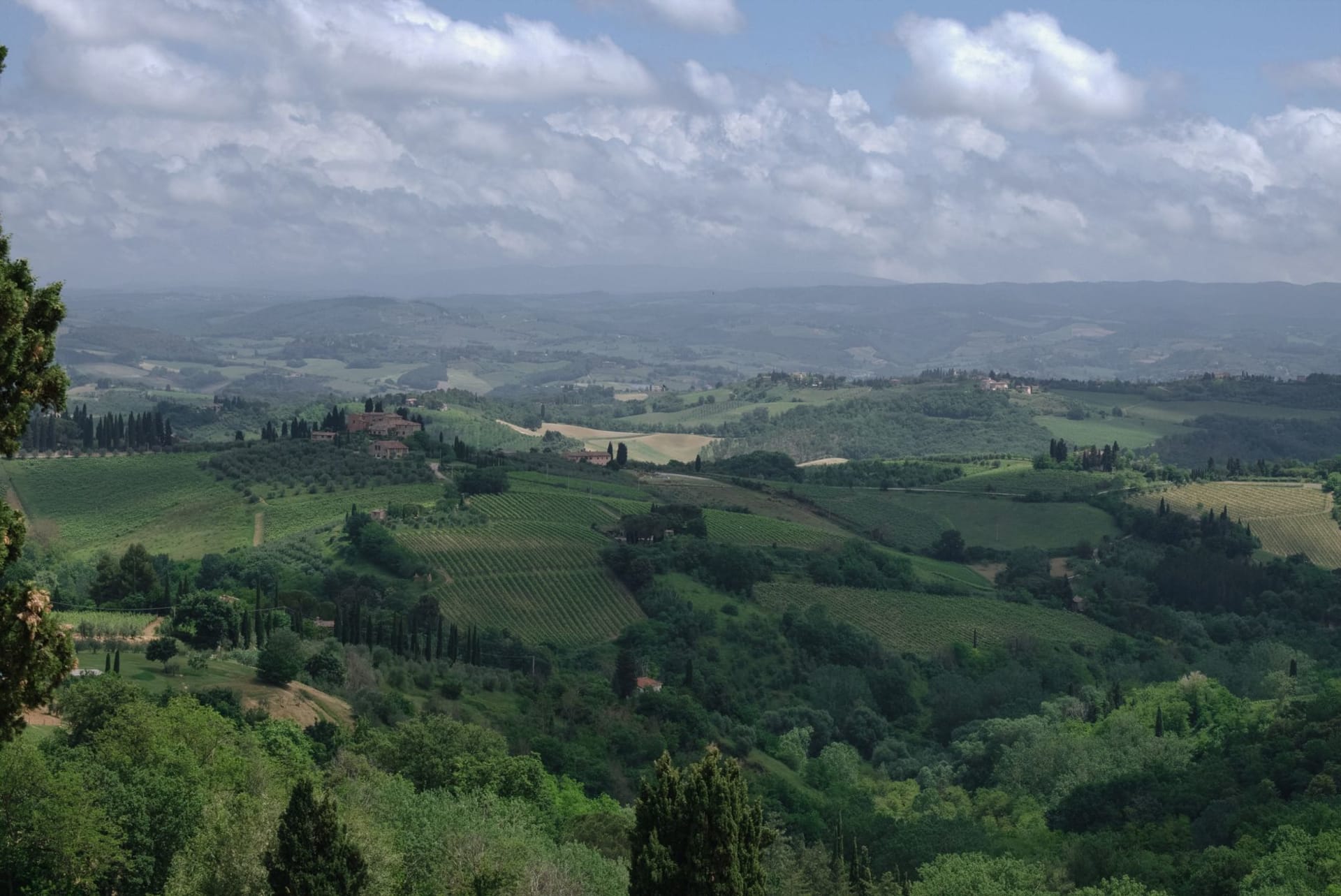
They call Montefalco the ringhiera dell’Umbria, the balcony of Umbria, and from the edge of town you understand why: the land falls away in every direction into a patchwork of vineyards, olive groves, and distant hill towns — Assisi, Perugia, Spello — floating on their own ridges like ships. I stood up there at sunset with Lia, both of us silent, watching the whole region go amber.
But the real surprise was indoors. The former church of San Francesco, now a small museum, holds a cycle of frescoes by Benozzo Gozzoli depicting the life of Saint Francis, painted in the 1450s. I am not a person who weeps at frescoes. I came close. The colors are impossibly fresh, the faces specific and human, and the room was nearly empty — no queues, no glass, no crowds shuffling past with audio guides. Just me, Lia, and five centuries of paint.

Sagrantino, the Wine That Doesn’t Apologize
Now, the wine. Sagrantino di Montefalco is one of the most tannic red wines in the world — a grape so concentrated and structured that it was historically used for sweet passito versions because the dry one was nearly undrinkable young. Modern winemakers have tamed it just enough. We visited a small family cantina on the slope below town where the owner, a wiry man named Marco who clearly thought tasting notes were a foreign affectation, poured us a 2016 dry Sagrantino and watched our faces with frank interest.
It was enormous — dark, dusty, tannic enough to dry your tongue to the roof of your mouth, and somehow gorgeous. Lia, who usually prefers something lighter, asked for a second pour, which never happens. We bought three bottles we’ll have to carry carefully and probably can’t get home, and Marco threw in a bottle of his olive oil because, he said, we had asked good questions. I’m fairly sure we hadn’t.

The Quiet Around It
What I liked most about Montefalco is what it lacks. There’s no must-see checklist beyond the frescoes, no tour-bus circuit, no sense that you’re being processed. We ate slow lunches under umbrellas on the central piazza, wandered the walls twice, and let entire afternoons evaporate. Umbria gets called the green heart of Italy, usually by people selling something, but in Montefalco the cliché holds up. It’s quieter than Tuscany, less polished, and all the better for it.
When to go: September and October, during and just after the grape harvest, are the most rewarding — the vineyards turn gold and the cantinas are lively. May and June are gorgeous and green with fewer visitors. Avoid the deep heat of August, when the hilltop offers little shade and the wine, frankly, deserves a cooler evening.