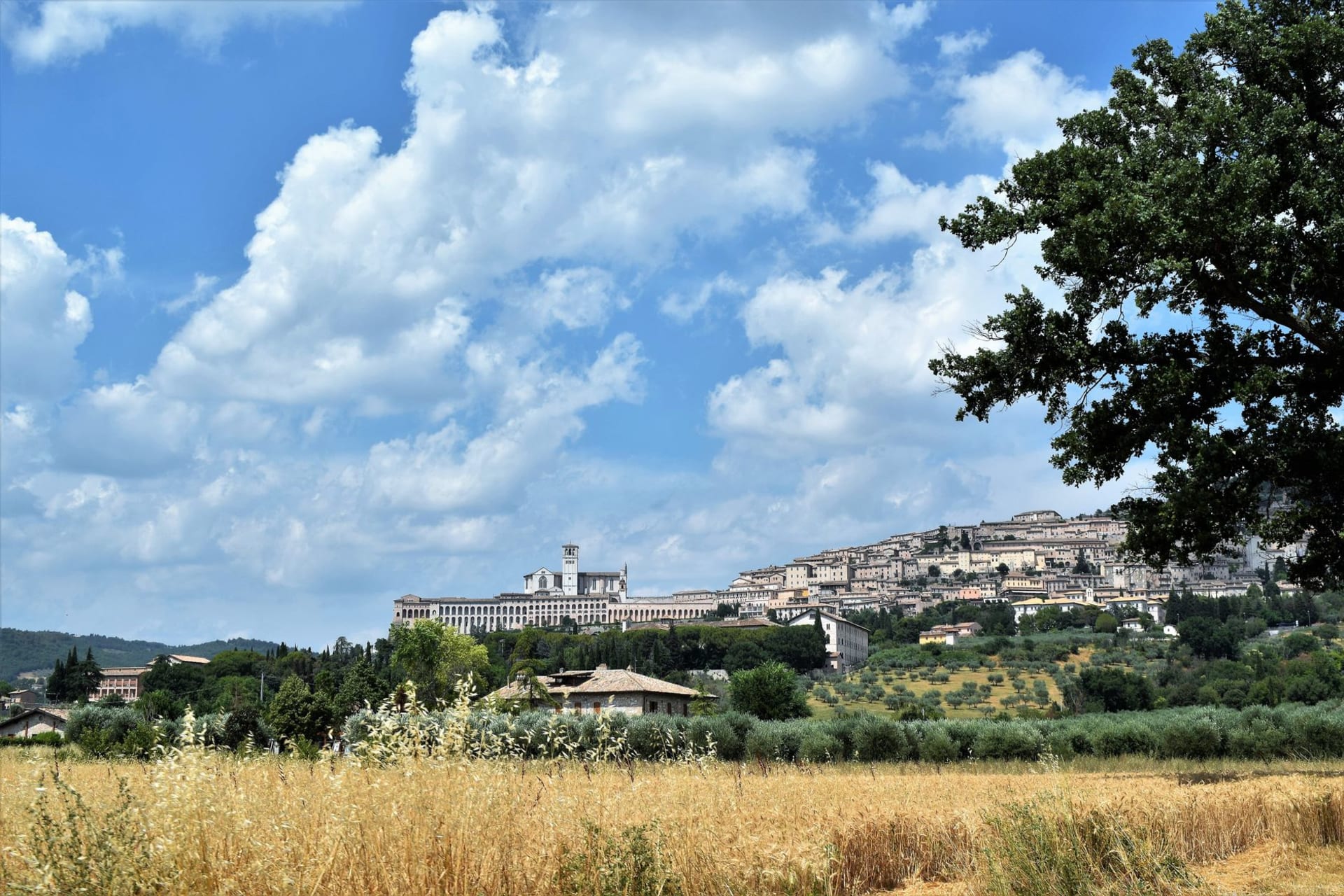
Assisi
"I went expecting crowds and clichés. I left having stood in front of a Giotto fresco so alive it made me question what painting is for."
I’ll be honest: I almost didn’t go. The word “pilgrimage site” usually means gift shops, tour buses with engines running, and a kind of spiritual theater that exhausts me. But Assisi earns its reputation in a way that bypassed my cynicism entirely. The town itself is the first argument — pink Subasio stone, tight medieval lanes, views down into the green Valle Umbra that make you stop walking just to look.
The Basilica That Changed Painting
The Basilica di San Francesco is the point of the visit and also — inconveniently for anyone who wants to be unmoved — genuinely extraordinary. The lower church is dim and Byzantine, heavy with incense and candlelight. The upper church is where Giotto’s fresco cycle lives, and it’s one of those rooms where the art history you half-remember from school suddenly becomes legible. These are the images that dragged European painting toward psychological realism. You can see it happening in real time, on the wall, in a building that itself dates to 1230. I stood in there for forty minutes while guided tour groups swept through around me.
The Town Beyond the Basilica
What I didn’t expect was how much Assisi works as a town separate from its saint. The Piazza del Comune sits over a Roman forum and anchors the old city with the kind of purposeful gravity that medieval planners understood better than we do. The Temple of Minerva — perfectly preserved Roman columns stuck to the front of a later church — is one of those architectural jokes that Italy tells with a straight face. I had lunch at a place off the main square serving strangozzi pasta with black truffle so fragrant I could smell it before the bowl arrived.
Early Morning and the Hermitage
The trick with Assisi is timing. The tour buses arrive mid-morning and leave by late afternoon. Go earlier, or stay later. Better yet, walk up to the Eremo delle Carceri — the hermitage carved into the mountainside above town where Francis retreated to pray — in the hour before it opens. The forest up there is beech and oak, completely silent, and the views back down to the town with the valley behind it are the kind of thing that explains why someone might choose to stay forever.
Sleeping in Town
I stayed one night, which I’d recommend over the day-trip approach. After the last buses leave, the stone lanes go quiet in a way that feels earned. The restaurants that had been full at noon are occupied by locals at eight. I ate at a small place near the Porta Nuova — cinghiale ragu, Sagrantino wine so dark it was almost black — and walked back through streets lit by wall-mounted lamps that have been doing the same job since the medieval city was new.
When to go: April and May, before school groups arrive in force. October for the Calendimaggio procession and autumn light on the stone. Avoid Easter weekend unless you want the full pilgrimage experience, which is genuinely moving but also genuinely overwhelming. December is unexpectedly quiet and cold, with the town lit for Christmas.