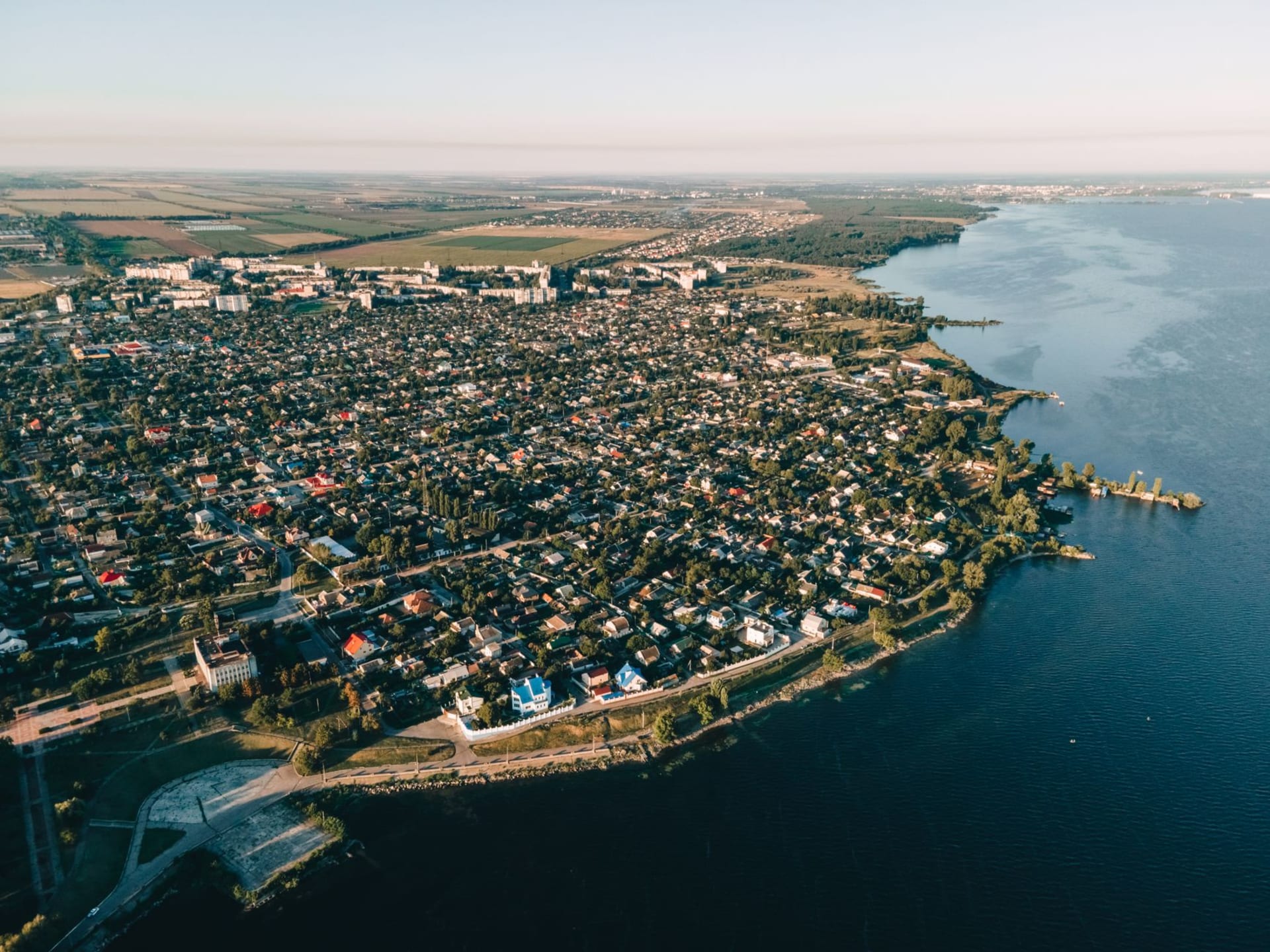
Odesa
"Odesa smells like salt and ambition and something you can't quite name but definitely want more of."
Every port city develops its own character in proportion to how many different people have passed through it, and Odesa — founded by Catherine the Great and built by a Greek-Italian-French-Jewish cosmopolitan melting pot — has character in surplus. The city faces south, toward the sea and toward the world, and something of that orientation survives in the way people carry themselves here: there’s a lightness and a slightly theatrical self-confidence that you don’t find inland.
The Potemkin Stairs and the Harbor
The Potemkin Stairs are one of those civic gestures so confident in their own grandeur that they actually earn it. One hundred and ninety-two steps descending from the city to the sea — designed with a forced perspective that makes them appear longer from the bottom — they were built in the 1840s and are best appreciated at the extreme hours. I came down them at six in the morning with the harbor cranes visible through the mist and the Black Sea flat as pewter behind them. The Eisenstein film gives these steps their darkest association, but standing on them in silence, with nothing dramatic occurring, is its own reward.
The Moldavanka District
The real Odesa is not the grand Primorsky Boulevard with its acacia trees and neo-classical facades — though those are genuinely beautiful — but the Moldavanka, the old Jewish quarter southwest of the center. Isaac Babel set his Odessa Stories here, among the gangsters and courtyard houses and market noise, and enough physical fabric survives to make the stories feel spatiotemporally close. The courtyards (known locally as dvoriki) are social organisms: communal laundry, stacked balconies, cats on every surface, a family argument audible three floors up. I walked slowly through a few of them and felt the familiar discomfort of the tourist in the domestic space, which is usually a sign you’re somewhere real.
The Opera House and the French Architecture
Odesa’s opera house is arguably the most beautiful building in Ukraine: a late-19th century neo-Baroque jewel in cream and gold that looks like it was assembled from the best parts of Vienna, Paris, and Lviv. The exterior is impressive enough; the interior, if you can catch a performance or a daytime tour, is staggering. The broader Primorsky Boulevard area is a long walk of French-influenced architecture that gives the city its nickname as the “Pearl of the Black Sea,” a phrase that should be retired but describes something true.
The Derybasivska and Evening Culture
The main pedestrian street, Derybasivska, is tourist-facing but not unpleasant — the Odesans who gather there seem genuinely fond of the street, not resigned to it. Evenings here are social in a Mediterranean way, with a slowness and a willingness to loiter that doesn’t feel performative. I sat at a table outside long after finishing my glass, listening to the particular mix of Ukrainian and Russian that still characterizes Odesa’s daily speech, and felt pleasantly surplus to requirements.
When to go: June through August is beach season along the city’s sandy coastline and resorts to the south; the city fills and prices rise but the energy is undeniable. May and September offer warm weather and fewer crowds. The famous Odesa Film Festival in mid-July draws a creative crowd from across the region. Check travel advisories carefully — Odesa’s Black Sea position has made it particularly sensitive in recent years.