Chernivtsi
"Chernivtsi is what happens when empire overbuilds and then leaves — and the result is magnificent."
I wasn’t sure what to expect from Chernivtsi. It appears on most Ukraine itineraries as a footnote, if at all — a city in the far southwest that’s hard to reach and easy to skip. Getting there from Lviv takes five hours by train through increasingly rural landscape, and the payoff, when the train pulls into a station that could pass for a small Austrian city, feels disproportionate to the effort. This is one of those places that exists in near-total obscurity outside specialist circles and is, as a result, entirely itself.
The University That Broke Every Rule
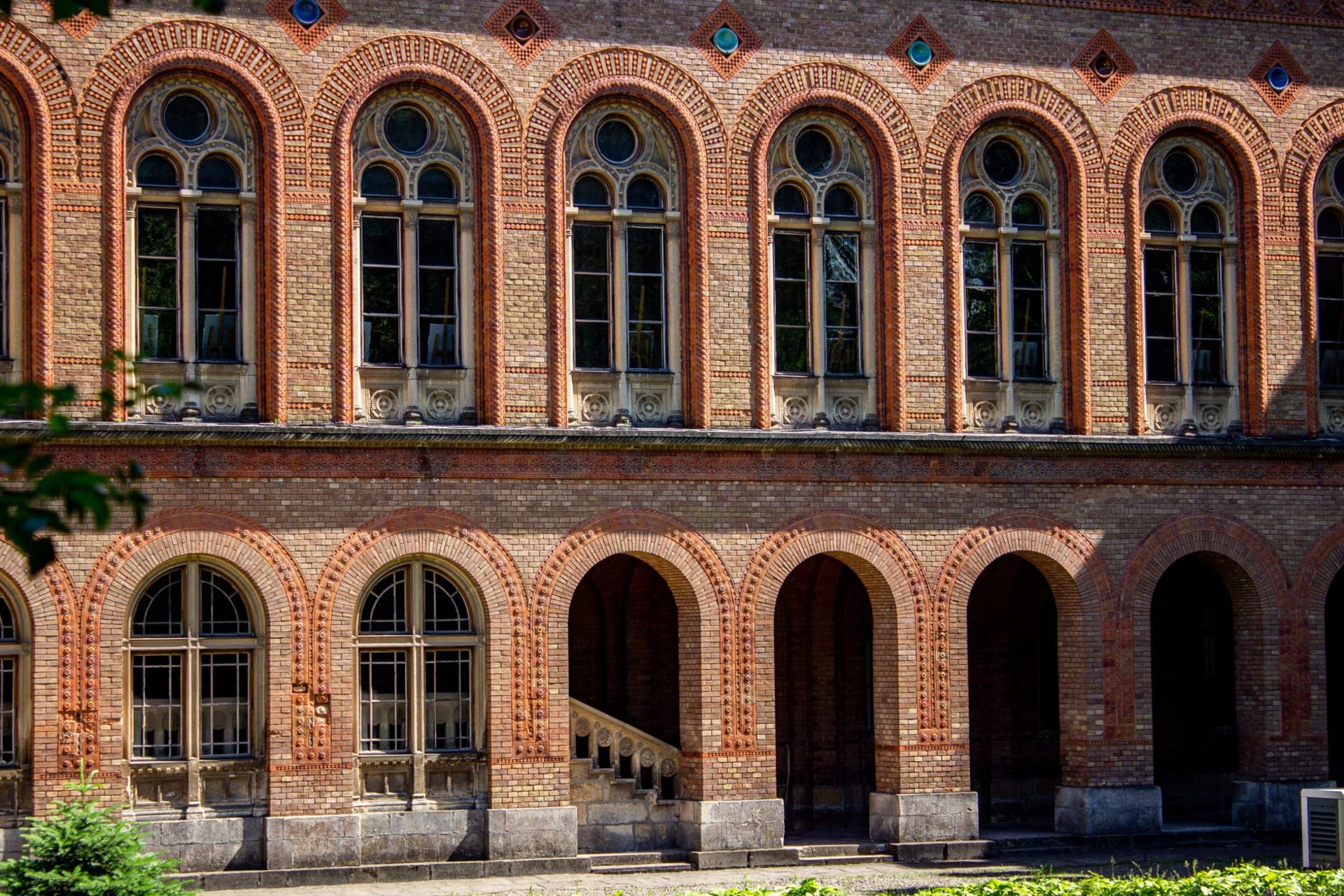
The Residence of Bukovinian and Dalmatian Metropolitans — now Chernivtsi National University — is one of the strangest and most beautiful pieces of architecture I’ve encountered anywhere. Czech architect Josef Hlávka designed it in the 1860s for the Habsburg Empire, and he apparently felt no obligation to commit to a single style: Byzantine striped arches, Moorish tilework, Gothic silhouettes, Romanesque detailing, all combined in a building that should be a disaster and is instead extraordinary. The courtyard contains a seminary church with a tiled facade so intricate it takes a full minute of close examination to begin to understand it. The campus is functioning and generally accessible; students cross the same grounds under the same improbable towers every morning.
The Central Market and the Old Town
Chernivtsi’s old town is compact and substantially intact: streets of neo-Baroque and Secessionist buildings from the late 19th century, a covered market that sells everything from raw wool to tinned fish, and a central square with a town hall that strikes the confident pose of a city that once considered itself a miniature Vienna. The market particularly rewards early mornings, when the stalls of mushrooms and dried fruits and local cheeses are freshest and the light comes sideways through the high windows. I bought a jar of forest honey from a woman who spoke at me at length in Romanian and seemed entirely satisfied with my nodding.
The Cultural Palimpsest
What makes Chernivtsi singular is the overlay of cultures. This was the capital of the Austrian crownland of Bukovina, a region that produced a Jewish intellectual tradition of unusual density — Paul Celan was born here; so was Rose Ausländer. The city’s German-speaking Jewish community was largely annihilated in the Holocaust, and their absence is still present in the architecture they left behind and the synagogues that survive in various states. Walking the streets with any historical awareness creates that vertiginous feeling of cities that have lived too many lives in a short time.
The Chernivtsi Pace
There’s a quality of life here that I associate with cities that have been geographically sidelined from major development pressures. Things are still proportional: the streets are walkable, the buildings are human-scaled, the cafés serve cake with the seriousness of a professional obligation. Lia and I spent a full afternoon in a konditorei on the main pedestrian street eating too much Sachertorte and reading, and the afternoon felt entirely justified by the surroundings.
When to go: May and June are ideal — the gardens are in bloom and the spring light is exceptional on the Secessionist facades. September sees the city at harvest season with the surrounding Bukovina countryside at its most vivid. Winter is cold and quiet and has its own enclosed beauty. The city sees relatively few foreign visitors year-round, which is both the challenge and the point.