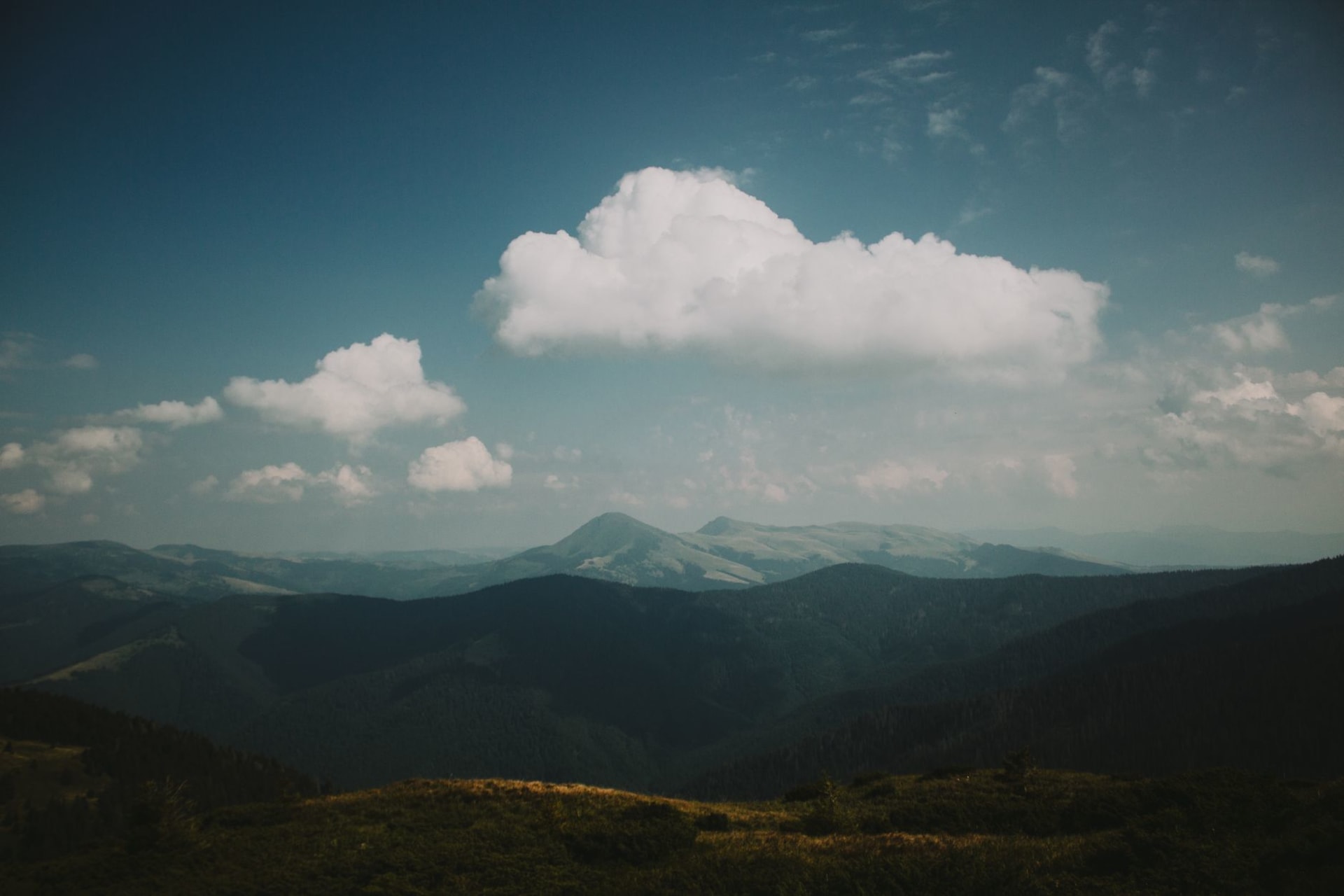
Ukrainian Carpathians
"The Carpathians aren't dramatic in the Alps sense — they're deep, and that's different."
The Ukrainian Carpathians don’t compete with the Alps and they don’t try to. No glaciers, no vertical walls of rock, no altitude that empties the lungs. What they offer instead is continuity: ridge after ridge of mixed forest, beech and fir and hornbeam, descending to valleys where highland villages have been doing essentially the same things for a very long time. The Hutsul people — the highland pastoralists who’ve inhabited these mountains for centuries — have developed a material culture dense enough that ethnographers still spend careers in it: embroidered textiles, carved wood, painted Easter eggs (pysanky) of extraordinary geometric complexity.
Yaremche and the Prut Valley
The usual entry point is Yaremche, a resort town in the Prut River valley that fills with Ukrainian tourists in summer and skiers in winter and is slightly more charming than resort towns usually are. The wooden market below the bridge over the Prut sells Hutsul handicrafts of variable quality and occasional genuine excellence — I spent an hour there once sorting through embroidered blouses and found two that were clearly made by someone who knew exactly what they were doing. The waterfall above town (Probiy Falls) is small but the walk to it through the beech forest is the point, not the destination.
Hoverla and the Higher Ridges
Hoverla is the highest peak in Ukraine at 2,061 meters, and on weekends in summer it’s a traffic jam of hikers — accessible enough to attract everyone from experienced trekkers to people in jeans who saw it on Instagram. The summit views, when the cloud clears, stretch over an ocean of forested ridges that goes to the horizon in every direction. The climb itself is straightforward and takes four to five hours return; the interest is in the ridge walk north toward Petros and the way the landscape opens above the treeline. I went on a weekday in September when I had the upper ridge largely to myself and the light was doing something extraordinary with the grass.
Verkhovyna and the Village Interior
The real Carpathian experience is in the villages of the highland basin around Verkhovyna, deeper into the mountains and less visited. Wooden churches with shingled onion domes sit at the centers of settlements that feel architecturally and culturally coherent in a way that development pressure usually dissolves. The interiors of these tserkvy are painted and carved with a folk precision that doesn’t need iconographic training to appreciate — it communicates directly, color and pattern doing the theological work. Several villages have guesthouses run by local families where the food is hearty and the silence at night is absolute.
The Sound of the Mountains
There’s a particular quiet in these mountains that I’ve thought about since leaving. Not silence exactly — there are always birds and the sound of water — but a density of landscape that muffles the frequency range that modern life generates. Sitting on a ridge above Burkut at seven in the morning with a thermos of strong tea, listening to nothing in particular, I felt the specific de-pressurization that only certain remote places produce. The Carpathians do this efficiently and without fanfare.
When to go: June through September is peak hiking season; the wildflower meadows are at their best in late June and early July. October brings spectacular autumn color — the beech forests turn a deep amber that runs for days across the ridges. For skiing, January and February around Bukovel are reliable. Avoid the mud-season shoulder months of late November and March.