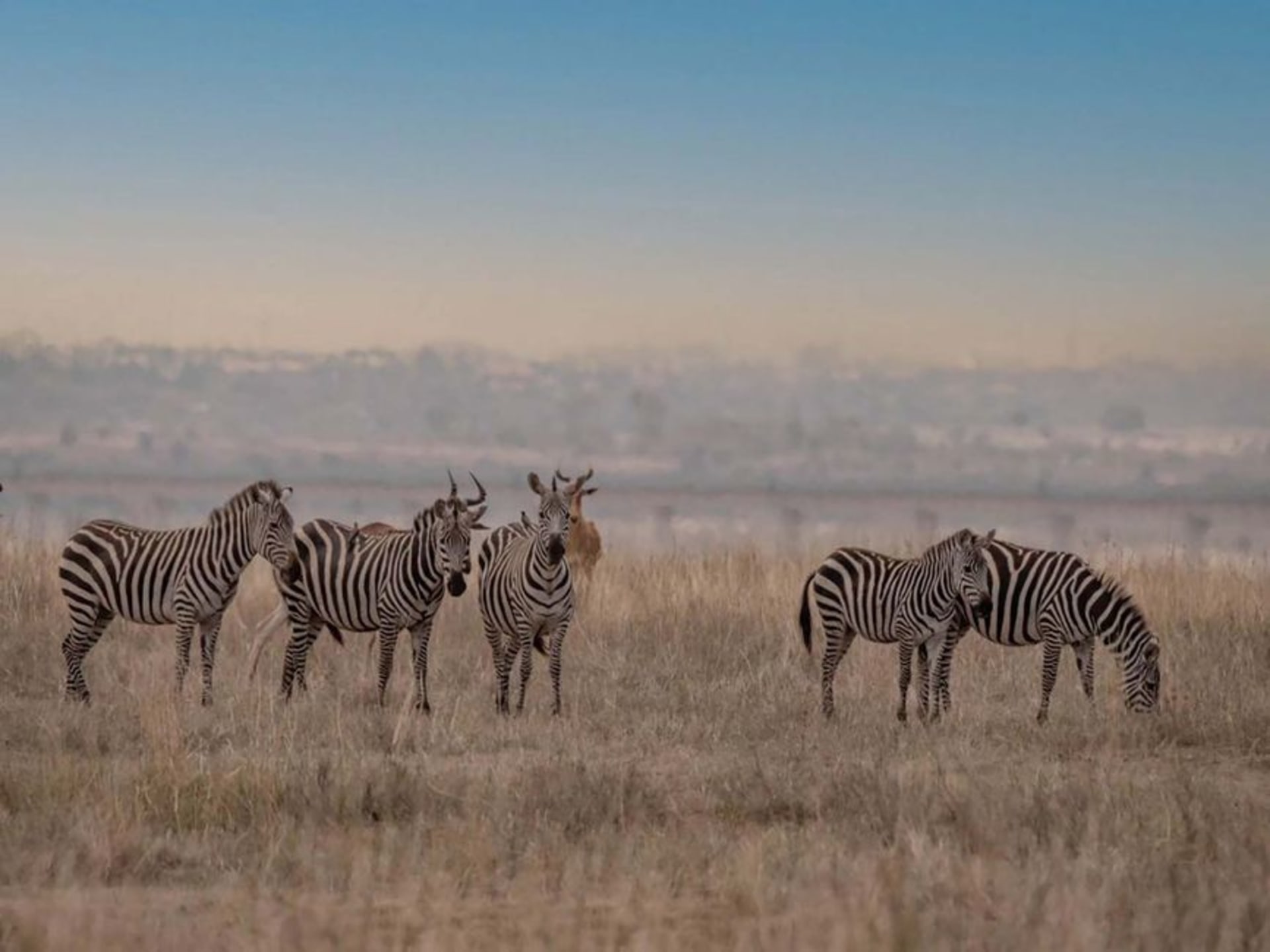
Lake Mburo National Park
"The one park in Uganda where nothing is trying to eat you, so you can finally get out of the car."
Uganda's smallest savannah park, where zebra graze beside the trail and you walk, ride, and drift by boat instead of just driving through.
We drove down from Kampala on a red dirt road that got narrower and quieter with every kilometer, and by the time we crossed into Lake Mburo National Park, Lia had her feet up on the dashboard and I’d stopped checking my phone. At about 370 square kilometers, it’s the smallest of Uganda’s savannah parks, tucked between Masaka and Mbarara in the southwest, and you feel that scale immediately — it’s intimate in a way Murchison Falls or Queen Elizabeth never quite are. Our guide, a soft-spoken man named Robert who’d grown up near Mbarara, told us the town’s name is said to come from the impala that once wandered its outskirts, and that Mburo is now the only place left in Uganda where you can reliably see them. That detail stuck with me more than I expected — an entire species tied to a single patch of ground.
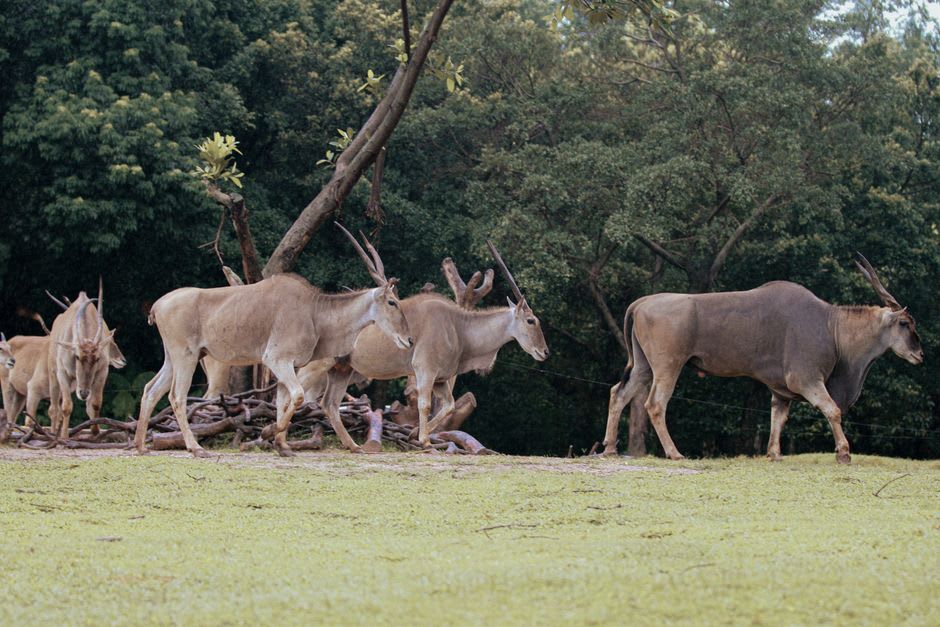
What sold me on Mburo, though, was that it has no lions and barely any predators, which meant we could actually get out and walk. We did a guided walking safari at dawn, boots crunching through wet grass, and came around a thicket to find a small herd of eland watching us with total indifference. No vehicle between us, no glass, just Robert’s quiet hand signals and the sound of our own breathing. Lia grabbed my arm when a warthog family trotted past closer than either of us expected, tails straight up like little antennas.
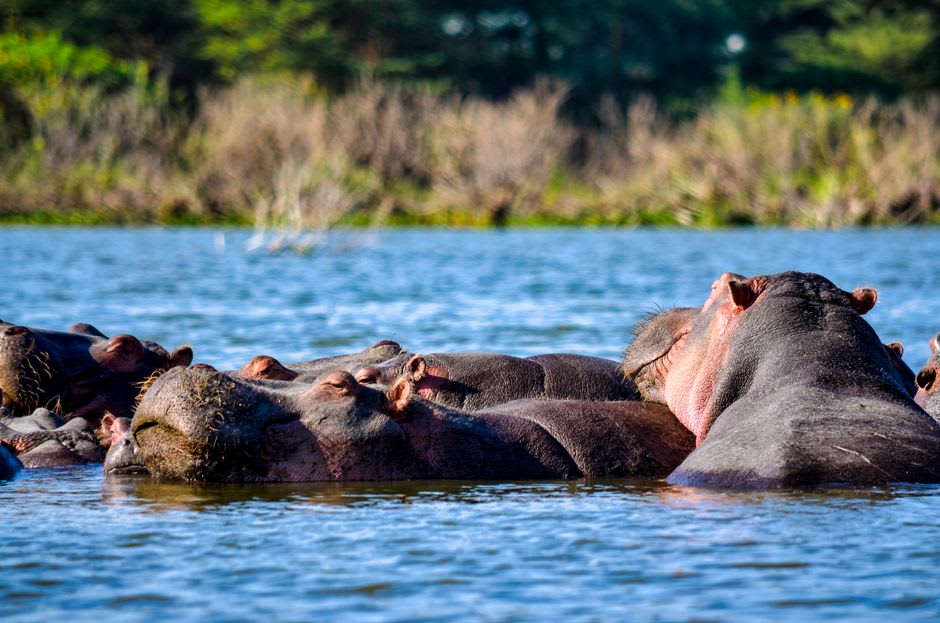
The lake itself is the heart of the park — one of five connected by swamp, though Mburo is the one everyone comes for. We took a boat out in the late afternoon, and within ten minutes we’d counted a dozen hippos, ears twitching above the waterline, and a fish eagle that dropped out of a dead tree and snatched something from the surface so fast I only caught it on the second take of my photo. Our boatman cut the engine near a crocodile sunning itself on a mud bank, and we just sat there rocking gently, nobody saying much. That evening we also went out on horseback — something I hadn’t done since I was a kid in France — riding right up alongside a group of grazing zebra who barely lifted their heads.
We stayed two nights in a simple tented camp on a ridge overlooking the lake, and I remember waking up the second morning to a buffalo grazing about thirty meters from our tent, completely unbothered by us. It’s a small park, and maybe that’s exactly the point — you’re not covering vast distances chasing sightings, you’re just present in a landscape that’s still going about its business around you.
When to go: We visited in the dry season, and I’d recommend either window — June to August or December to February — since the walking safaris and horseback rides really depend on firm, dry trails and wildlife that’s easier to spot when the grass is low.