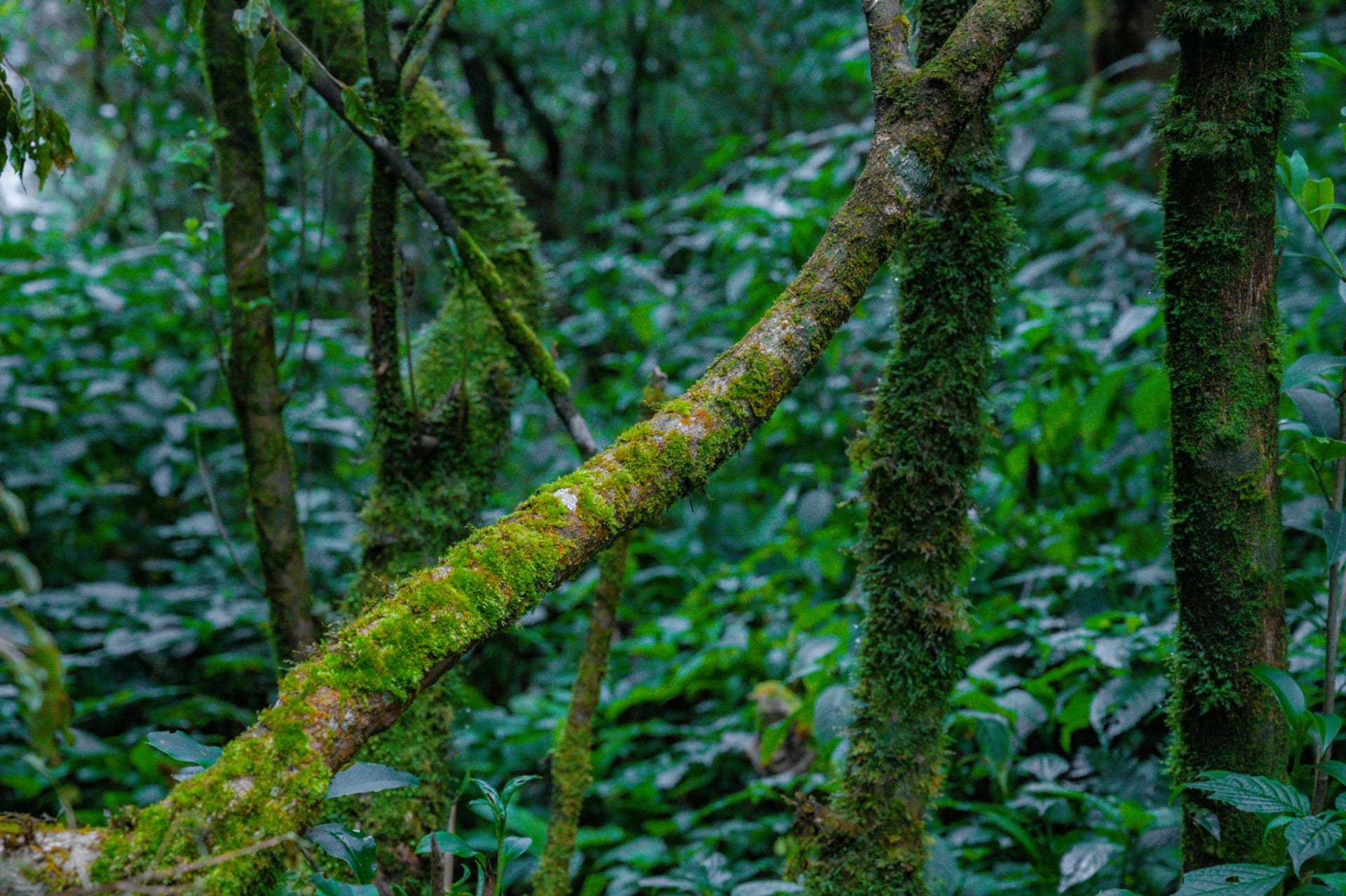
Bwindi Impenetrable Forest
"Nothing I read prepared me for how quietly they moved through a world that clearly belonged to them."
The permit costs $800. The trek can take seven hours through vertical mud. Rangers will tell you the hour-limit with the gorillas is firm, and they mean it. None of that felt like a complaint afterward, standing in a small clearing while a silverback named Rwigi sat six meters away and simply watched us back.
Getting to the Forest
Bwindi sits in the extreme southwest of Uganda, close to the Congo border and sharing a ridge line with Rwanda’s Virunga mountains. The approach from Kampala is long — nine or ten hours by road, longer if you stop at Queen Elizabeth — and the landscape spends the final two hours turning steeper and greener until the road becomes more concept than surface. Flying into Kihihi airstrip cuts the overland to under an hour. I took the road. Lia made a reasonable argument for the plane, which I overruled, and then we didn’t speak much for a few hours of corrugated red dirt.
The village of Buhoma at the park’s northern edge is small, functional, ecotourist-oriented in the best and most honest sense. The mist comes down by four in the afternoon and doesn’t fully leave until mid-morning. Everything smells of woodsmoke and wet earth.
The Trek Itself
The guides read the forest with a kind of practiced patience I found humbling. They know where the habituated groups slept the previous night and track from there, but gorillas move, and the terrain is the word “impenetrable” made literal. I grabbed at roots and branches, slid backward on slopes, ducked under things that scratched regardless. The rangers move through it like they’re walking to the kitchen.
When the vegetation thinned into a small break and the guide ahead stopped and held up one hand, I nearly collided with him. The group — seven individuals including two juveniles and Rwigi — was just there, doing very little, which turned out to be the most riveting thing I had watched in years.
An Hour with Rwigi
The juveniles played. An adult female peeled a stem and ate it with the focused attention of someone reading important correspondence. Rwigi shifted his weight once, glanced at our group with what I can only call measured tolerance, then looked away. One of the juveniles climbed a small tree, fell out of it, and climbed it again immediately with the same result.
The hour expired while I was trying to memorize the texture of all of it — the particular green-black of the forest floor, the sound of knuckles on wet root, the smell of something warm and animal mixed with crushed leaves. The guide tapped my elbow gently.
Practical Notes
There are four gorilla-tracking sectors in Bwindi — Buhoma, Ruhija, Rushaga, and Nkuringo. Each offers different trek difficulty and different group dynamics. Rushaga has the most habituated groups and suits people with limited mobility. Nkuringo has the most dramatic landscape but the most demanding approach. Booking the permit months in advance is not optional during peak season; the Uganda Wildlife Authority limits daily trekkers per group to eight.
When to go: The dry seasons — June through August and December through February — make the trekking trails marginally less treacherous and the trails more passable. That said, Bwindi receives rain year-round, so “dry” is relative. Shoulder months like May and October offer fewer visitors and only slightly worse mud. Avoid the long rains of April if you can.