La Mer
"A stretch of Jumeirah beach where the murals are louder than the waves, and I mean that as a compliment."
A Jumeirah beachfront strip where street art murals face the Gulf directly, sand between your toes just steps from a skate park and a taco stand.
La Mer surprised me the first time because it didn’t try to be anything other than a beach with good graffiti. Dubai’s coastline is usually curated within an inch of its life — private clubs, hotel beach clubs charging entry fees that would cover a week of tacos back home in Mexico — so a public, walkable stretch of sand in Jumeirah with skateboarders doing kickflips off a concrete bowl and murals covering entire building facades felt almost rebellious by comparison.
I went at golden hour on a Friday, which in the UAE is the start of the weekend, and the place had the loose, unbothered energy of a beach town rather than a five-star resort. Families had staked out patches of sand with folding chairs. A group of teenagers filmed each other on the skate ramp. Somewhere a food truck was doing brisk business in fish tacos, and I bought one mostly to see if it would be any good — it was, sharp with lime and a chili crema that had no business being that balanced coming out of a shipping-container kitchen.
Murals against the Gulf
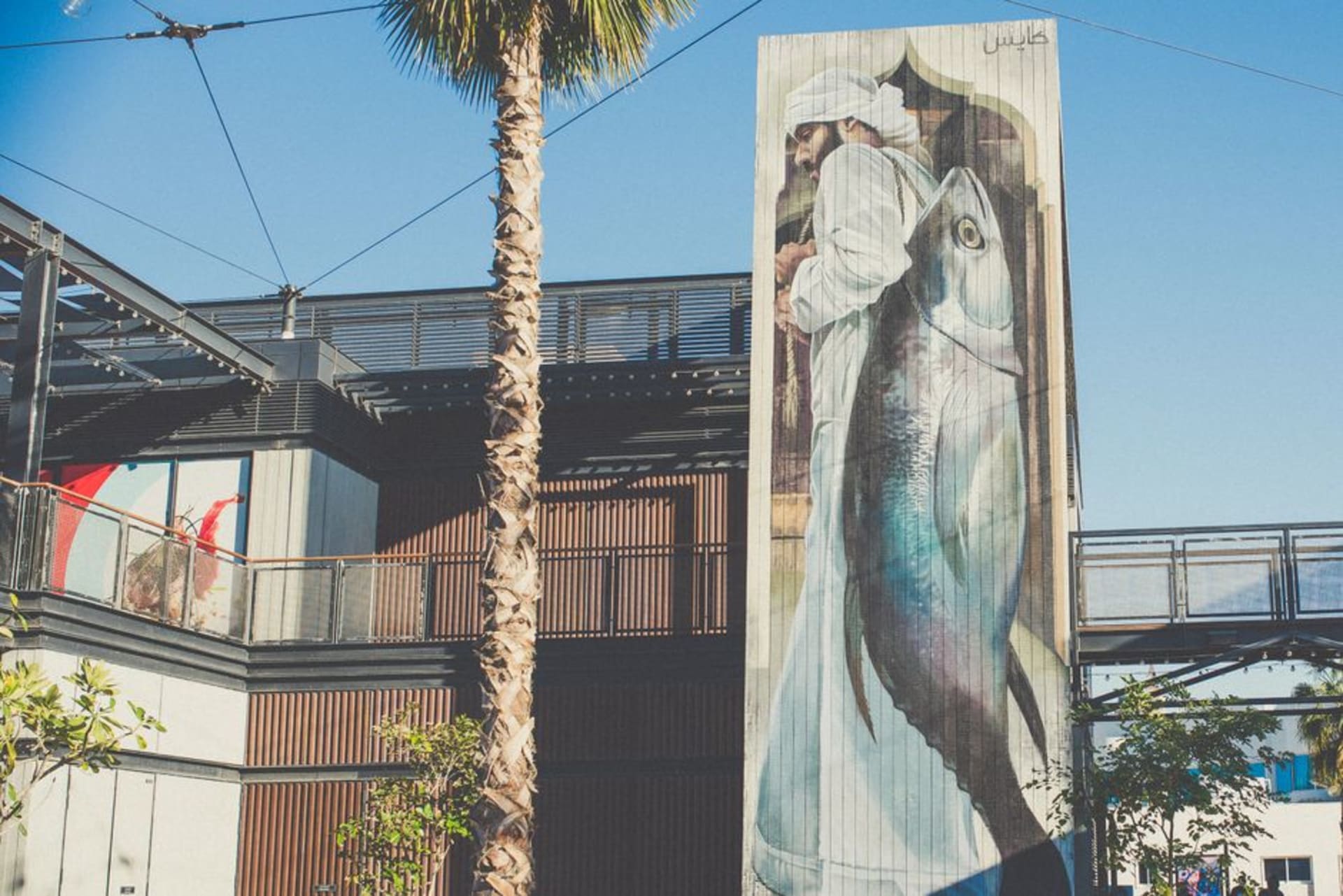
The street art is what gives La Mer its identity, and it’s not the sanitized corporate-mural style you sometimes see slapped onto developments trying to look “creative.” Local and regional artists have covered entire building faces here — a geometric wave pattern in teal and coral running the length of one block, a portrait mural three stories tall on another, calligraphy pieces blending Arabic script into abstract color fields. Walking the promenade with the actual Gulf as a backdrop, the murals and the water talk to each other in a way that felt genuinely considered rather than decorative.
I got talking to a vendor at one of the beachfront kiosks, a guy originally from Aleppo who’d been working the same stretch of boardwalk for three years, and he said the murals rotate every so often — the district commissions new work rather than letting the old pieces fade into a museum of themselves. That kept it feeling alive rather than preserved.
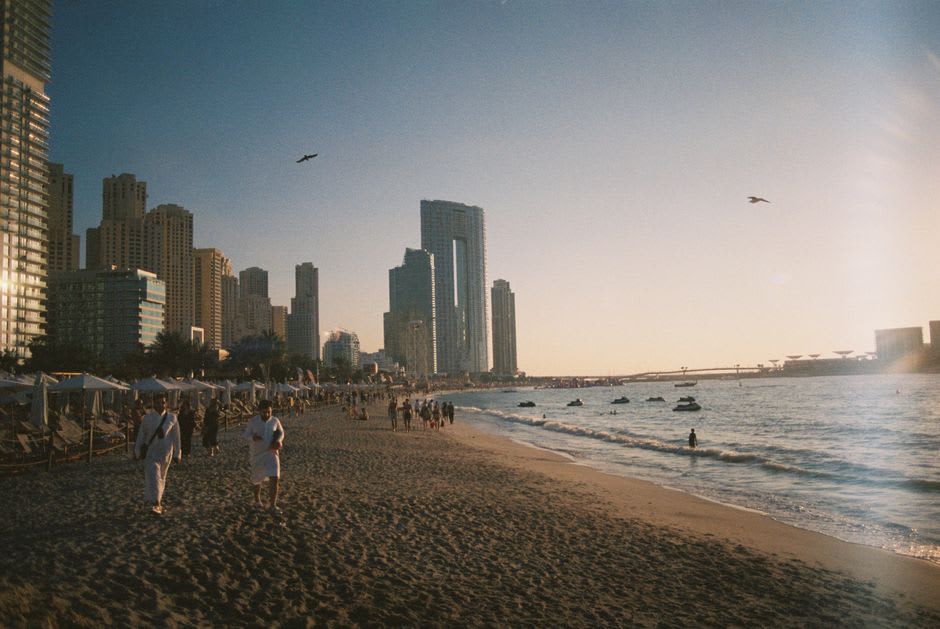
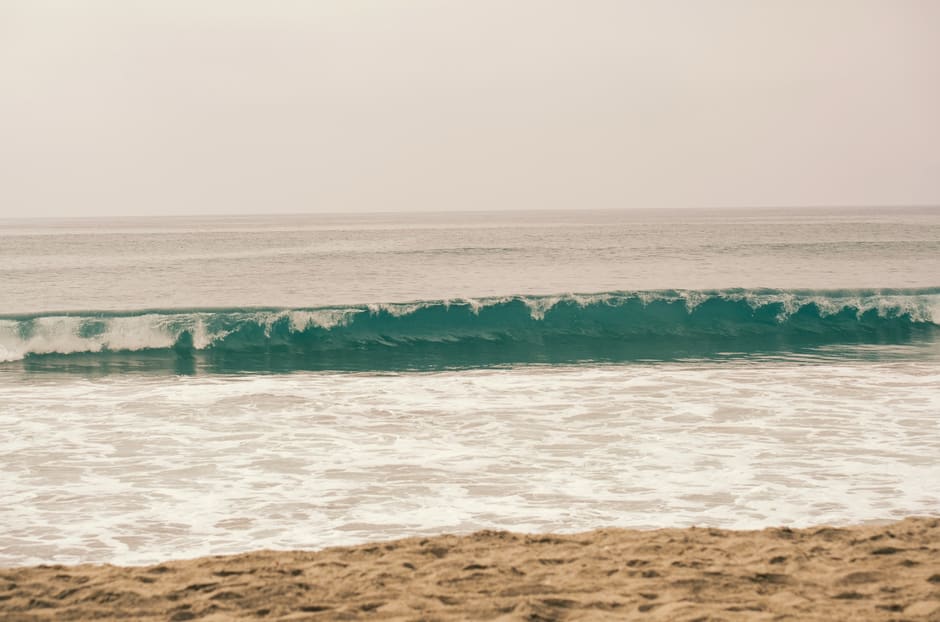
The beach itself is unremarkable in the best sense — soft sand, calm water, no velvet rope separating you from it. I swam until the light went orange, then walked back along the boardwalk past a woman doing sunset yoga on a paddleboard and a cluster of teenagers still chasing each other around the skate bowl, nobody in any hurry to leave.
When to go: Late afternoon into evening year-round, when the heat breaks and the promenade fills up. Winter weekends (November to March) bring the biggest crowds and liveliest street-food scene.