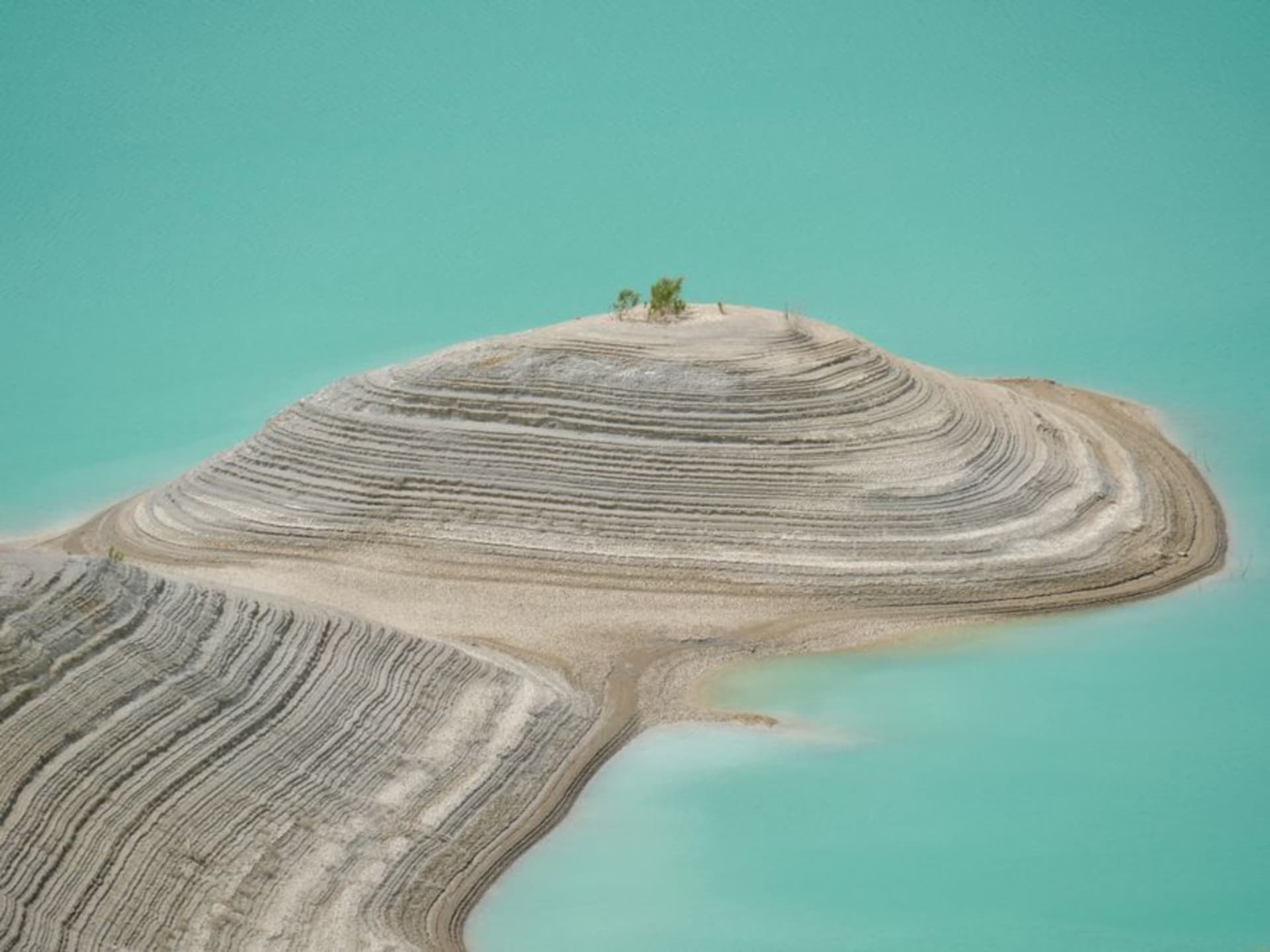
A turquoise reservoir cupped between bare Hajar Mountain ridges, where kayaking against jagged brown peaks feels like discovering a different country inside Dubai's own emirate.
I have shown people photos of Hatta Dam and watched them assume I doctored the color. I did not. The water really is that turquoise — an almost chemical blue-green that sits in a bowl of bare, sun-blasted mountains with not a scrap of green in sight. The first time I rented a kayak here, I paddled out expecting a pleasant lake and instead got a small existential jolt: this is the same emirate that gave the world the Burj Khalifa, and it also gave the world this, ten minutes further up the road, a reservoir that looks airlifted in from Norway and dropped into the driest range in Arabia.
The dam itself is a working piece of infrastructure — built for flood control and groundwater recharge, feeding the wadis below — but nobody comes here to think about hydrology. They come for the fifteen minutes of paddling where the rock walls close in and the water goes glassy and silent, and the only sound is your own oar dripping. I went early on a Friday, before the tour buses, and had a stretch of the reservoir entirely to myself. A pair of Egyptian geese watched me from a rock ledge with what I choose to interpret as mild contempt.
The color trick
What makes the reservoir so photogenic is the contrast, not the water itself. Everywhere else in Dubai’s desert scenery you get sand, gravel, or the flat gulf. Here the mountains are a deep rust-brown, almost chocolate in late afternoon light, and the water reads as impossibly saturated against them because there is nothing else in the frame to dilute it. Kayak out to the middle of the reservoir around sunset and the whole basin turns into two colors arguing with each other — and somehow neither wins.
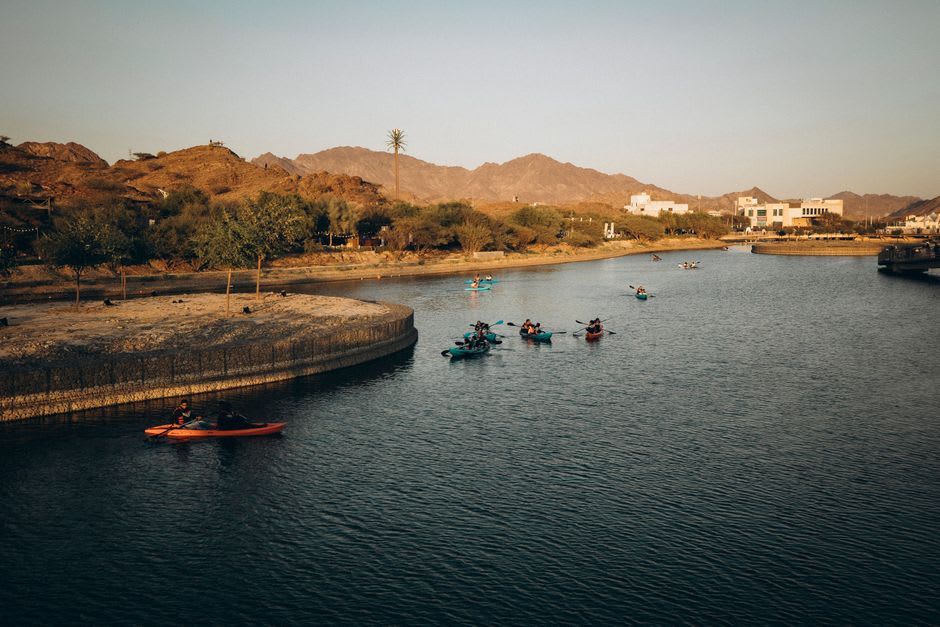
Getting out on the water
Rental kiosks near the shore rent single and double kayaks, along with pedal boats if you are traveling with kids who will not sit still for paddling. There is no shade on the water, so morning or the last two hours before sunset are the only sane windows outside of winter. I would skip the pedal boats and get a kayak — you can nose it into the narrower coves along the eastern shore where the rock walls rise almost vertically and the reservoir narrows to something closer to a fjord than a lake.
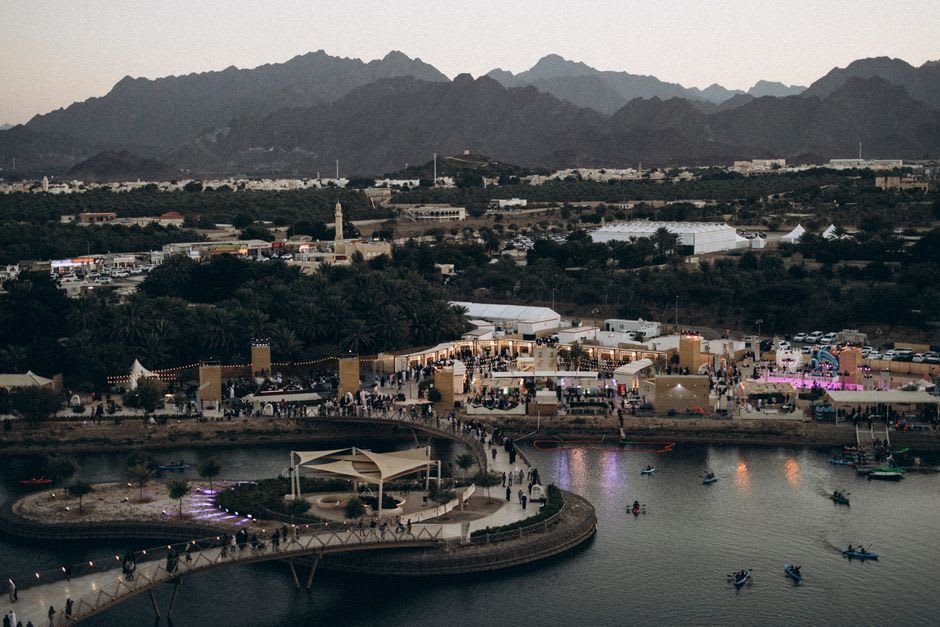
When to go: November through March, early morning or the last two hours of daylight. Midday summer heat on open water with zero shade is genuinely dangerous — this is not a place to underestimate the sun.