Nukufetau
"The atoll from the air looks like something a child drew — a perfect ring, as if the ocean decided to make a point."
From the porthole of the inter-island plane — on the rare occasions a flight routes through the outer atolls — Nukufetau appears unmistakably circular. Thirty-three motu form an almost unbroken ring around a central lagoon that has no business being as calm as it is, given what the open Pacific is doing just on the other side of the reef. The atoll has been sheltering things since well before anyone arrived to notice it.
The Shape of the Water
The geometry of Nukufetau’s lagoon is the first thing that registers and the thing you keep coming back to. At low sun angles, especially morning and late afternoon, the enclosed water reads a different color than the surrounding ocean — darker, more saturated, like a pool that has had time to deepen without being disturbed. The motu that form the rim range from wide and heavily vegetated to narrow sandbars that disappear at high tide, but together they create an enclosure that makes the lagoon feel almost architectural.
I spent a full day circumnavigating the inner edge of the atoll by boat, stopping where the reef shelf was visible and wading into knee-deep water over sand that was the fine, dry-sugar white of things that have never been touched. I found hermit crabs in shells too large for their ambitions, and a moray eel lodged under a coral head who regarded me with the contempt specific to moray eels.
Savave: The One Village
All of Nukufetau’s population — currently around 470 people — lives in Savave on the main western motu. The village’s layout follows the classic outer Tuvaluan pattern: a single track running the length of the island, houses set back in the shade, the maneapa at the center, the church nearby. What differs from other atolls is the particular quality of Savave’s light in the late afternoon, when the sun descends on the lagoon side and the whole village turns amber.
The community maintains breadfruit orchards on several of the larger uninhabited motu, accessed by canoe and harvested on a seasonal schedule. Breadfruit, roasted or fermented into the long-keeping ma paste, remains a dietary staple here in a way it no longer is in Funafuti, where imported rice has largely replaced it. I ate fermented breadfruit for the first time at Nukufetau, at the insistence of an elderly man named Teika who wanted my unfiltered reaction. My reaction was politic. His laughter suggested he knew exactly what I actually thought.
The Outer Reef
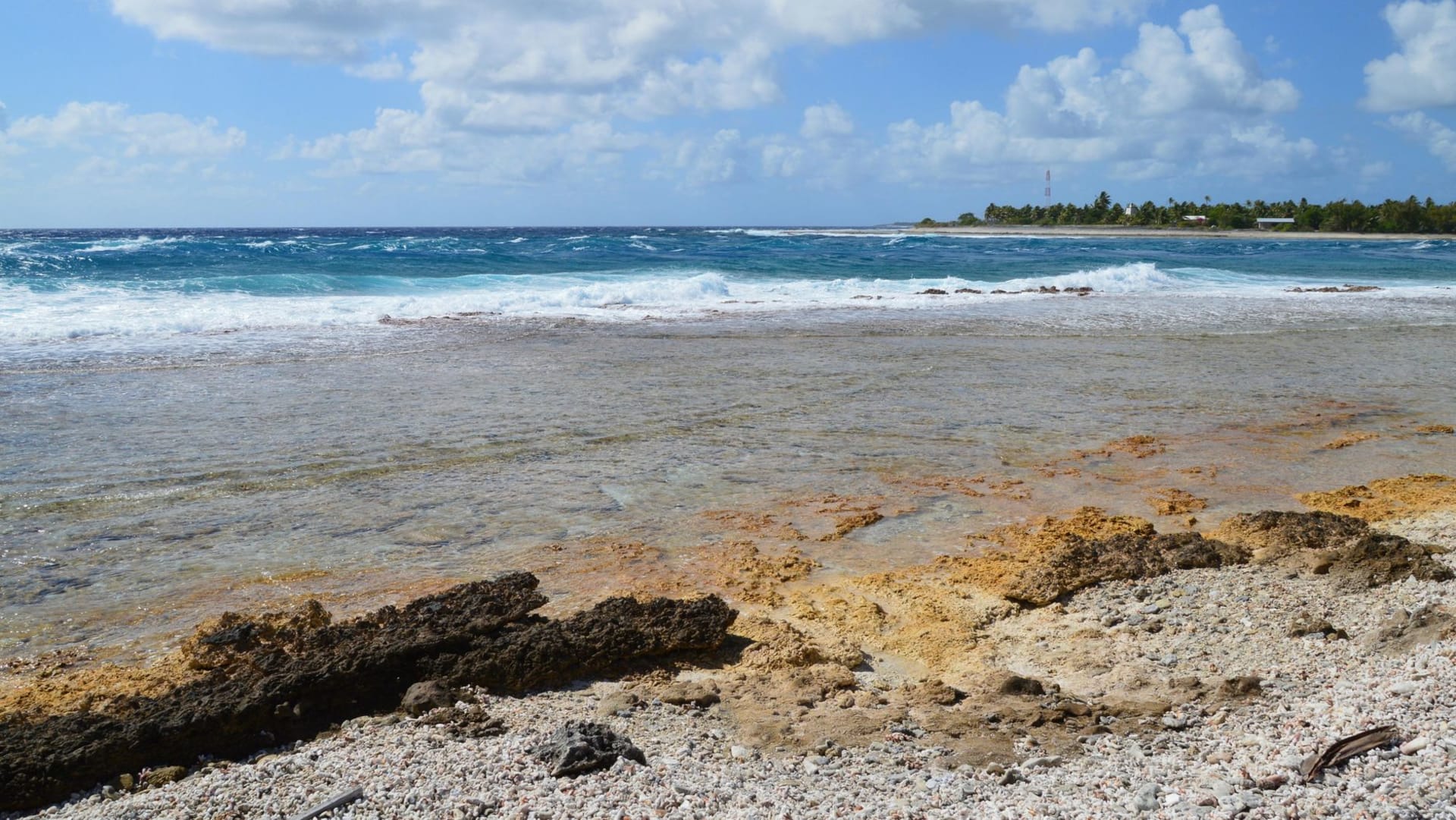
The eastern rim of Nukufetau takes the full force of Pacific swells, and the outer reef here shows the accumulated energy of those impacts: walls of broken coral, surge channels, the occasional enormous wave that arrives without warning and reorganizes everything in the zone. This is not a place to snorkel carelessly.
On the inside of the same rim, in the shelter created by the reef lip, the water is a different proposition entirely. Coral gardens grow in the calm: table corals the width of dining tables, brain corals the size and texture of the skulls they’re named for, forests of staghorn through which surgeonfish move in formation. The contrast between the violence five meters away and the stillness here felt like the atoll showing off.
Connections to the Broader World
Nukufetau appears in the Second World War record as a point of Allied activity, like several Tuvaluan atolls. It is also notable for being the landing point of the first telegraph cable to reach Tuvalu — an infrastructure connection to the wider world that came long before any road, any airport, any reliable supply of anything else. A cable landed; that was contact. It felt like a metaphor for how these islands have always related to the world: receiving signals from elsewhere, staying where they are.
When to go: June through September for settled weather and clearer water. The trip requires catching the inter-island shipping schedule from Funafuti, which runs monthly — plan around it rather than assuming flexibility.