Pacific
Tuvalu
"I came to see a place disappearing, and stayed to understand why it matters."
The flight from Fiji drops you onto Funafuti’s single runway — a strip of tarmac that is also, depending on the hour, a road, a football pitch, and a gathering place. The moment the plane door opens, a wall of salt air hits you. Not the pleasant beach-resort kind. Heavier, older, more insistent. This is the smell of a place where the ocean wins a little more ground each year, and nobody pretends otherwise.
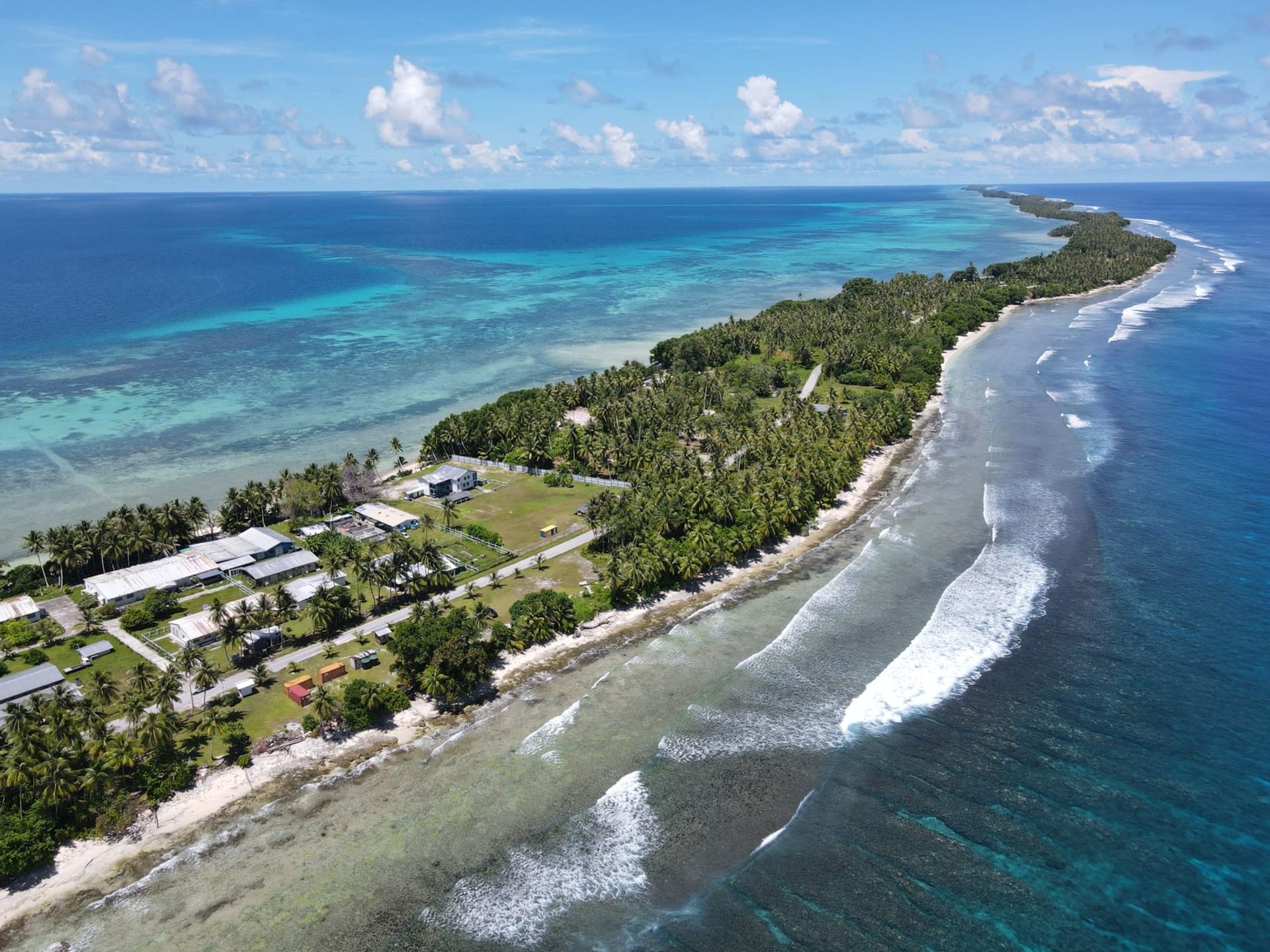
Funafuti is the capital, which is to say it’s where most of the country’s 11,000 people live, crammed onto a sliver of land that’s rarely more than 400 meters wide. The lagoon on one side is almost violent in its beauty — translucent green, absurdly calm, dotted with motu where kids fish from dugout canoes. The open Pacific on the other side is a different animal entirely: dark blue, restless, climbing higher up the beach with each king tide. I watched a family sandbag their front door on a Tuesday morning with the practiced calm of people who’ve done it a hundred times. They offered me tea. We sat on their porch and watched the water recede.
The food here surprised me. I’d expected canned everything, and there’s certainly that. But the fish — caught same-day, cooked simply over coconut husk — is extraordinary. Pulaka, a taro-like root grown in pits dug below the water table, has a starchy, earthy sweetness I didn’t expect to love as much as I did. Toddy — the fermented sap of the coconut palm — appears at most social occasions and tastes like if ginger beer and white wine had a slightly funky child. I drank a lot of toddy.
What stays with me isn’t any single sight but the particular weight of the place. There are no tourist attractions here in the conventional sense. You don’t come to Tuvalu to do things. You come, if you come at all, to be somewhere that forces you to think about what it means that it might not exist in 50 years. The people are not waiting to be saved. They are governing, fishing, arguing about politics, raising children, building houses — living with an urgency that has nothing theatrical about it.
When to go: April to October is the dry season, with less rainfall and calmer seas. Avoid November through March — cyclone season brings heavy rains and periodic flooding that can disrupt internal travel between atolls. Easter and Christmas see most Tuvaluans who’ve emigrated to New Zealand return home, which makes accommodation scarce but social life unusually vibrant.
What most guides get wrong: Tuvalu gets framed almost exclusively as a climate change tragedy — a place on the brink, a cautionary tale, a place to visit before it vanishes. That framing is real and the science is serious, but it flattens what’s actually a functioning, proud, complicated society into a metaphor. The Tuvaluans I met were not passive symbols. They were people with opinions about their prime minister, strong feelings about rugby, and specific memories of where the best fishing is at what tide. Treat it like any other destination — with curiosity, respect, and your eyes open — and it will give you more than any bucket-list checkbox ever could.