Fongafale
"The foreign ministry is on the same block as the hardware store. This is not a metaphor for anything. This is just how space works here."
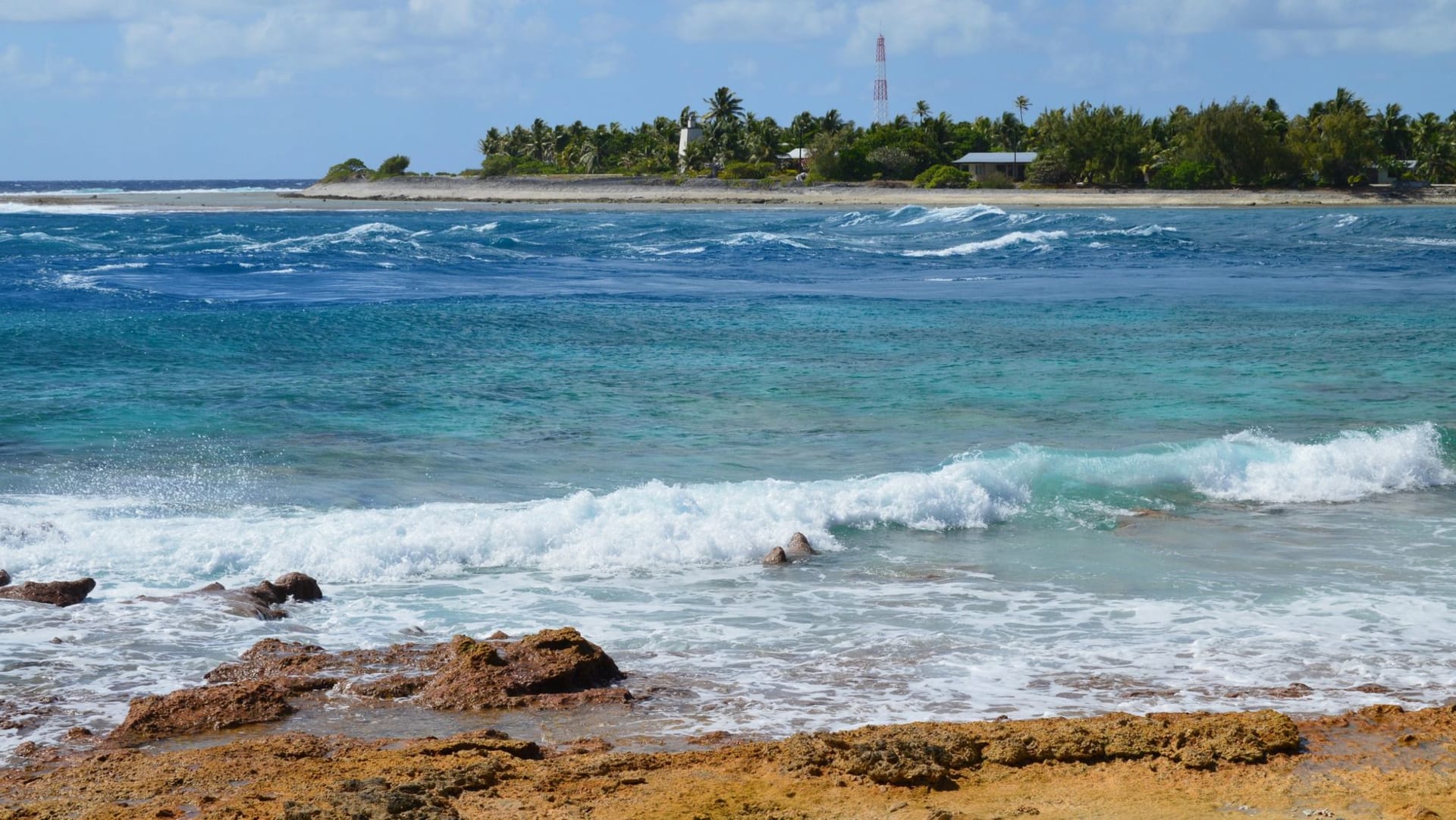
Fongafale is the principal islet of Funafuti atoll, and on it sits everything that constitutes national life in Tuvalu: the parliament, the hospital, the one hotel, the market, the airport, the telecommunications building, the three foreign embassies (Australia, Japan, and Taiwan), and the densest concentration of the country’s 11,000 people. To walk from one end of central Fongafale to the other takes fifteen minutes at tourist pace. At purposeful pace, less.
The Anatomy of a Capital
The layout of Fongafale’s urban section — a term that requires some generosity — is the product of colonial planning, post-independence improvisation, and the hard constraint of a land mass that averages perhaps forty meters in width. The government buildings cluster around the southern end of the runway, modest in scale and faded with tropical humidity into shades of cream and grey-blue. The market operates several mornings a week near the main wharf, selling fresh fish, produce from the outer islands, and the occasional handicraft.
I spent a morning walking from the Catholic church in the south to the telecommunications tower in the north, a distance of about two kilometers, and counted every category of building I could identify. Government offices: eleven. Churches: four, belonging to different denominations that had each arrived at separate points in the colonial period and had been having a sustained polite disagreement ever since. Stores: eight. Restaurants: two, loosely defined.
The Runway as Town Square
The airport runway is the functional center of Fongafale’s social life in the way that a plaza is in a Mexican town or a pub is in an English village. Twice daily when flights operate, the community materializes to watch the plane land — not from any particular aviation enthusiasm but because this is how news arrives, how relatives return, how the outside world makes its scheduled appearances. Between flights, the runway is reclaimed by motorbikes, footballs, and the occasional rooster.
In the evenings, families walk the runway’s length as evening exercise. The strip is lit at its margins by low solar lamps that cast a warm light on the concrete. The lagoon is visible to the west, darkening quickly after sunset; the ocean to the east is audible but invisible in the dark. Walking the strip at that hour with the wind off the Pacific and the last of the daylight gone orange, I found it genuinely hard to be anywhere else.
Temporal and Climate Pressure
Fongafale shows the marks of a community navigating an existential question in real time. Some sections of the islet’s southern end have been raised with coral fill, creating small elevations above the high-tide line. Seawalls line parts of the lagoon shore. Buildings are increasingly constructed on raised foundations. None of this is invisible and none of it is sufficient; it is adaptation in the engineering sense — buying time, adjusting the terms.
The government ministries here handle climate negotiations that have made Tuvalu’s case before international bodies, linking development aid to emissions reductions, arguing in forums designed for much larger nations that smallness is not a disqualification from having interests. The foreign minister and the fishermen work on the same islet. When you understand that, Fongafale’s scale stops feeling like a limitation and starts feeling like clarity.
Markets and Daily Life
The Tuesday and Friday markets at the main wharf are worth waking early for: fish laid out on folding tables while the catch is still firm, taro in varieties I couldn’t identify, coconut crabs when someone’s brought them in from the outer islands. The social function of the market exceeds the commercial one. Information moves here: who’s arriving on the next ship, which outer island had a good breadfruit harvest, what the weather has been in the north.
I bought papaya from a woman who told me her daughter was studying nursing in Fiji and would return in two years. She said this with neither pride nor sadness but with the steady calm of someone who has made the accounting and found it acceptable.
When to go: Fongafale is accessible year-round via Fiji Airways flights from Nadi. The dry season from May to October offers less humidity and lower cyclone risk, and is when the outer island supply ships run on their closest approximation to schedule.