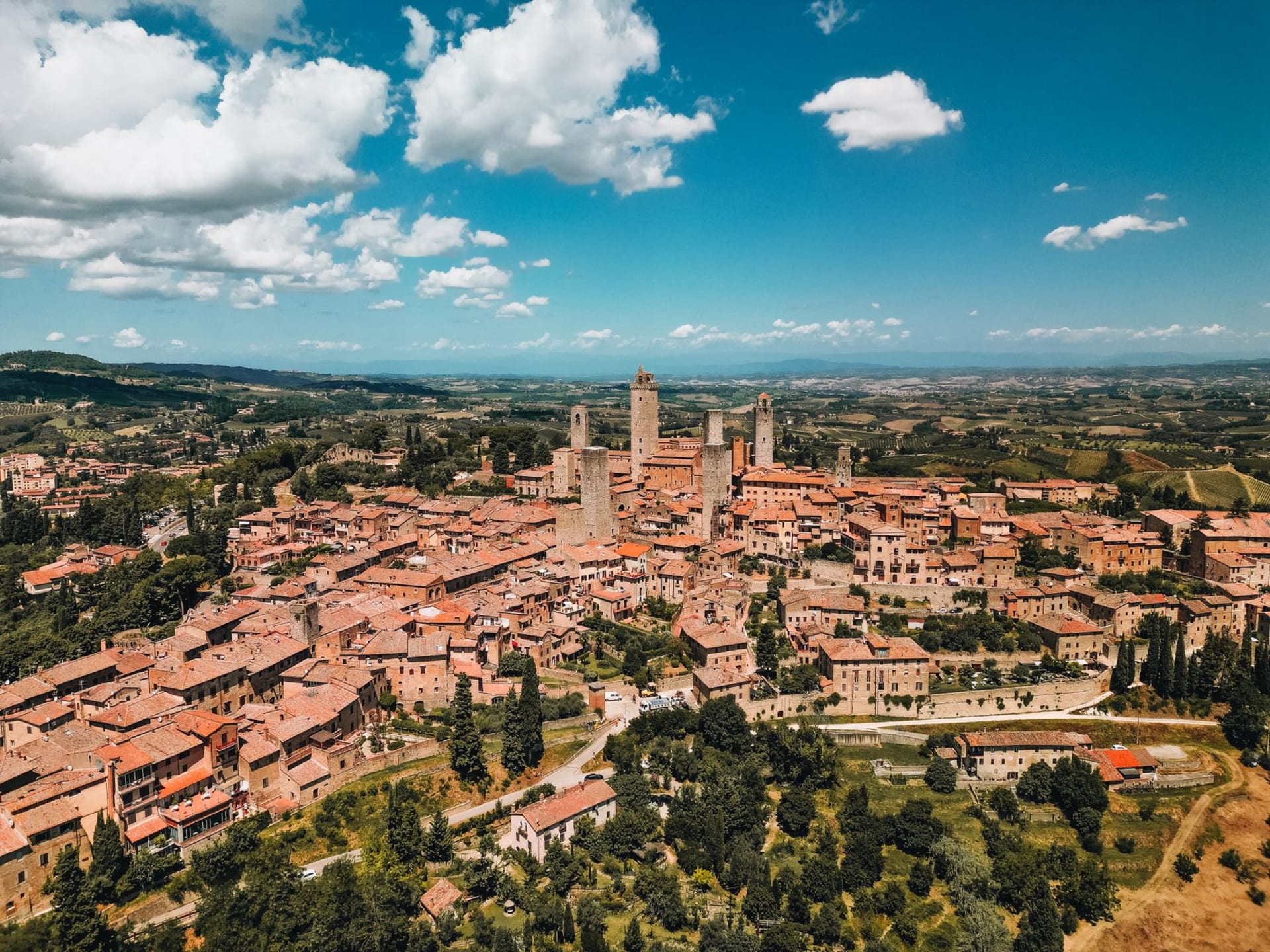
San Gimignano
"At dusk, when the day-trippers leave, this town becomes something else entirely."
Towers That Outlasted Their Purpose
In medieval San Gimignano, towers were status symbols — wealthy families built them taller than their rivals’ to signal power and wealth, and at the city’s height there were seventy-two of them crowding the skyline. Most were demolished over the centuries as fashions changed and the stone was reused. Fourteen survived, and they’ve been generating income for the town ever since in a different currency: tourism.
The problem with San Gimignano is that everyone knows about it. Buses arrive from Florence and Siena by 9 AM and the narrow main street — via San Giovanni, lined with wine shops and gelaterie — fills to a pressure that makes the medieval walls seem suddenly inadequate. I made the mistake of arriving at noon on a Wednesday in July and spent twenty minutes pressed against the doorway of a ceramics shop watching a tour group photographer try to frame a shot without capturing 200 other tourists.
The solution is simple: stay the night.
After Five O’Clock
By 5:30 PM the last buses leave and something happens to the town. The light goes long and orange, the alleys empty, and you can hear your own footsteps on the stone. The towers cast actual shadows. The cats reappear on the walls. Lia and I walked up to the Rocca — the old fortress at the top, now a park — and sat on the wall watching the Val d’Elsa spread out below us in the last hour of sun, the vineyards going amber-green, a haze sitting over the valley that made everything look slightly soft at the edges.
We ate at a restaurant in the main piazza that had been aggressively mediocre at lunch and turned out to serve genuinely good ribollita once the tourist heat died down. Whether the food actually changed or whether I was just more capable of tasting it without someone’s luggage against my shin, I can’t say.
The Wine That Belongs Here
Vernaccia di San Gimignano is the white wine of this part of Tuscany — straw-colored, dry, with a slight bitter finish that works well with the salted, porky food of the region. It was the first Italian wine to receive DOC status, in 1966, which the locals mention with the calm pride of people who have been right about something for a very long time. I drank it from a small producer whose tasting room occupied a vaulted cellar below street level, the bottles cool to the touch even in July heat.
The Vernaccia is better here than anywhere I’ve had it outside the region. This is either terroir or confirmation bias. Possibly both.
The Collegiate Church Interior
Most visitors walk through the Collegiata — the main church — without slowing down much, because the towers are the draw. This is a mistake. The interior has two cycles of frescoes that run along the nave walls: Old Testament scenes on the left, New Testament on the right, painted in the fourteenth century by artists of the Sienese school. The Last Judgment on the rear wall includes a depiction of hell that’s specific and inventive in ways that suggest the painter had thought carefully about what forms punishment might take.
I spent forty minutes in there and came out blinking into the brightness, which felt appropriately timed.
When to go: Arrive in late afternoon any time from April to October and stay overnight — this is non-negotiable for actually experiencing the place. Shoulder season (April-May, September-October) has the best weather and the most manageable daytime crowds. November through February is nearly empty, somewhat melancholy, and very beautiful.