Europe
Tuscany
"Every hill here looks like someone painted it on purpose."
I arrived in Tuscany by train from Rome, bleary and slightly hungover from too much Frascati the night before, and the first thing I saw when I stepped off in Siena was an old man arguing with a pigeon outside the station bar. He was losing. That felt right. Not the postcard version, just life going sideways in a beautiful place.
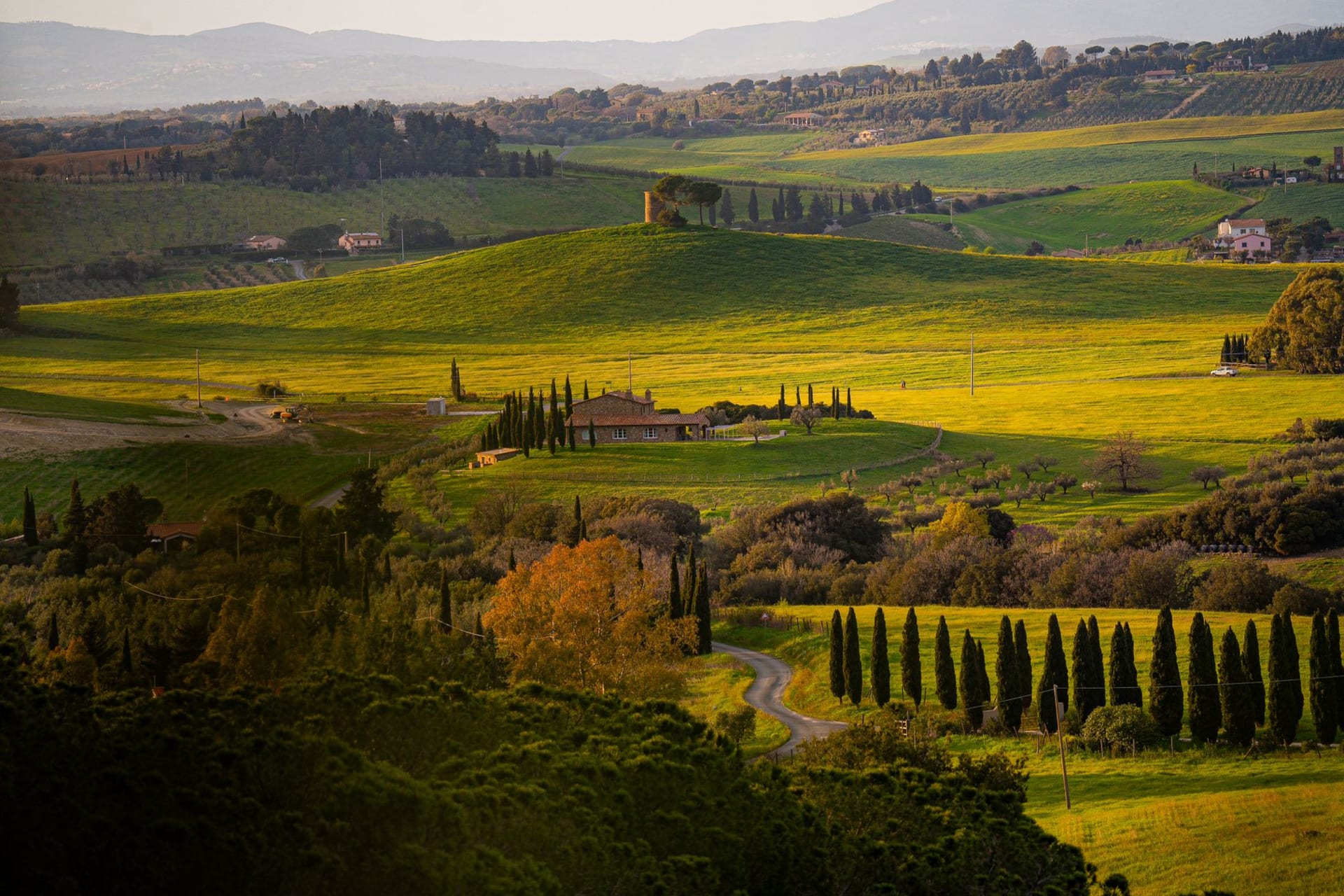
What catches me off guard every time I’m in Tuscany — and I’ve been three times now, which still feels insufficient — is how the landscape does something quietly aggressive. It insists you pay attention. The cypress trees marching up a ridge in single file, the pale green of an olive grove after rain, the way a hilltop town like Montepulciano turns golden at five in the afternoon and then drops into blue shadow with unsettling speed. You stop mid-sentence. You forget what you were saying. It happens to everyone, even people who claim they’ve seen it all.
The food is where Tuscany earns its reputation honestly. I’ve eaten ribollita in trattorias so unfussy they don’t bother with menus, just whatever they made that morning. I’ve had bistecca alla Fiorentina at a place in the Chianti hills that looked like someone’s garage and tasted like the best thing I’d eaten in years. The wine is relentless — Brunello, Morellino, Vernaccia di San Gimignano — and priced at levels that make you feel irrationally wealthy if you’ve been traveling in Mexico for any length of time. A bottle of something serious costs less than a cocktail in Mexico City. I have complicated feelings about this.
The smaller towns are where the experience opens up. Pienza is almost absurdly lovely but somehow avoids feeling like a museum. Volterra has a rawness to it, a medieval darkness that the tour buses mostly bypass. San Miniato in truffle season — October and November — smells like forest floor and wet stone and something faintly animal, which I mean as a compliment.
When to go: May and September are the sweet spots — the light is warm, crowds haven’t peaked, and the landscape is either green from spring or golden from harvest. July and August are possible but brutal in terms of heat and company. If you can manage it, late October in the Chianti or Montalcino zones during harvest is worth any inconvenience.
What most guides get wrong: Tuscany is treated as a highlight reel — Florence, Siena, the Val d’Orcia, done. But the region rewards slow movement and deliberate detachment from the itinerary. The best moments I’ve had here came from stopping somewhere unplanned because a town looked interesting from the road, eating whatever was on the board, and leaving without having seen the main attraction. The guides make you feel like you’re there to consume a checklist. You’re not. You’re there to let a place at you.