Pisa
"I came to Pisa cynical about the tower and left genuinely fond of the city it stands in, which nobody warns you about."
Pisa has a reputation problem. Everyone arrives, walks straight to the leaning tower, takes the obligatory photograph of themselves pretending to hold it up, and leaves within two hours convinced they have done Pisa. I was prepared to be one of those people. Then Lia, who had a friend studying at the university here, dragged me away from the famous square and into the actual city, and I discovered that Pisa is a genuinely good town that happens to have a freakish marble landmark attached to it.
The Piazza dei Miracoli Is Stranger Than You Think
Let me deal with the tower, because you will go and you should. The thing is, the photographs flatten it. In person the lean is dizzying — it tilts almost four metres off vertical, and standing beneath it produces a real, animal sense of wrongness, a conviction that it is about to come down on you. It has been leaning since construction began in the 1170s, when the soft ground started giving way before they had finished the third floor, and the builders gamely carried on, curving the upper storeys to compensate. It is, in other words, a beautiful eight-hundred-year-old mistake.
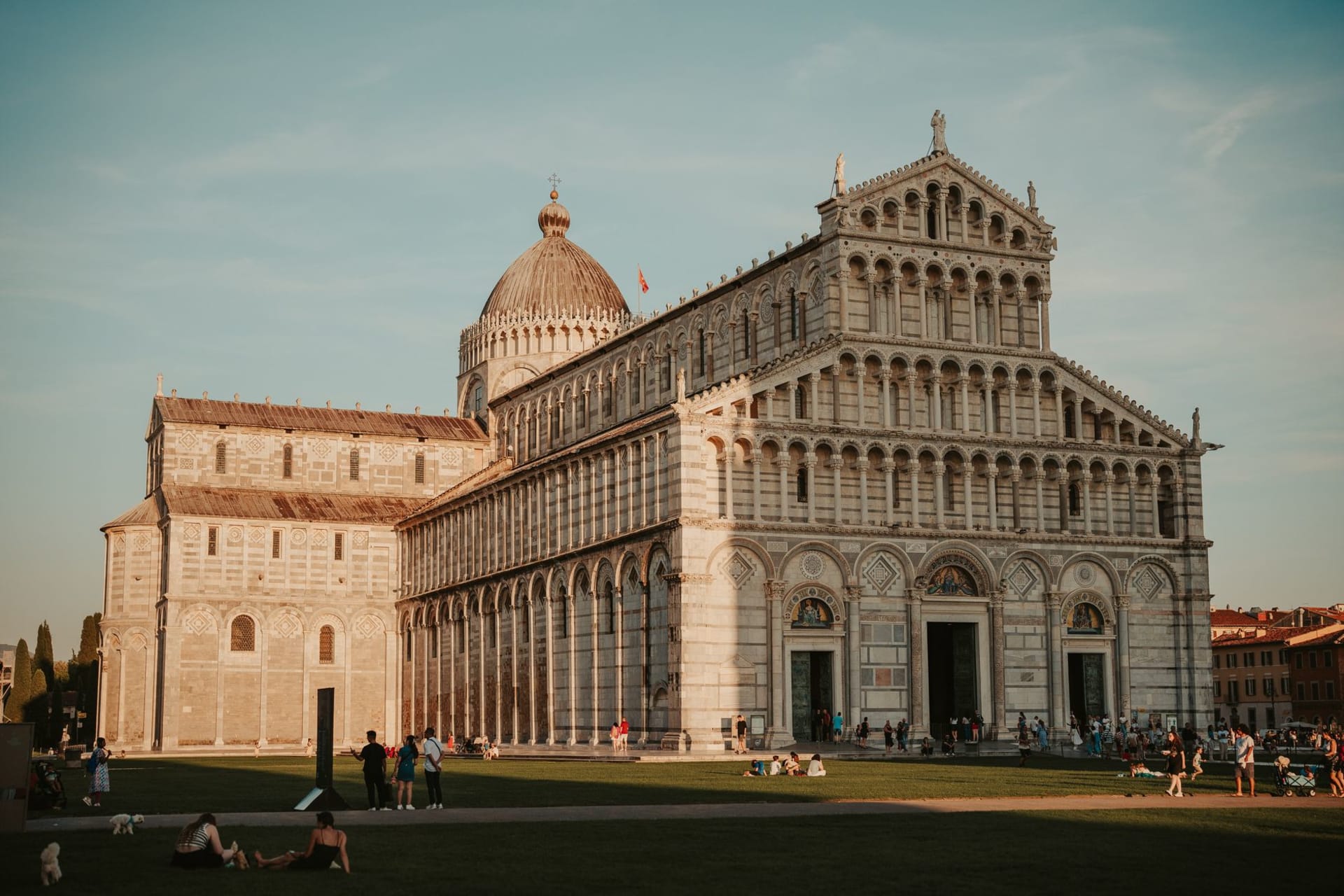
What surprised me is that the tower is the least interesting thing on the square. The Duomo beside it is a masterpiece of striped Pisan-Romanesque marble, and the Baptistery — a vast round drum of a building — has an acoustic so perfect that a guard sings a few notes every half hour to demonstrate, the sound hanging and overlapping in the dome until it becomes a chord made by one voice. I stood in there with my mouth slightly open. That, not the tower, is the thing I think about.

The City the Tourists Skip
The real revelation is everything south of the square. Pisa is a serious university town — the Scuola Normale, where Galileo studied and which Napoleon refounded, gives the place a young, slightly scruffy, intellectual energy entirely absent from the manicured hill towns of Chianti. The streets fill in the evening with students, the aperitivo is cheap and generous, and the whole city has the unpretentious feel of a place that does not depend on tourists for its self-respect.
We walked the Lungarni, the streets that line both banks of the Arno, in the late afternoon, the river running flat and brown between rows of ochre and pink palazzi. Lia’s friend took us to a tiny osteria with no English menu and no view of anything famous, where I ate a plate of cecina — a thick chickpea-flour pancake, Pisa’s great cheap street food — and drank a rough local red, and it was the best meal I had in Tuscany. The tourist Pisa empties out by evening. The student Pisa is just getting going.

Practicalities
The Piazza dei Miracoli is a fifteen-minute walk from the central station, and you can climb the tower if you book a timed ticket in advance — worth it for the genuinely unsettling experience of ascending a staircase that is not level. Do not eat near the square; walk five minutes in any direction for better food at half the price.
When to go: April to June and September to October for warm weather without the July–August furnace and the worst of the crowds. The square is busiest mid-morning when the coaches arrive; come early or stay late, and give the city itself an evening. It deserves more than the two hours everyone gives it.