Montalcino
"They grow one grape here and they've been thinking about it for a very long time."
The Town That Invented Brunello
Montalcino sits at 564 meters in the southern Val d’Orcia, a walled medieval town of about 5,000 people whose modern identity is organized almost entirely around Brunello di Montalcino — the Sangiovese Grosso wine that the Biondi Santi family essentially defined in the nineteenth century and that now commands prices that seem improbable until you taste a properly aged bottle.
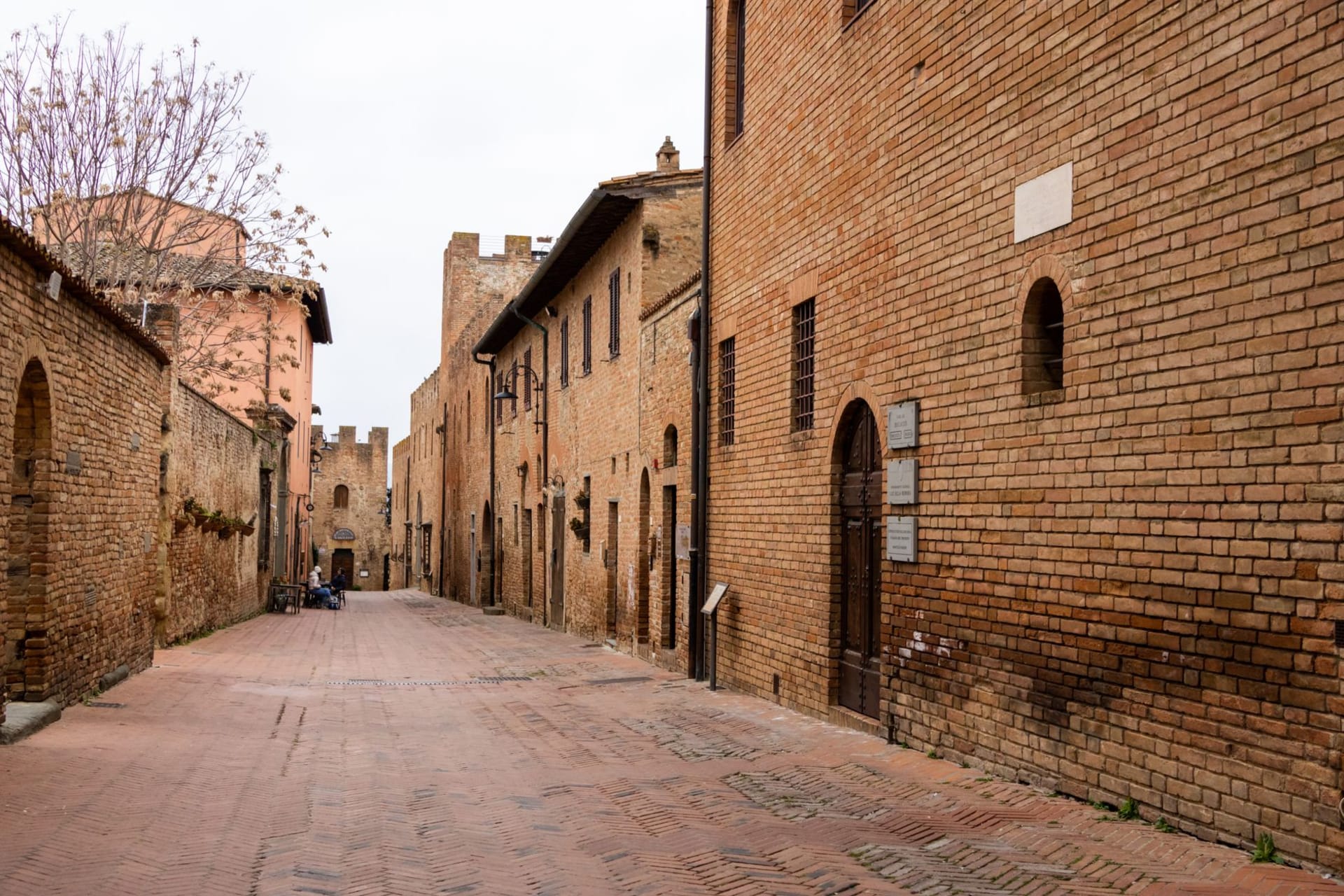
I arrived in the afternoon, parked outside the medieval walls, and walked in through the gate. The main street — via Mato Civitali, then via Moglio — is quiet on a weekday, the kind of quiet that comes from a town confident enough in what it produces that it doesn’t feel the need to market itself aggressively. There are wine shops, obviously. But there are also hardware stores and a pharmacy and a school, which tells you this is a working town that happens to make exceptional wine.
The Fortress Wine Bar
Inside the fourteenth-century Fortezza at the top of town, a wine bar has been operating for decades with a selection of local producers poured by the glass. This is the correct introduction to Brunello: you sit at a wooden table in the old armory, you pay eight to fifteen euros for a glass depending on vintage and producer, and you take your time.
A Brunello from a good year needs at minimum five years of aging before release under the denomination rules — Riserva needs six — and by the time it reaches you it has done something long and slow with time that shows in the texture. The tannins are still there but they’ve stopped fighting. The dried cherry and tobacco and leather qualities that characterize aged Sangiovese are all present, in proportion, not clamoring.
I sat there for an hour and a half and worked through two glasses. The light coming through the narrow windows turned gold and then orange.
The Larger Wine Estate Question
The serious wine estates — Biondi Santi, Casanova di Neri, Col d’Orcia, Poggio di Sotto — take appointments, and some of them require them well in advance. This is correct behavior for properties producing wine that will outlive most of the people who buy it. I had an appointment at a smaller producer whose name I was given by a bar owner in Siena, a family that farmed twelve hectares and made perhaps thirty thousand bottles a year.
The cellar was cold and smelled of old wood and wine. The winemaker walked me through the stages with the patience of someone who has explained this many times to people who are genuinely trying to understand and many more who are not. We tasted from barrel — the 2022, still rough and tannic, still working out what it was — and from bottle, a 2016 that had arrived somewhere the barrel hadn’t gotten to yet.
Rosso di Montalcino and the Daily Drinking Question
Brunello is expensive. The answer to wanting to drink good wine from Montalcino without the expense is Rosso di Montalcino — the younger, lighter version from the same producers, using grapes that didn’t make the Brunello cut, aged for one year instead of five. It’s not a consolation prize; it’s a different wine with its own pleasures, and at fourteen to twenty euros a bottle it’s what you drink with dinner.
I had a Rosso at an enoteca in town with a plate of affettati — local salumi, lardo, finocchiona — and bread from a loaf that had been sliced at a reasonable thickness. This meal cost perhaps eighteen euros and was one of the better evenings of that trip.
When to go: September and October during the harvest, when the vineyards are active and the air has the particular quality of a landscape in the middle of doing its most important work. The Benvenuto Brunello event in February, when the new vintage is released, draws serious wine buyers and is fascinating if that’s your context. Summer is pleasant at elevation but the more interesting life is shoulder season.