Maremma
"This is Tuscany without the tour groups, which is to say it's Tuscany at its actual temperature."
The Other Tuscany
Everything north of Siena has been written about at sufficient length. The Maremma — the southwestern coastal zone that runs roughly from Grosseto to the Lazio border — has been left alone, partly because it was historically malarial (drained in the twentieth century), partly because it lacks a cathedral city with brand recognition, and partly because the kind of traveler it attracts prefers it this way.
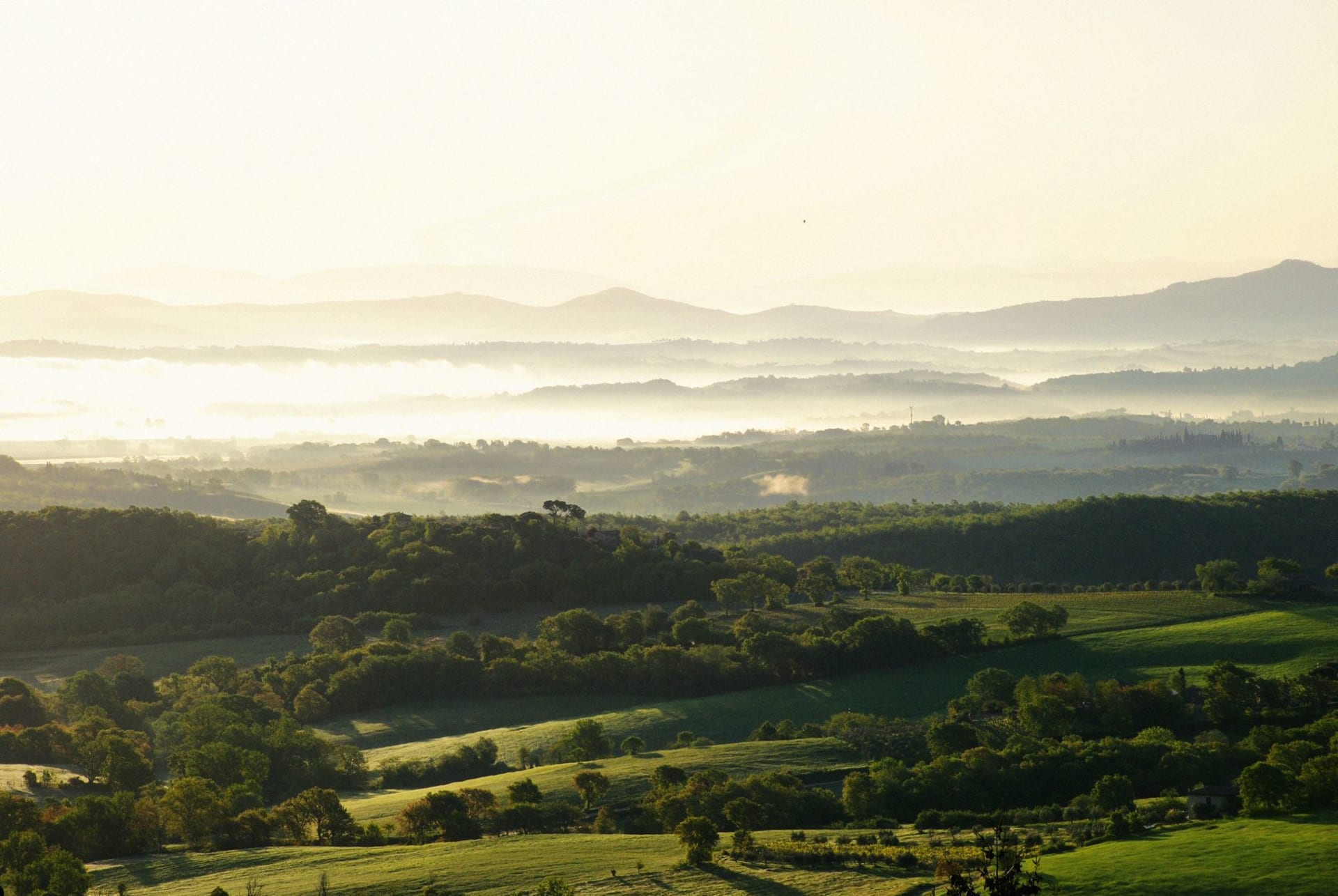
The landscape is different from inland Tuscany: flatter, more maritime, with umbrella pines and macchia scrubland rather than cypress and vineyard. The hills exist but they’re rounder, older looking. The sea is present as a smell and a light quality even when you can’t see it. In the Parco Naturale della Maremma — a coastal nature reserve where private development is prohibited — there are beaches accessible only on foot or by canoe, backed by pine forest, with no facilities except the water itself.
The Butteri and the Horses
The Maremma has a cowboy tradition — the butteri, mounted herdsmen who managed the Maremman cattle on horseback with a technique distinct from every other European equivalent. The tradition is not extinct; you can still find active butteri in the area around Alberese, and the horses — Maremman horses, a breed that developed on this specific terrain — are distinctive: heavy-boned, calm, built for long days in difficult ground.
I watched a group of butteri moving cattle through the Parco early one morning, the horses moving with the easy confidence of animals that know their work. The fog was still low on the meadows. It looked exactly like what it was, which is a thing that doesn’t happen often enough.
Etruscan Ruins Without the Queue
The Maremma contains a dense layer of Etruscan settlements — Vetulonia, Populonia, Sovana, Saturnia — most of them incompletely excavated and almost entirely free of other visitors. Sovana, a village of a few hundred people in the inland hills, was a significant Etruscan city, and the necropolis that extends into the tufaceous gorges below it includes tomb facades carved directly from the rock face, some of them fifteen meters high, hidden in the undergrowth.
I spent a morning in those gorges with no one else around, the path damp and smelling of moss, the carved faces of the tombs emerging from the walls as I rounded corners. The Etruscan taste for elaborate burial runs to the theatrical when given this much stone to work with.
Saturnia, at the northern edge of the zone, has thermal springs that have been flowing into travertine pools since the Romans bathed in them. The public pools are free, open twenty-four hours, and genuinely hot. I went at 7 AM on a November morning with mist rising off the water and the temperature at perhaps 8 degrees Celsius outside the pool. This is the correct time to visit Saturnia.
The Maremman Table
Acquacotta — “cooked water” — is the traditional Maremmana peasant soup: whatever vegetables were available, cooked with water and bread, finished with an egg poached in the broth. The name is an act of honesty about its origins. When it’s made well, with good olive oil and bread that has enough age to hold up to soaking, it’s exactly the kind of food that makes arguments about simplicity versus sophistication seem beside the point.
I had it at an agriturismo outside Manciano where the owner raised the vegetables herself and the bread came from a wood-fired oven behind the building. She brought it in a terracotta bowl that was too hot to hold.
When to go: May through June for the wildflower season in the Parco Naturale and pleasant sea temperatures. September and October are excellent — the beaches empty after August, the water is still warm, and the prices drop substantially. July and August bring Italian beach tourism in quantity; not unpleasant, but a different experience.