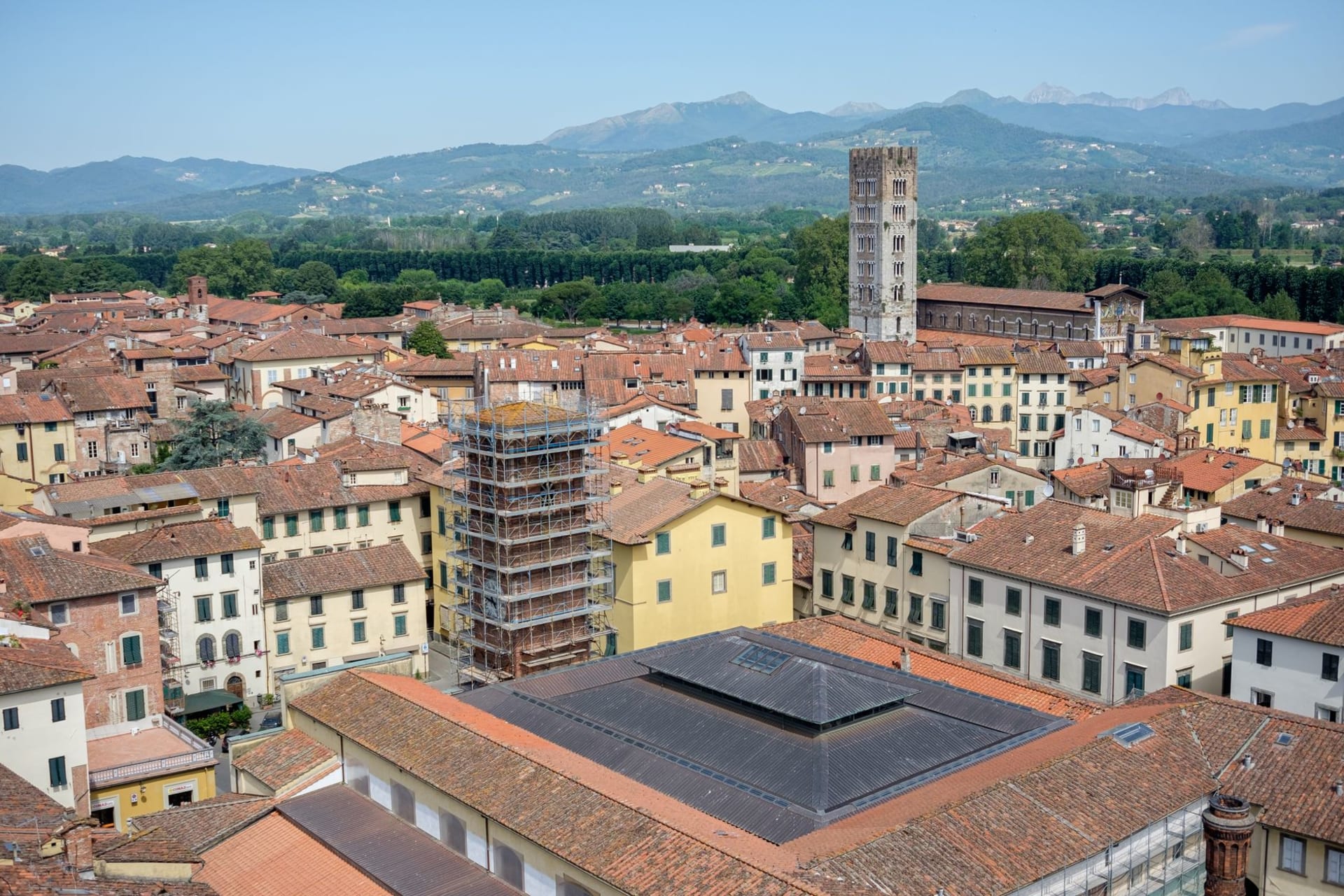
The Walls That Work
Lucca’s Renaissance walls — built between the sixteenth and seventeenth centuries, never breached in conflict, later used as a promenade — are four kilometers around and wide enough at the top to accommodate a tree-lined boulevard. The Luccans converted them into a public park, and on any given morning you’ll find people cycling, jogging, walking dogs, and having conversations that are clearly continuations of longer arguments.
I rented a bicycle from a shop just inside the Porta Santa Maria and spent an hour on the ramparts before looking at anything else in the city. The plane trees were dropping leaves in October, the light was low and warm, and I could see down into the gardens of the private houses that back up against the interior wall — kitchen gardens, fig trees, one extremely elderly man reading a newspaper in a lawn chair.
This is the correct introduction to Lucca.
Inside the Oval
The street plan of the city centre is Roman — you can see the oval outline of the old amphitheater in the Piazza dell’Anfiteatro, where the medieval buildings were constructed against and above the original Roman structure, preserving its shape in negative. The piazza is now ringed with café tables and restaurants, used for markets and concerts, and the oval shape makes sound travel in interesting ways during live music.
The towers are fewer here than in San Gimignano — Lucca’s medieval families also competed in height, but most towers were shortened over the centuries. One exception: the Torre Guinigi, which has a small oak grove growing from its top, the roots having found purchase in the accumulated debris of centuries. It’s genuinely strange to look up and see trees forty-five meters off the ground.
Puccini’s City
Giacomo Puccini was born in Lucca in 1858, and the city maintains a quiet, proprietorial pride about this. The house where he was born is now a museum, and the summer festival — Opera Theater of Lucca — draws serious productions in reasonable venues. I’m not an opera person, but I wandered past a rehearsal one afternoon and stood in the doorway long enough to hear a soprano singing something from Tosca with the kind of voice that makes you reconsider your opinions.
The city’s relationship with sound in general is good — the churches have excellent acoustics, and organ concerts in San Giovanni are a regular fixture.
The Food Without the Celebrity Tax
Lucca doesn’t appear on the short list of Tuscan food destinations the way Florence and Siena do, and this is reflected in the prices and the quality. The tordelli Lucchesi — a large fresh pasta filled with meat and served with a meat ragù — is the dish to eat here, and I found a version at a trattoria off the via Fillungo that was three euros cheaper than anything comparable in Florence and considerably better made.
The olive oil from the Lucchesia hills is distinct from the rest of Tuscany — lighter in colour, lower in bitterness, with a grassy quality that works especially well raw on bread or white beans. I bought a bottle from a producer at the weekly market and carried it in my bag for three days more carefully than my phone.
When to go: April through June for pleasant weather and the city before summer crowds. September and October for the festival season and cooling temperatures. Lucca is genuinely livable in winter — the walls are beautiful in mist, the restaurants stay open, and the crowds essentially disappear.