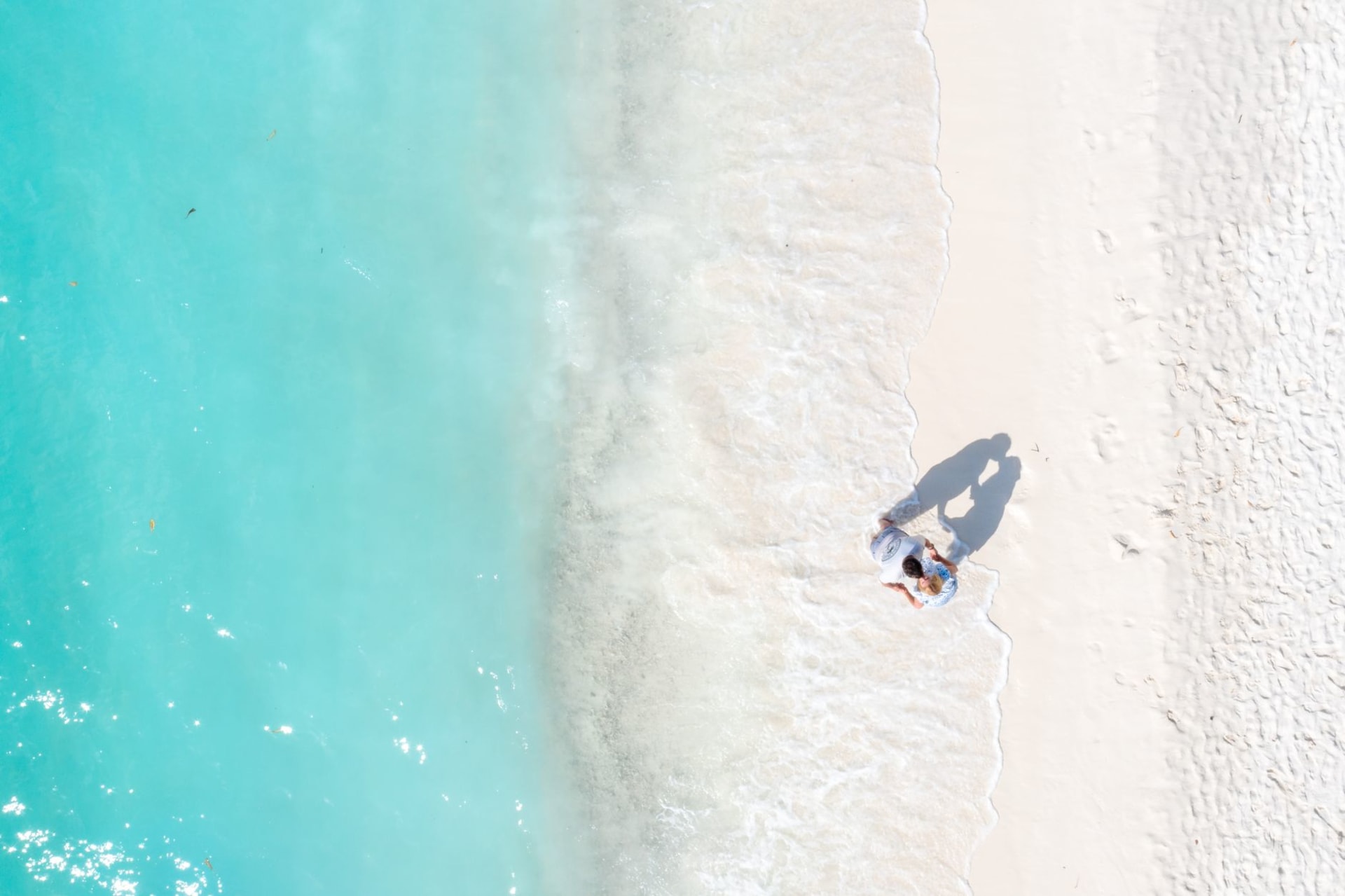
West Caicos
"West Caicos doesn't ask anything of you. It just waits, the way wild places do."
West Caicos is not officially empty — it has a history of habitation, a failed resort development whose concrete bones are being steadily consumed by vegetation, and occasional day-trippers who arrive by boat and leave before dark. But for practical purposes, when you’re there, you’re alone. No permanent residents, no roads worth the name, no services of any kind. The island sits about fifteen kilometers southwest of Providenciales, separated from Provo’s dive sites by a channel of water, and it’s the kind of place that dive operators mention in the tone of voice they reserve for things they’re not entirely sure they want everyone to know about.
The Wall
The west coast of West Caicos drops off a reef wall that descends well past recreational diving limits, and the conditions that make it exceptional — consistent visibility, minimal boat traffic, strong but manageable current — are a direct result of the island’s uninhabited status. The sites along this wall have names that suggest early divers running out of creative energy: White Face, Brandywine, Highway to Heaven. The fish are abundant in the way marine life becomes when it isn’t under constant pressure. Nurse sharks rest on the sandy shelf before the drop-off. Hawksbill turtles move through the coral with the unhurried authority of animals that understand the food chain.
I did a morning dive here that produced more eagle rays than I’ve seen in my entire diving life — four at one point, moving in formation in the current above the wall edge, their motion that eerie slow flap that looks nothing like a fish and everything like a bird. My guide surfaced grinning and said nothing, which was the right response.
The Reef Flat and the Shallows
Above the wall, the reef flat on West Caicos’s west side is shallow enough for snorkeling and in good enough condition that it rewards the effort. The coral coverage here is noticeably higher than on the more-visited sites in Provo — brain corals the size of small cars, stands of elkhorn and staghorn that are genuinely healthy rather than the recovering-from-something state that most Caribbean reef coral now occupies.
The water clarity, without the silt disturbance that boat traffic creates on busier sites, means you can see the bottom in twelve feet of water with the same resolution you’d have looking through a clean window.
The Interior and the Ghost Resort
The island’s interior is low scrub vegetation — buttonwood, sea grape, cactus — crossed by sandy tracks that were once roads servicing a resort development that was started, stopped, and abandoned over several decades of ownership changes. The concrete foundations and walls still stand, partly obscured by vegetation, the swimming pools filled with sand and leaves. There’s a lighthouse at the island’s north end that has been non-functional for years. Walking the shoreline in the late afternoon, with the ruins visible inland and no other boats at anchor, the island has a quality I can only describe as aftermath — not threatening, just complete in a way that doesn’t include you.
Getting There
No ferry serves West Caicos. Reaching it means joining a dive trip or chartering a boat from Provo — a forty-five-minute to one-hour crossing depending on conditions. Dive operators in Grace Bay run trips out here regularly, usually as full-day excursions with multiple dives. The crossing can be rough if the trade wind is up; the trips run in good weather and cancel in bad, which is one of the island’s better features.
Snorkelers can join dive boats and spend time on the reef flat while the certified divers go deeper. The surface time between dives, anchored off the beach in flat-calm water, with no one else around, is almost as good as the diving.
When to go: November through April for the calmest crossing conditions and clearest water. December through March tends to be the most reliably dive-able period. Summer dive trips run but crossings can be rougher and afternoon squalls are more frequent.