Providenciales
"Provo gets dismissed as the tourist island, which is what people say before they've eaten here."
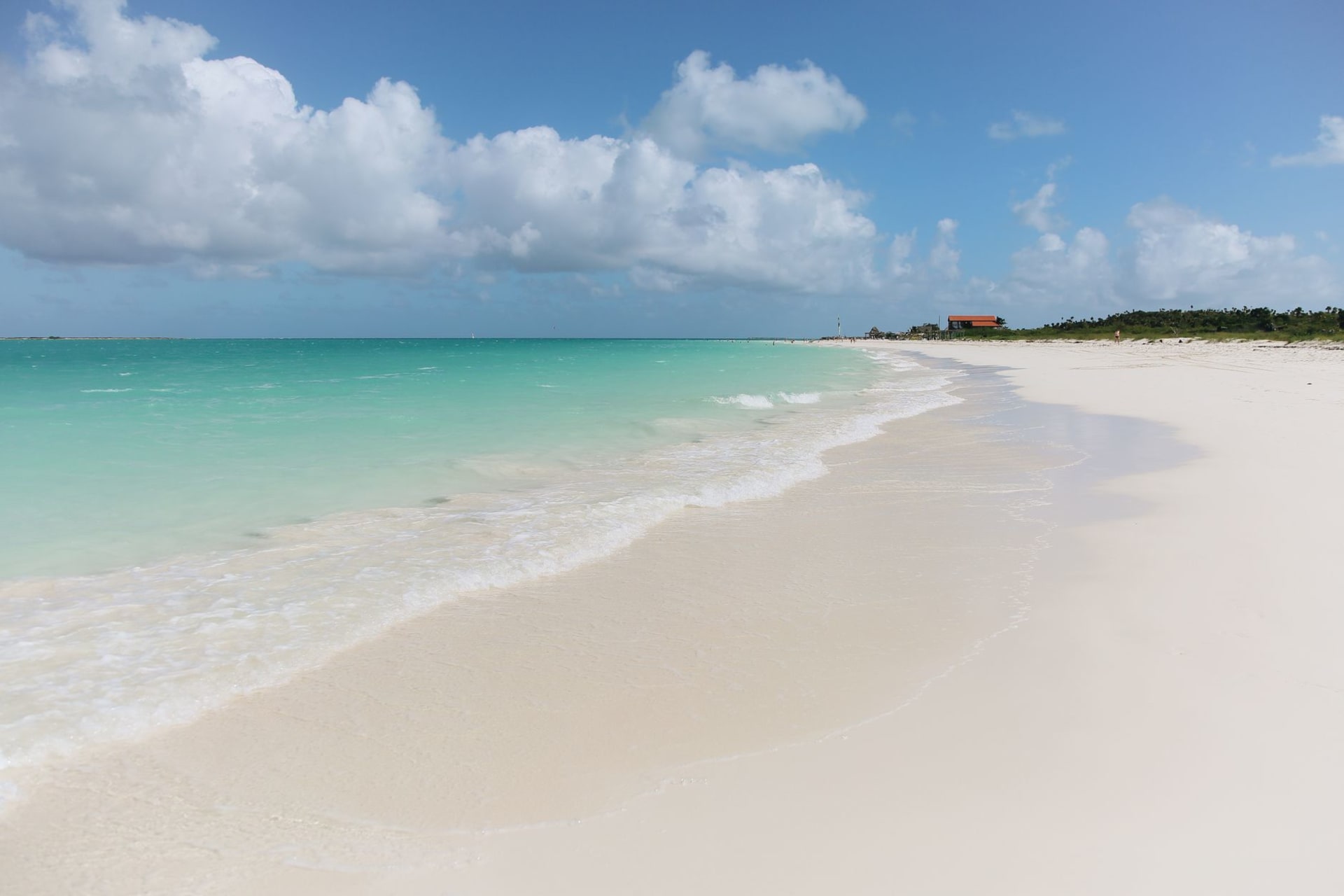
Everyone lands in Providenciales. It’s where the main airport is, where the resorts are concentrated, where the dive operators and charter boats and restaurants are headquartered. For many visitors it’s the only island they see, and some of them leave slightly disappointed because the version of Provo they expected — empty paradise, castaway beach — isn’t exactly what they found. The Provo that actually exists is more interesting than that and requires less idealization to appreciate.
What Provo Actually Is
Providenciales is about twenty-five kilometers long and twelve wide, and it has the layered, slightly chaotic development pattern of an island that grew fast in a short period. The Grace Bay strip along the north coast is organized around resorts and restaurants and runs for several kilometers without a break. Turtle Cove, slightly to the west, has the marina and is quieter, more functional, built for people who are using it as a base rather than a destination. The interior is low scrub and subdivision, not beautiful, practical in the way that island interiors tend to be.
What Provo has that the more remote islands in TCI don’t is infrastructure — good restaurants, proper dive shops with quality equipment, a functioning grocery store, a farmers’ market on Saturdays, reliable electricity. After a few days on Salt Cay or Middle Caicos, this registers as a luxury.
The Food Scene
The restaurant situation in Provo is genuinely impressive and has been for long enough that it doesn’t feel like a recent development. Da Conch Shack on the west end of the island has been frying conch in the same location since the nineties and the result is the definitive version of cracked conch in TCI: a crisp, peppery crust over meat that’s tender without being soft, served at a picnic table with the sea directly in front of you. Get there before noon.
On the other end of the spectrum, the restaurants at Grace Bay — Coco Bistro, Girasol, Parallel23 — operate at a level of cooking that would be notable in any coastal city. The lobster in season is extraordinary and everyone knows it; the snapper preparations show genuine thought. Lia tends to order whatever has the most local ingredients and has not been disappointed.
The Saturday farmers’ market at Providenciales Airport Road draws a mix of local producers and regional importers and is worth the early morning visit for the hot sauce selection alone.
Diving from Provo
Provo’s north coast is protected by a barrier reef that is also the starting point for a wall system extending across the archipelago. The dive sites accessible by boat from Grace Bay range from shallow beginner reefs to wall dives in the fifty-to-eighty-foot range. The operators based at Turtle Cove and Grace Bay are professional, well-equipped, and know their sites — this is not a cut-rate operation.
The best-known sites, like the Aquarium and the Crack, are excellent without being as unspoiled as the sites at West Caicos or South Caicos, which is what happens when a reef gets a lot of good-natured attention. Still worth it.
Using Provo as a Base
The most logical approach to TCI is to use Provo as the hub. Fly in, spend a night or two acclimatizing, then branch out to the outer islands by ferry or light aircraft. Come back to Provo for the last couple of nights and eat well. This structure gives you access to the full range of what the archipelago offers without requiring you to commit to the infrastructure limitations of the smaller islands for your entire trip.
The light aircraft flights — operated by several small carriers — are a pleasure in themselves. Fifteen minutes over the Caicos Bank, the water below you running through every variation of blue, is as good an introduction to island geography as any map.
When to go: December through April for peak-season conditions and the full range of activities. May and June offer nearly identical weather at significantly lower prices. July through October is hurricane season — September is highest risk, but many visitors come in October and November to beat the crowds and find prices have dropped substantially.