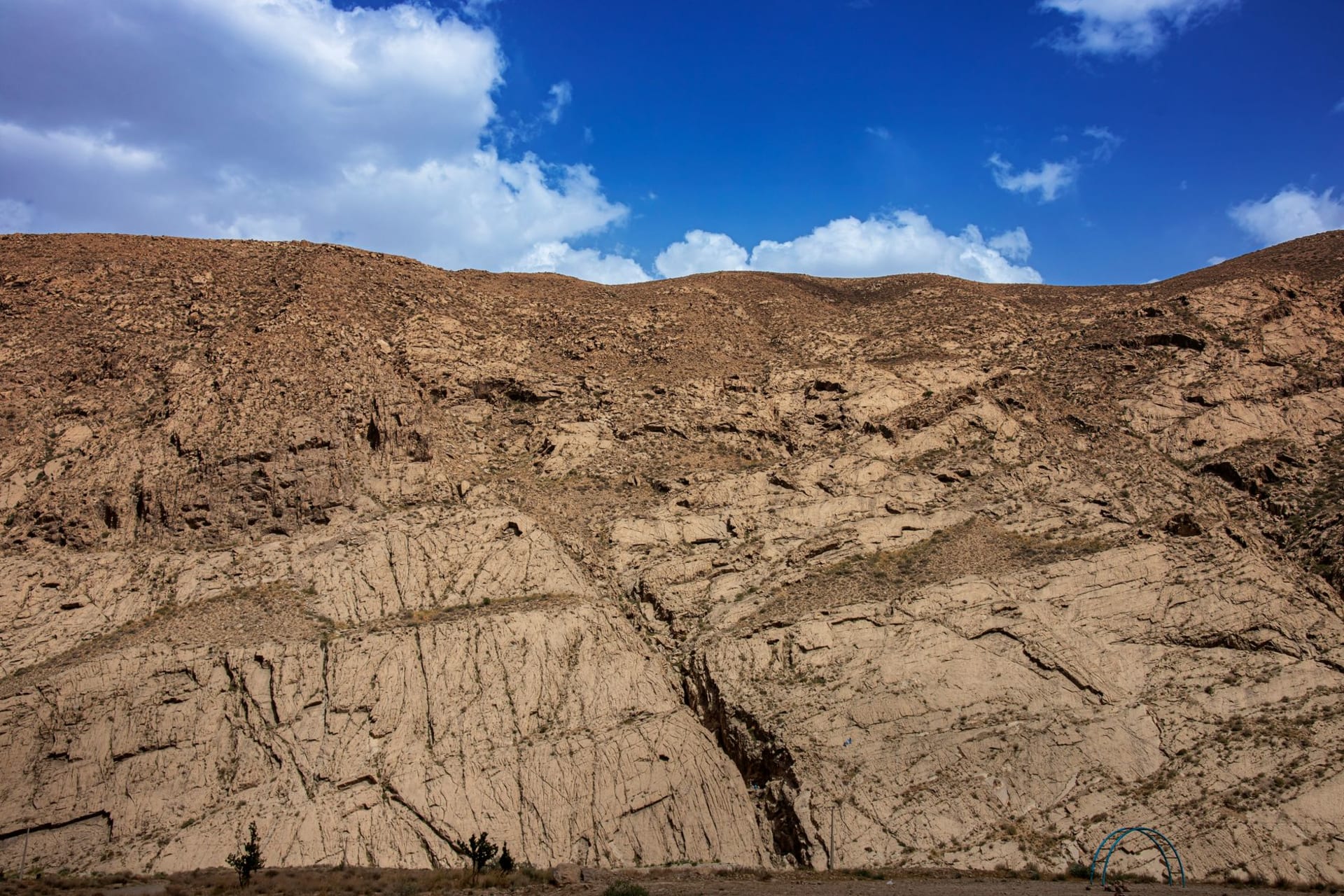
Yangykala Canyon
"The canyon wall was the color of a coal ember — not orange, not red, something between the two."
How to Find a Hidden Canyon
Yangykala sits in the western Balkhan region, roughly 300 kilometers north of Turkmenbashi city along roads that become progressively less formal as you travel. The approach is through flat scrubland — sparse saxaul trees, salt flats, the occasional camel standing with the resigned composure of an animal that has made peace with its environment. There are no signs indicating the canyon. The first time I spotted a strip of red on the horizon I thought it was a factory.
It is not a factory. It is the rim of a canyon system of considerable scale — roughly 25 kilometers long, with walls that in places exceed 100 meters — whose striated layers of Cretaceous limestone read like a geological textbook cut open and stood upright. The reds, oranges, creams, and grays shift with the light in ways that make the word “canyon” feel inadequate.
What Makes the Walls
The colors at Yangykala are the product of different mineral contents in alternating sedimentary layers: iron oxides for the reds and oranges, calcium carbonate for the whites, organic material for the occasional dark band. The canyon was once an ancient sea bed — the Caspian’s predecessor, the Paratethys — and the layers represent different geological periods in that ancient sea’s history.
I find that knowing the science doesn’t diminish the visual experience. If anything it amplifies it. Standing at the rim looking down at those bands is like reading time in the only alphabet that matters at geological scale.
The Light
Come in late afternoon. I cannot stress this enough. At midday the canyon is striking but relatively flat in quality — the sun overhead flattens the relief and the colors read more muted. As the sun drops toward the western horizon (toward the Caspian, invisible but close), the walls catch the raking light and the reds intensify into something almost muscular. At the last twenty minutes before sunset, the canyon glows from within in a way that photographs struggle to accurately represent.
Lia and I sat on the rim until we lost the light entirely, eating bread and dried apricots we’d bought in Turkmenbashi, watching the color drain from the walls in the order it had arrived — the highest points going dark first, the deeper recesses holding their orange for an extra few minutes. The silence was total. No other visitors, no wind worth mentioning, just the sound of the desert settling into night.
Logistics of a Place That Doesn’t Really Want to Be Visited
Yangykala requires a tour operator or a very confident approach to independent travel in Turkmenistan. Technically it falls within a zone requiring additional permits beyond the standard tourist visa. In practice, operators in Ashgabat include it in western Turkmenistan circuits that combine the canyon with Avaza/Turkmenbashi and sometimes Dehistan. A 4WD vehicle is essential — the tracks to the canyon rim are unpaved and sandy.
Camping at the rim is possible and genuinely spectacular. The canyon holds warmth after sunset and the stars in this part of Turkmenistan are exceptional — the country has almost no light pollution outside of Ashgabat, and the Milky Way is properly visible on moonless nights.
When to go: April through May and September through October offer the ideal combination of bearable temperatures and good light quality. Summer is hot but not as extreme as the Karakum interior — the Caspian proximity moderates slightly. Avoid winter for road access reasons rather than weather, though January nights at the canyon rim are cold.