Darvaza Gas Crater
"I stood at the edge and felt the heat on my face from thirty meters away."
A collapsed Soviet drilling site has burned continuously since 1971, lighting the Karakum Desert from below like a wound in the earth that refuses to close.

Getting There Is the Point
The road to Darvaza exists in a theoretical sense. There is a paved highway north from Ashgabat — decent, even fast — and then a turnoff where the paving ends and the Karakum begins. From that point it’s roughly twenty kilometers of desert track, washboard and sand, the kind of driving that teaches you to keep your teeth slightly apart. Our driver knew where he was going and said nothing for the duration. The desert here is flat and colorless under midday light, the horizon perfectly unbroken. You can’t see the crater until you’re nearly on top of it.
Then you smell it. A faint sulfurous undertone, then stronger, then unmistakable. And then the edge of a depression appears in the sand and the heat arrives before you do.
The Hole Itself
Sixty meters across, twenty meters deep, burning. The official story — possibly apocryphal — is that Soviet geologists drilling for natural gas in 1971 caused the ground to collapse, and someone lit the escaping gas to prevent a methane hazard, expecting it to burn out in a few weeks. It has now been burning for over five decades.
The practical reality at the crater’s rim is sensory overload. The heat is the first thing: genuine, physical heat that presses against your face and arms even from the established viewpoint. The sound is a sustained low roar, not dramatic, more like industrial ventilation, but constant. The flames themselves are beautiful — dozens of jets of different heights, blue at the base, orange further up, the walls of the crater rippling with convection. At night, which is when you should be there, the sky around the crater vanishes and the whole world contracts to the orange circle below.
Camping at the Edge of the World
The standard approach is to camp nearby — tour operators set up tents on the sand, and you spend the evening watching the light change on the crater walls as the sun drops. Lia and I sat outside the tent long after dinner, a small fire of our own burning low, the distant orange glow pulsing on the horizon. The desert at night is genuinely cold, which makes the warmth radiating from the crater feel like a strange gift.
There are two other craters nearby — one flooded with mud, one that once burned and is now dark. The mud crater is worth the short walk: sulfurous water the color of old concrete bubbles and shifts, completely still except for those eruptions. The extinct crater is just a hole in the desert, quiet and unremarkable, which makes it somehow the most thought-provoking of the three.
What Stays With You
No photograph I’ve taken communicates the scale correctly. The crater looks smaller in images, the flames less chaotic. What the images don’t capture at all is the smell, which follows you for the rest of the day, or the feeling of standing at the edge of something the earth created by accident and that has outlasted the people who made it.
A few other travelers were there the same night we were — some on organized tours from Ashgabat, one couple who’d come independently by rented 4WD. We didn’t talk much. The crater doesn’t encourage conversation.
When to go: April through early June and September through October. Summer temperatures in the Karakum regularly exceed 45°C, which makes camping a dangerous proposition. Winter nights are cold but the crater is spectacular with frost on the surrounding sand. Full moon nights add an eerie secondary light source that’s worth planning around.
Keep exploring
More from Turkmenistan
 turkmenistan
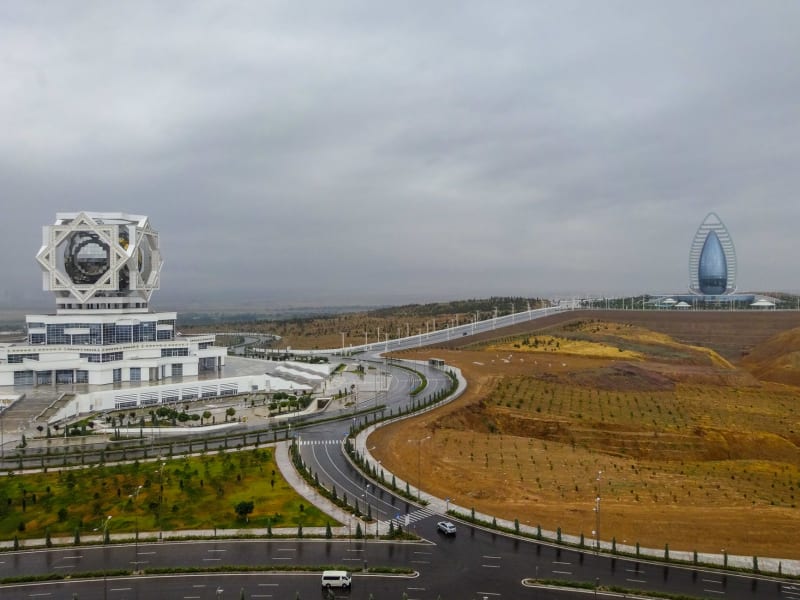
 Dehistan
A hauntingly ruined medieval city in the southwestern desert, its twin minarets still standing after ten centuries as the sand slowly reclaims the rest.
Explore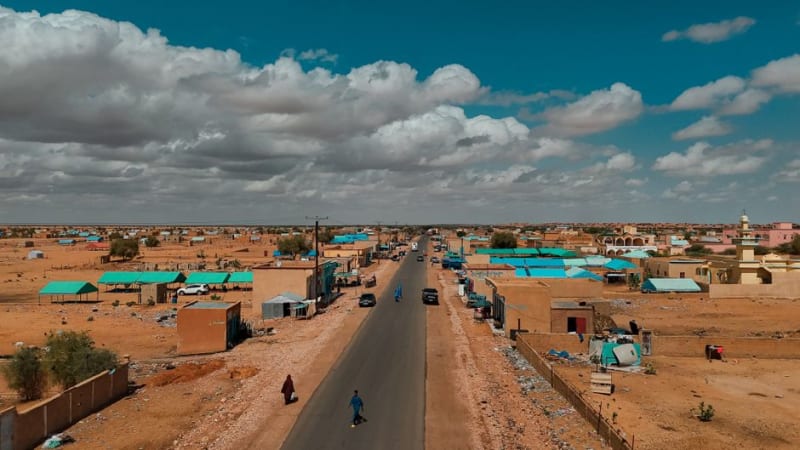 turkmenistan
 Gaurdak
A dusty eastern desert town near the Uzbek border, gateway to sulfur caves and pale salt formations few outsiders ever bother to see.
Explore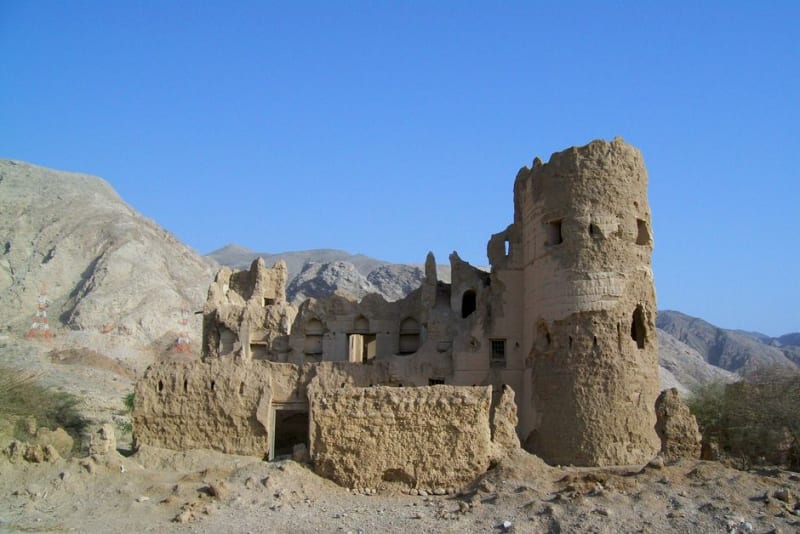 turkmenistan
 Geoktepe
A quiet desert fortress site west of Ashgabat where Turkmen tribes made their last stand against the Russian Empire in a brutal 1881 siege.
Explore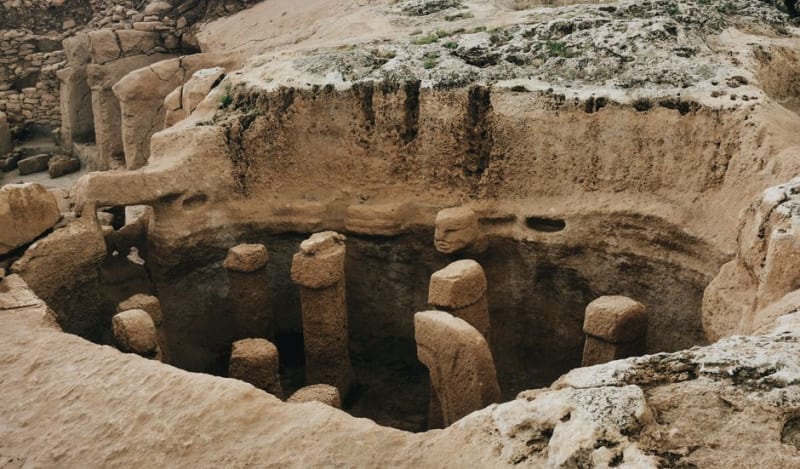 turkmenistan
 Gonur Depe
A crumbling Bronze Age palace complex buried in the Karakum desert, where a lost Central Asian civilization once thrived beside a river that no longer exists.
Explore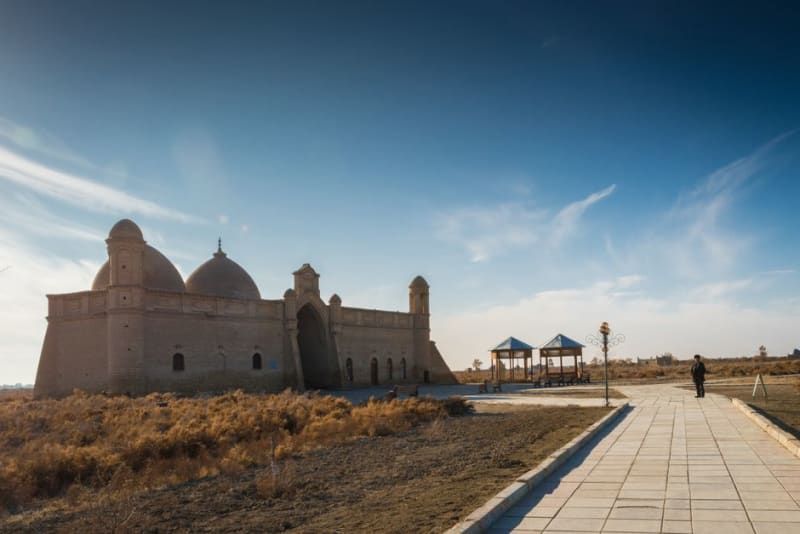 turkmenistan
 Gozli Ata
A remote pilgrimage necropolis in Turkmenistan's western desert, where domed mausoleums and centuries of graves cluster around a revered Sufi shrine.
Explore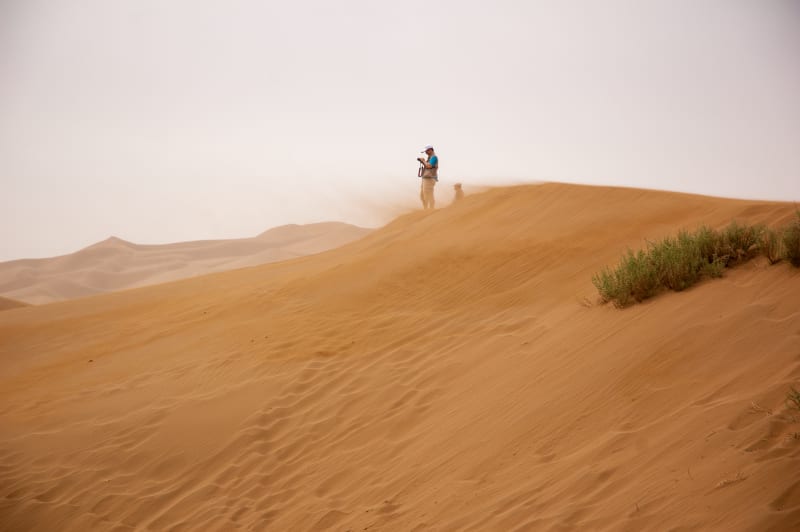 turkmenistan
 Karakum Desert
The Black Sand Desert covers 70 percent of Turkmenistan and swallows everything — ancient cities, Soviet projects, ambition — in a silence that has no edge.
Explore