Patara
"Lia found a turtle track before we found the ruins, and honestly, that set the tone."
An 18-kilometer beach guarding a buried Lycian capital, where turtle nests and half-excavated colonnades share the same sand.
We almost drove past Patara. There’s no dramatic sign, no crowd funneling you in — just a dirt road through sesame fields that eventually opens onto a ticket booth and, beyond it, ruins so scattered they feel more discovered than displayed. I remember cutting the engine and hearing nothing but wind moving through dry grass, and thinking: this was once the capital of the Lycian League, a place where representatives from dozens of cities gathered to vote in what’s considered one of the earliest parliamentary buildings anywhere. Standing in that half-buried assembly hall, sand drifted into corners the excavators hadn’t reached yet, I felt genuinely small in a way Ephesus never managed to make me feel, probably because nobody else was there to remind me I was a tourist.
Patara’s identity is layered in a way that took me a day to untangle. It’s supposedly where Saint Nicholas was born, it later became this Lycian League capital with real political weight, and centuries after that the Romans built a theatre and raised a triumphal arch for a governor named Mettius Modestus — his name still legible on the stone if you look up as you walk under it.
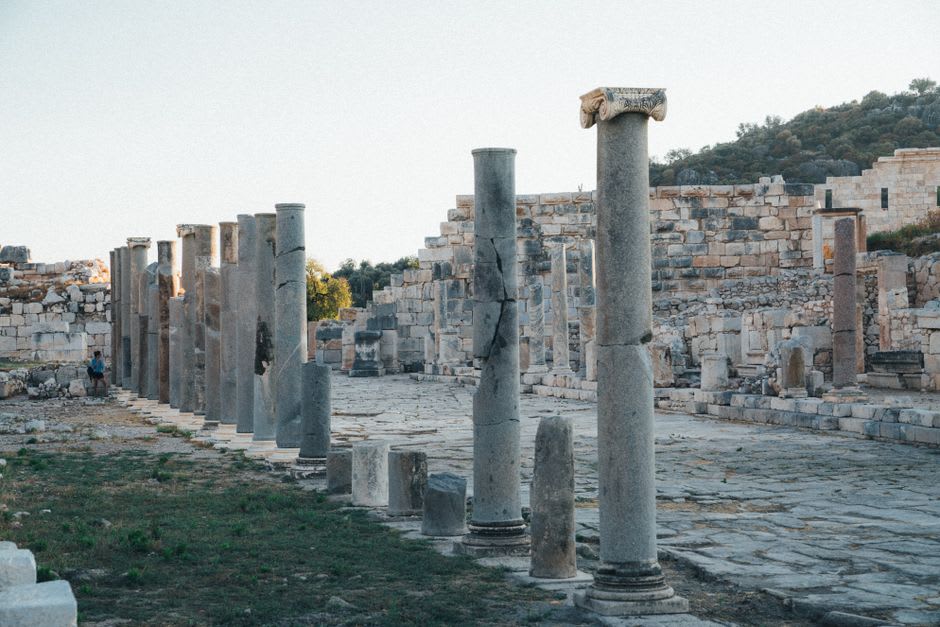
We wandered the colonnaded street next, or what’s visible of it — archaeologists are still digging columns out from under the dunes, so you’re essentially walking a street in the process of being un-buried. Then the lighthouse, dated to Nero’s reign around AD 64-65, sitting improbably close to the water like it’s still doing its job. I kept thinking about how the same sand that buried the street for centuries is the reason turtles still nest a few hundred meters away every summer.
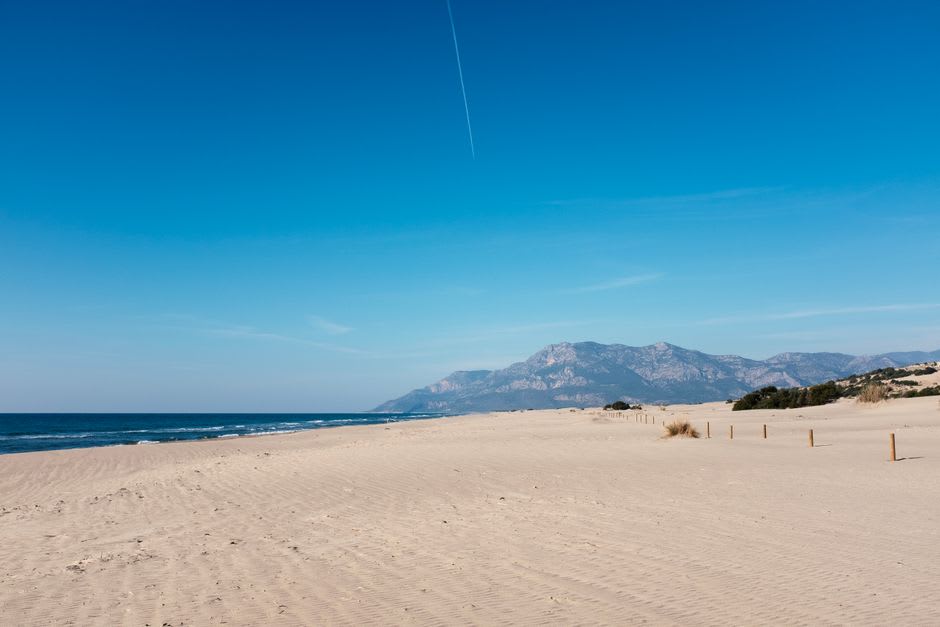
That beach is the other half of Patara, and it’s the part I didn’t expect to love as much as the ruins. Eighteen kilometers of sand, Turkey’s longest stretch, and because it’s protected loggerhead turtle nesting ground, there’s no beach bar chaos, no sunbed rows — just staked-off nest sites with little handwritten signs and Lia walking the tideline looking for tracks like she’d done it her whole life. We ended the day eating grilled fish at a tiny place near Gelemiş village, feet still sandy, talking about how strange it is that this beach sits right at the start of the Lycian Way, 540 kilometers of trail stretching off into the mountains behind us.
When to go: We went in late September and had the ruins nearly to ourselves — I’d aim for April through June or September into October, when the heat backs off, the crowds thin out, and if you’re lucky, you’ll spot turtle nests without the peak-summer scrum around them.
Keep exploring
More from Turkish Riviera
 turkish-riviera
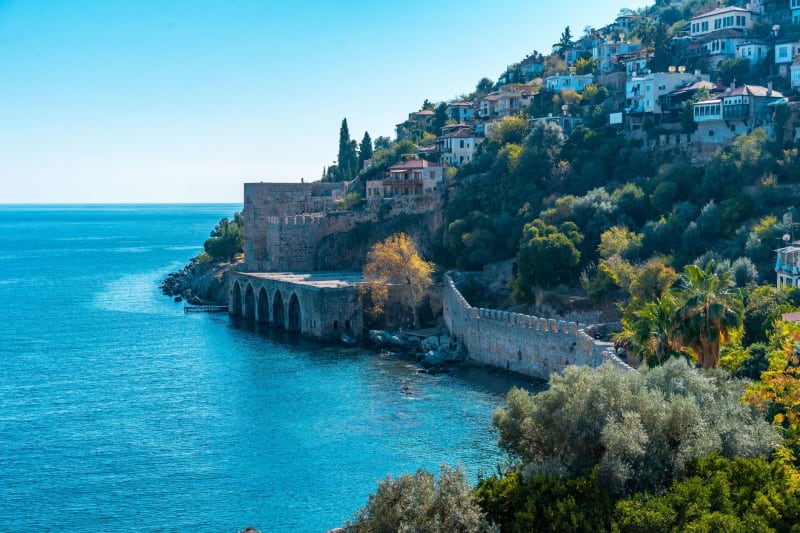
 Side
An ancient Greek and Roman port city still occupied, where Apollo's temple stands at the sea's edge and the ruins run between ice cream carts and jewelry shops without any apparent embarrassment.
Explore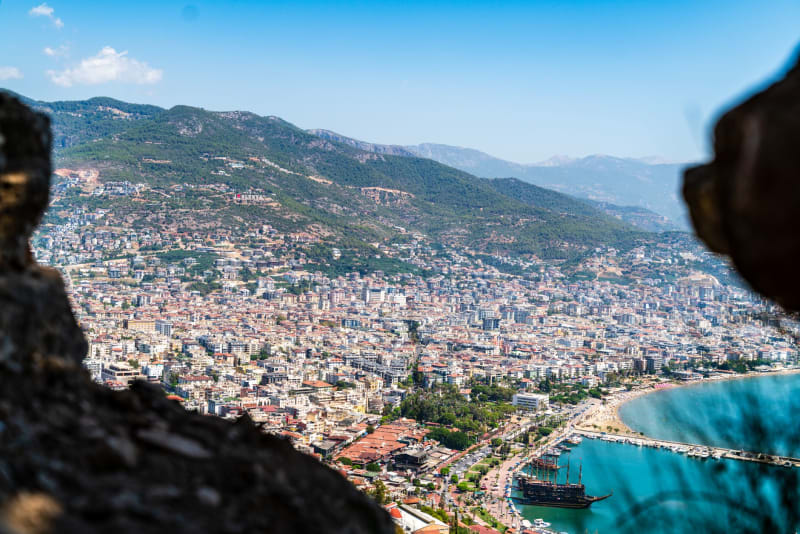 turkish-riviera
 Alanya
A Seljuk fortress town on a rocky promontory between two long beaches, where the medieval citadel walls still ring the clifftop and the view from inside them is worth every step of the climb.
Explore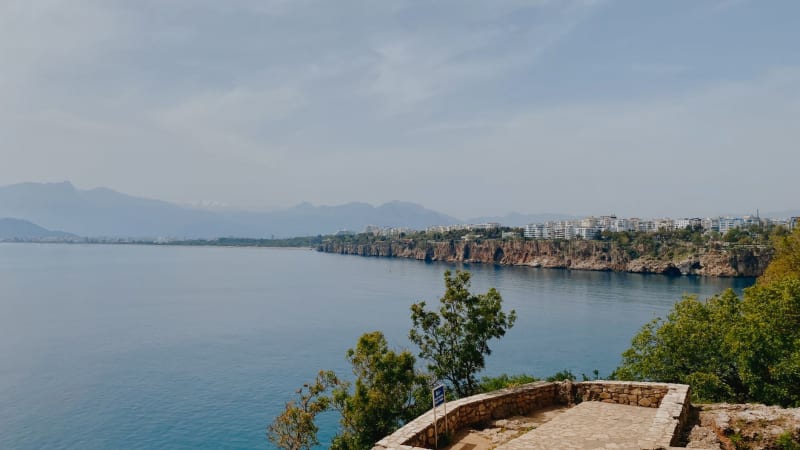 turkish-riviera
 Antalya
A Roman harbor town that refuses to become a mere airport layover, with a walled old quarter where laundry hangs between columns two millennia old.
Explore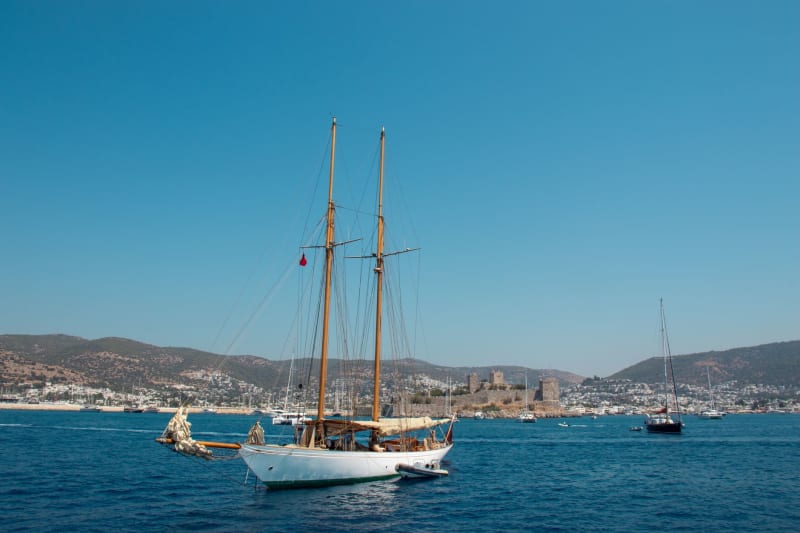 turkish-riviera
 Bodrum
A Aegean peninsula town of whitewashed houses and a Crusader castle where the marina holds superyachts and the backstreets hold pomegranate juice stalls, and somehow both feel native to the same place.
Explore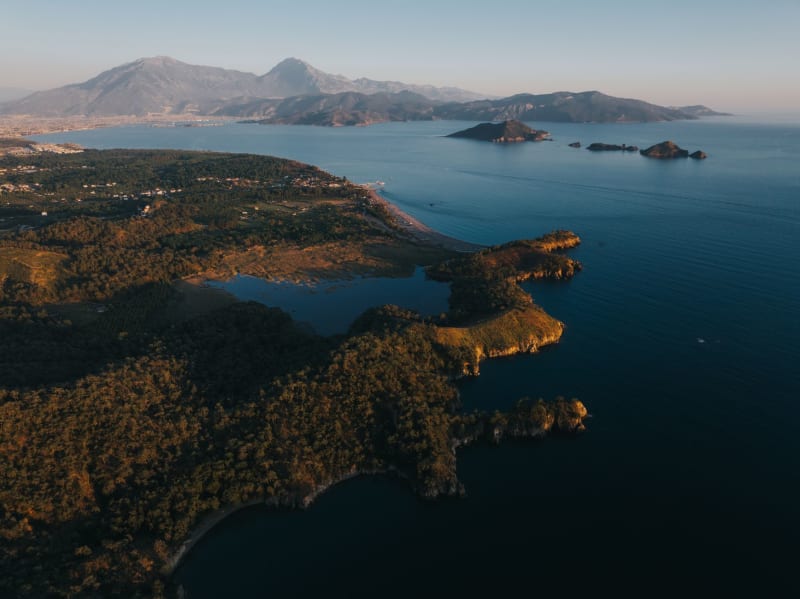 turkish-riviera
 Fethiye
A working harbor town built over Lycian Telmessos, where ancient rock tombs glow orange in the cliffs above the fish market and gulets line the waterfront like a fleet waiting for something to happen.
Explore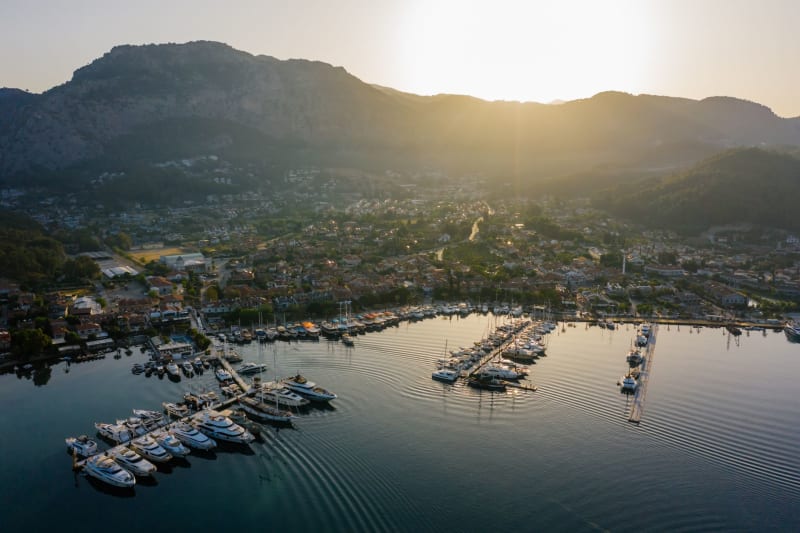 turkish-riviera
 Göcek
A small pine-backed sailing town of almost no beach and extraordinary anchorages, where the real geography is water rather than land and the twelve islands offshore are a private world for anyone with a boat.
Explore