Kalkan
"Kalkan taught me that 'whitewashed hillside village' can be either a cliché or a precise description depending entirely on where you're standing."
There’s a version of Kalkan that exists in British travel magazines — boutique hotels, infinity pools, villa rentals for couples who use words like “bolthole” — and there’s the Kalkan that’s actually there, which is closer to those descriptions than I’d like to admit and simultaneously more interesting than they suggest. The place earns its reputation. I just wish the reputation were a little less settled.
The Village Above the Harbor
Kalkan’s old town is a compact grid of Ottoman stone houses painted white and chalky blue, stacked on a hillside steep enough that some of the lanes are more staircase than street. The buildings have survived better here than almost anywhere else on the coast — partly because the town was Greek Orthodox until the 1923 population exchange, then stayed small enough that developers couldn’t be bothered with it until the architecture had already become a selling point.
In the morning the lanes are quiet. A woman beats a carpet over a railing. A cat performs its civic duty of sitting in a doorway. The smell coming from bakeries is yeasty and warm. I walked the old quarter before breakfast two mornings in a row and felt, both times, that I’d stumbled into something I wasn’t supposed to have access to.
The Harbor and the Water
The harbor is small — a crescent of moored gulets, a handful of cafes, a fish restaurant where the catch comes off local boats. There’s no beach in Kalkan proper; the swimming is off rocks and wooden platforms at the water’s edge, or on the boats themselves. The sea here is startlingly deep close to shore, and the color shifts from a pale mint near the rocks to something close to sapphire at depth.
We took a day boat one afternoon to a series of coves accessible only by water. The captain’s daughter served tea from a thermos while her father navigated by memory through limestone outcrops. We swam in three different coves and ate lunch on deck — bread, tomatoes, cucumbers, a jar of local honey — with the kind of pleasure that belongs to simple food eaten in the right place.
Rooftop Dinners
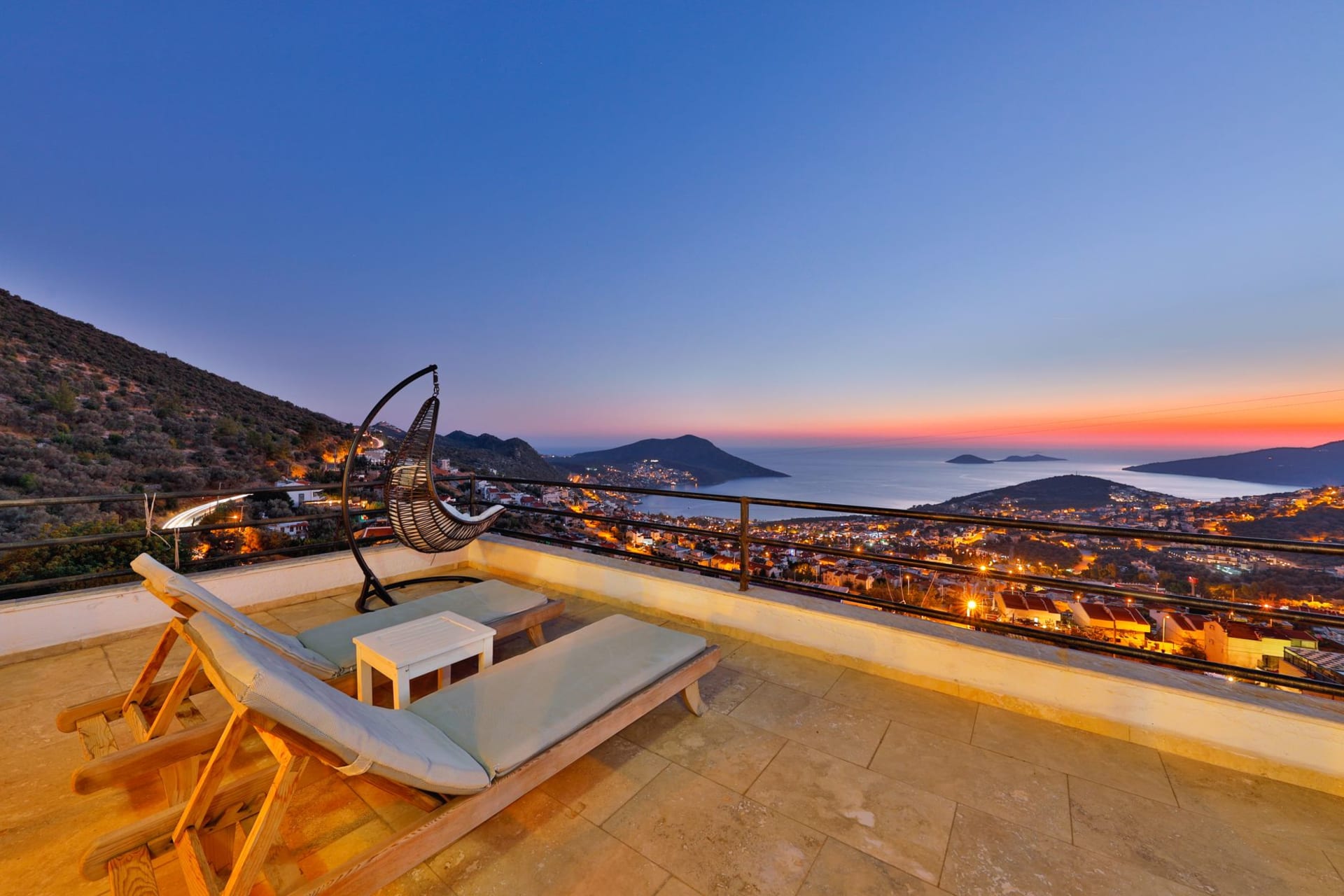
Kalkan’s rooftop restaurant scene is not a joke. A dozen places occupy the upper floors and terraces of old houses, and in the evening they offer a view of the harbor lights and the bay turning from blue to black while you eat. The food ranges from competent to excellent — the better spots take seafood seriously, the mezze are locally sourced, and the wine list includes some Aegean producers worth knowing. I had the best octopus of the trip here: grilled over wood until the exterior was almost brittle, the interior tender in a way that takes patience and practice.
Patara and Xanthos Nearby
Kalkan’s geographic advantage is proximity to two of the most significant Lycian sites: Patara, thirty minutes west, which combines a vast uninhabited beach with an important ancient city; and Xanthos, forty minutes north up the river valley, which was the Lycian capital and holds a UNESCO designation that the site absolutely justifies. Both are easy half-day trips. Combining them with a swim at Patara beach makes a full and satisfying day that costs almost nothing.
When to go: May and June are the sweet spot — warm enough for swimming, quiet enough for the rooftop restaurants to have tables available without booking a week ahead. October is excellent in a different way: the British villa crowd has gone home, prices drop, and the light goes amber and lateral in a way that makes everything look slightly unreal.