Middle East
Turkish Riviera
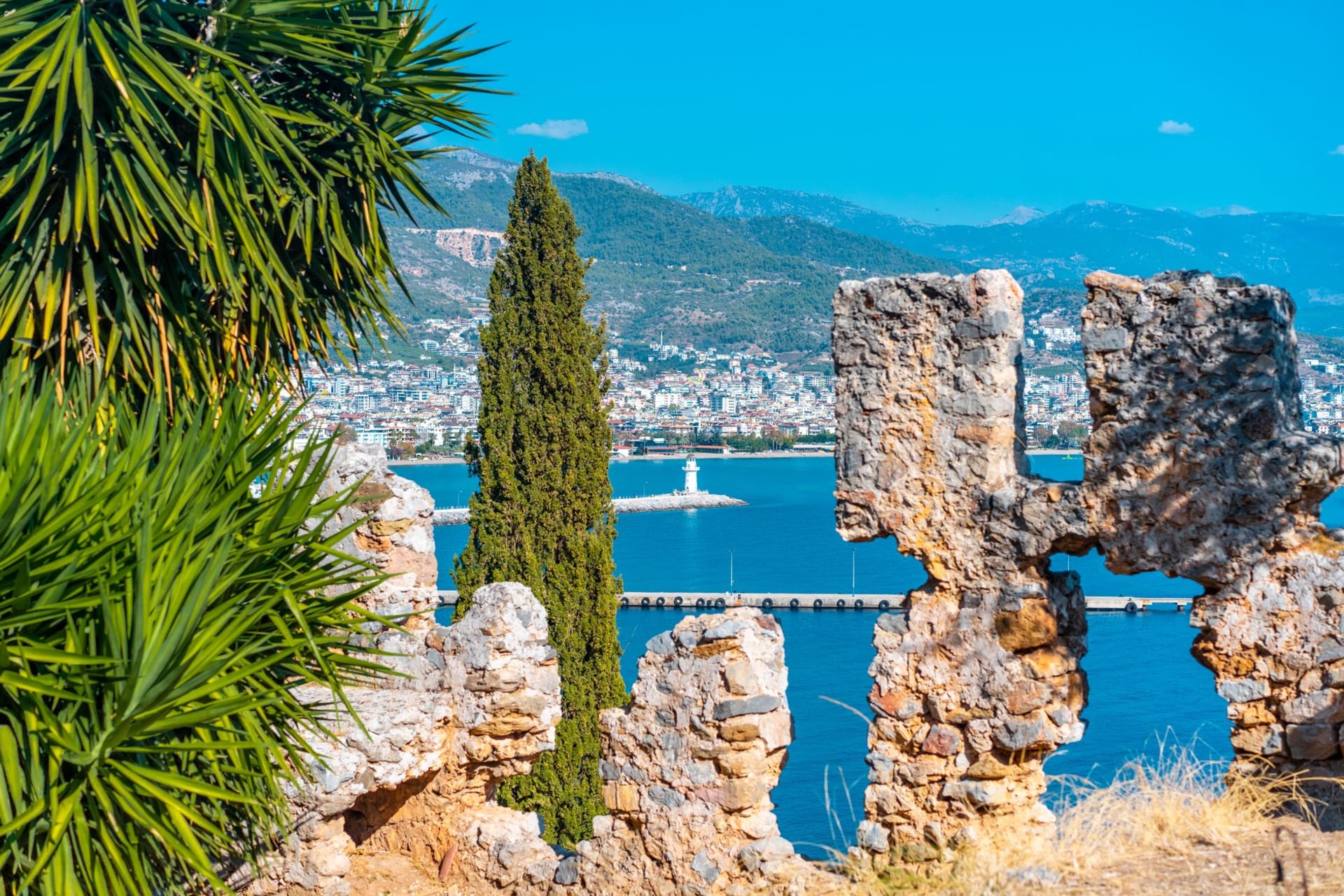
"Where ancient walls hold back nothing but the view of the sea."
The bus drops you in Kaş at seven in the morning, before the heat has settled, and the town is still quiet enough that you can hear the water. The harbor sits below streets of bougainvillea and Ottoman houses, the kind of place where the coffee is brought to you without asking and the bread is still warm. I had arrived from Antalya the night before, intending to spend two days. I stayed nine. The Turkish Riviera — the stretch from Antalya west to Fethiye that Turks call the Turquoise Coast — operates like that. It has a way of dismantling your schedule.
What distinguishes this coast from the rest of the Mediterranean is not the sea, which is beautiful but not uniquely so. It is the density of history packed into the shoreline. Lycian ruins appear around every bend: the half-submerged city of Kekova, visible only from a kayak, its streets and doorways blurring beneath two meters of clear water. The rock-cut tombs above Myra, where you can walk among carved facades and sarcophagi while a modern fishing village carries on below. The theater at Aspendos, so well preserved it still hosts opera performances on summer evenings, the acoustics unchanged since the second century. Between ruins, there are cedar forests that run to the cliff edge, small family-run pansiyons where dinner is a fixed spread of meze you did not choose and do not need to, and coves accessible only by boat where the water is the precise shade of blue that does not appear in photographs the way it does in life.
Antalya, the regional capital, is worth two or three days before you head west. The old town — Kaleiçi — is a tangle of Roman walls, Byzantine churches, and Seljuk minarets, all compressed into a few walkable blocks above the harbor. The Archaeological Museum holds one of the best collections of Roman statuary in Turkey, and the covered bazaar is genuinely functional rather than touristic. Eat the piyaz here, a white bean salad dressed with tahini and vinegar that is specific to Antalya and unlike anything you will find elsewhere.
When to go: April to June is the ideal window — the water is warm enough to swim, the light is extraordinary, and the ruins are not yet crowded. September and October work nearly as well. July and August bring fierce heat and the full weight of European package tourism, particularly around Ölüdeniz and Alanya.
What most guides get wrong: They frame the Riviera as a beach holiday with ancient ruins as a bonus. It is the other way around. The coast is a landscape of extraordinary historical depth that happens to have excellent swimming. Go to Kekova before ten in the morning, when the tour boats haven’t arrived yet. Rent a kayak and paddle over the submerged city alone. That is the Turkish Riviera at its truest — not the infinity pools at Ölüdeniz, but a moment of silence above a drowned civilization.