Diyarbakır
"Diyarbakır's walls are the first thing you see and the last thing you stop thinking about."
Black basalt walls second only to the Great Wall of China encircle the cultural heart of Turkey's Kurdish southeast, on a bend of the Tigris River.
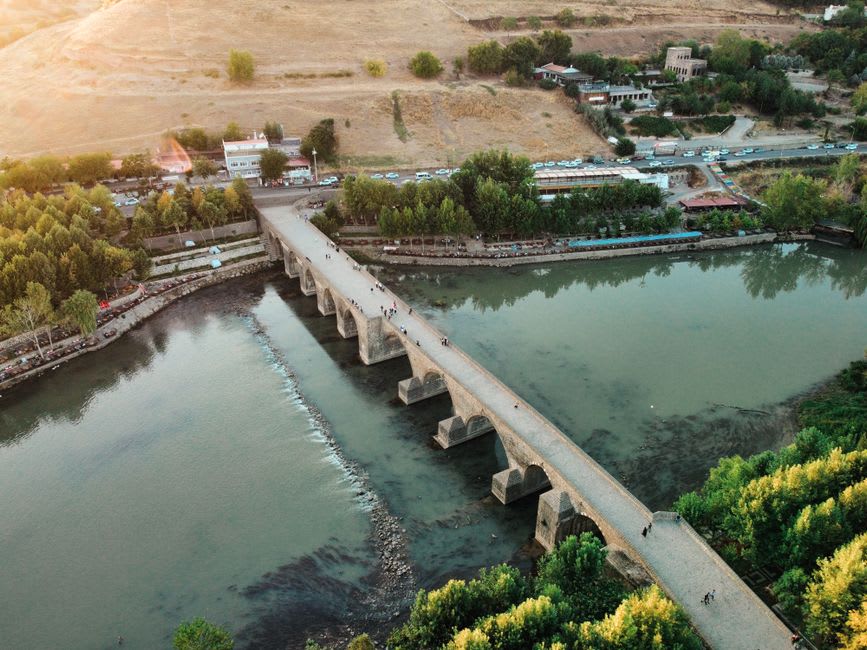
You see Diyarbakır’s walls before you see the city itself. They rise out of the Tigris River valley in a long, unbroken run of black basalt, and the effect from a distance is almost geological, like an outcrop the land produced rather than something built. I’d read that these are among the longest city walls still standing in the world, surpassed only by the Great Wall of China, and I’d assumed that was the kind of superlative that shrinks on arrival. It doesn’t. Nearly six kilometers of them still stand, punctuated by dozens of bastions, and walking even a fraction of the ramparts took most of an afternoon.
The walls and the old city
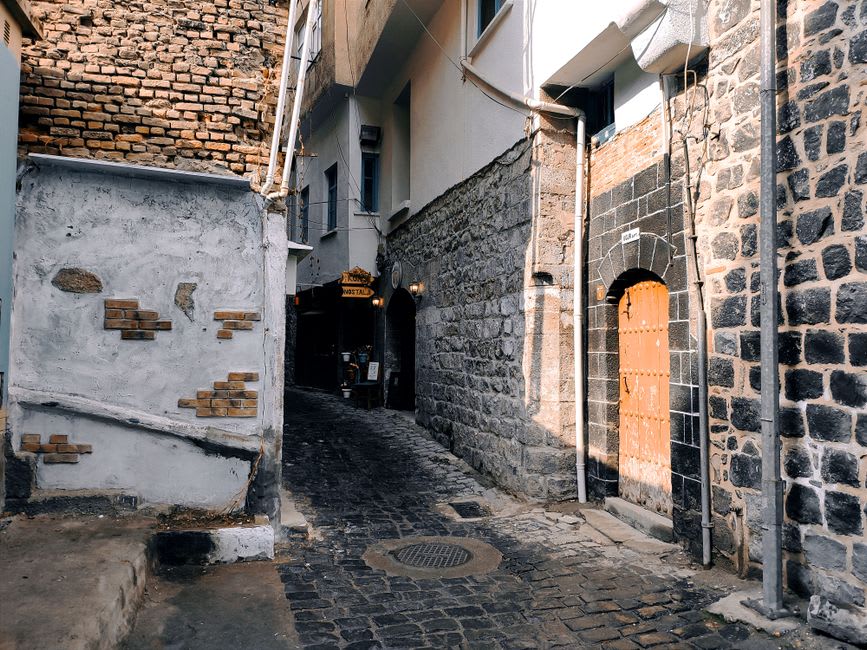
I climbed onto the ramparts near the Mardin Gate and walked west as the light went gold, the basalt turning from black to a strange bruised purple, the Tigris curling below on its way toward Mesopotamia. Diyarbakır’s stone comes from local volcanic rock, and the color gives the whole old city a mood unlike anywhere else I saw in Turkey — heavier, more fortified, more serious. Inside the walls, the old town is a warren of narrow lanes and traditional Diyarbakır houses built from the same black basalt banded with white limestone, a striping pattern locals call “kebe” that shows up on mosques, churches, and courtyard houses alike. The Ulu Camii, converted from a Byzantine church in the eleventh century, has an austere courtyard with recycled Roman and Byzantine columns that give it a patchwork, improvised grandeur.
The Kurdish cultural heart
Diyarbakır is, unambiguously, the cultural capital of Turkey’s Kurdish southeast, and that identity is present everywhere — in the Kurdish spoken on the street alongside Turkish, in the music spilling from tea houses, in a directness and hospitality that felt distinct from anywhere else on my trip. I was invited to sit with a group of men playing okey, a Turkish tile game, outside a çay house in the old quarter, and though we shared perhaps twenty words of a common language between us, I stayed for two hours and left having been fed watermelon, tea, and unreasonable amounts of local gossip translated badly through gestures. The bazaar sells copper, silver filigree, and the region’s dense, intensely spiced künefe — a shredded pastry dessert soaked in syrup and layered with cheese — that I ate hot enough to burn my tongue and immediately ordered again.
When to go: April to June or September to October. Summers on the Mesopotamian plain here are severe, regularly climbing past 40°C, and the walls offer little shade at midday.
Keep exploring
More from Turkey
 turkey
 Edirne
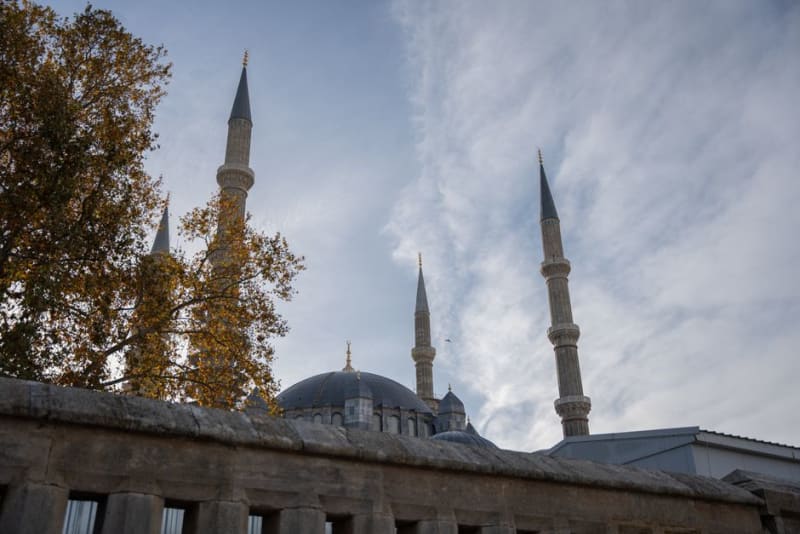
The Ottoman capital before Istanbul, home to Sinan's architectural masterpiece and a centuries-old oil-wrestling tradition, right on the Balkan border.
Explore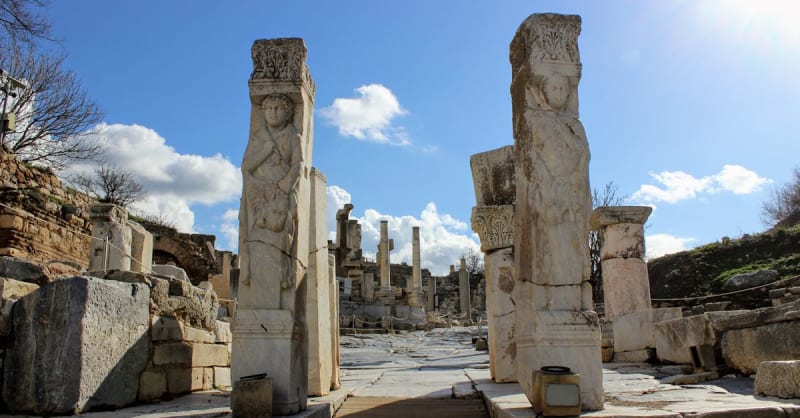 turkey
 Ephesus
One of the ancient world's greatest cities, where marble streets and a magnificent library still echo with Roman grandeur.
Explore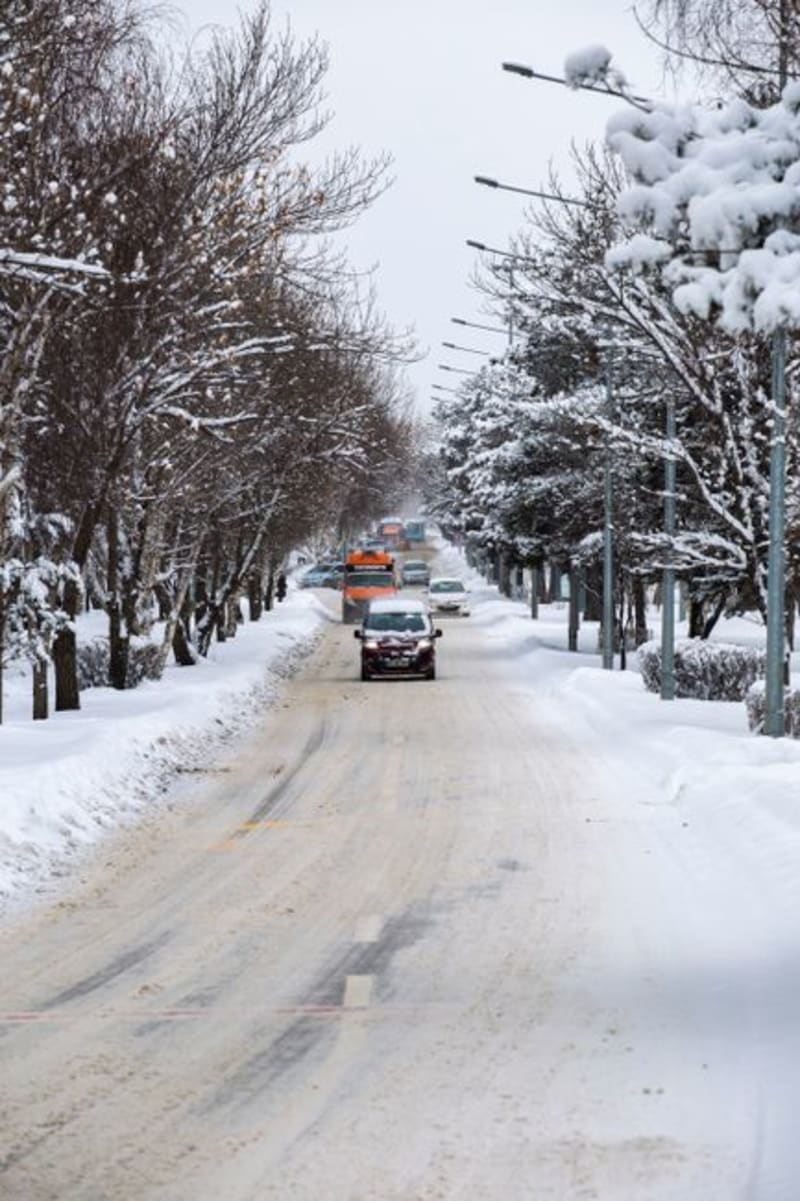 turkey
 Erzurum
A high-plateau fortress city where Seljuk stonework meets brutal winters, ski slopes above town, and a kebab worth freezing for.
Explore turkey
 Fethiye
A laid-back harbor town backed by pine-covered mountains, with Lycian rock tombs glowing above the waterfront at night.
Explore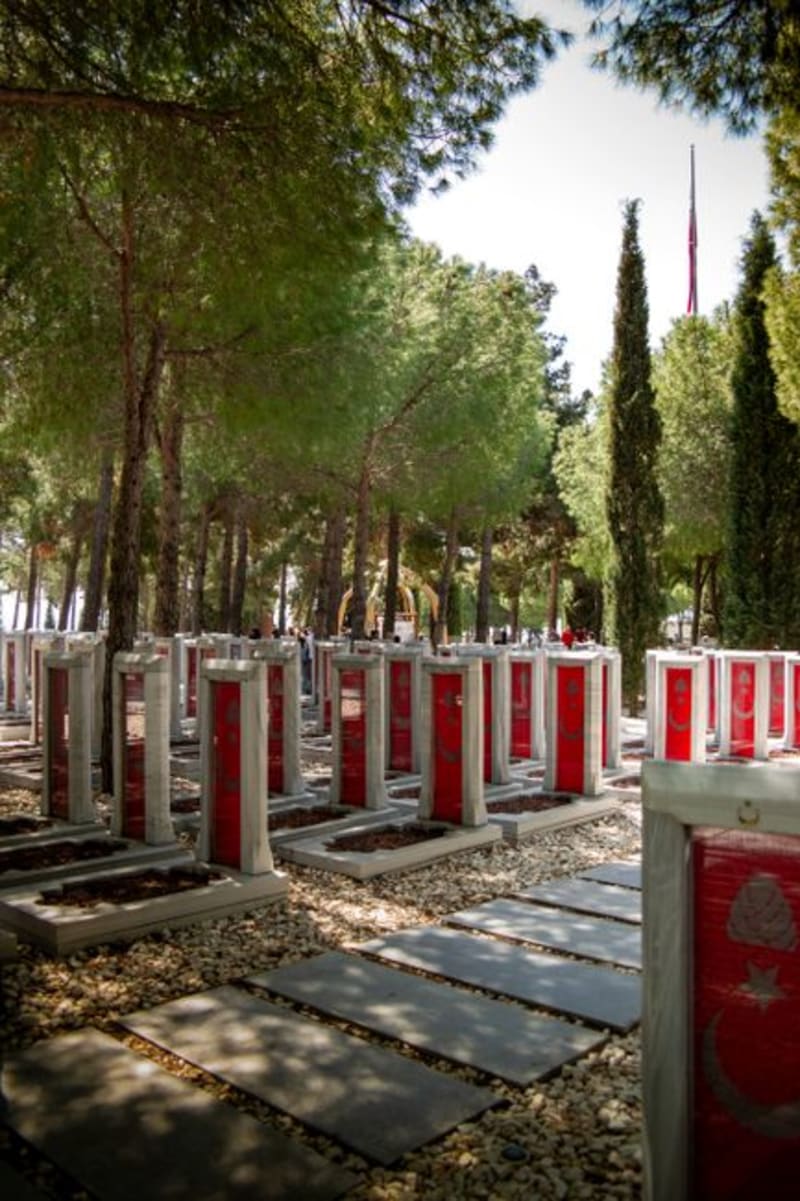 turkey
 Gallipoli
A somber WWI battlefield peninsula of pine forests and quiet cemeteries, where ANZAC Cove still carries the weight of a war that shaped nations.
Explore turkey
 Gaziantep
Turkey's culinary capital and one of the oldest continuously inhabited cities on earth, where baklava is a science and Roman mosaics rival anything in Italy.
Explore