Aspendos
"Someone tore a piece of paper on the stage floor and I heard every fiber of it from the top row."
The best-preserved Roman theater on earth, engineered so precisely that a whisper on stage still reaches the back row two thousand years later.
I’d read the claims about the acoustics at Aspendos before I went and assumed, as I usually do with superlatives in guidebooks, that they were exaggerated. They are not. I climbed to the very top row of the cavea, easily thirty meters above the stage, while a tour guide below demonstrated for her group by tearing a sheet of paper in half. I heard it distinctly — not amplified, not imagined, just carried up on the shape of the stone the way its Roman architect intended. A German couple next to me actually laughed out loud in disbelief.
An Engineering Trick That Still Works
The theater was built in the second century AD under the architect Zenon, a local, and it survives essentially complete — not reconstructed, not stitched together from fragments, but standing the way it was built, which is genuinely rare among Roman theaters anywhere in the former empire. The stage building still has its two tiers of columns and niches, most of its original decorative elements gone but the structure itself intact enough that the theater is still used for performances today, including an annual opera and ballet festival held on the same stage that hosted spectacles two millennia ago.
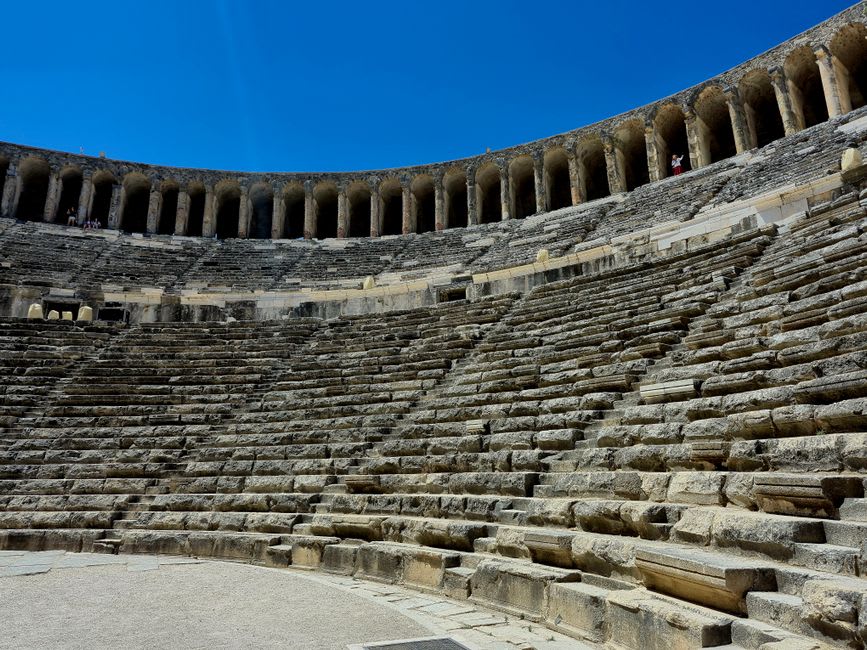
I sat through part of a rehearsal for that festival, a small orchestra tuning up, and the sound carried with a clarity that made every modern amplified concert I’ve attended feel like a workaround for a problem the Romans had already solved. A theater usher named Ferhat, who’d worked the venue for over a decade, told me musicians still adjust their playing when they realize how forgiving the acoustics are — softer passages that would vanish in a modern hall come through clean here.
Beyond the Theater
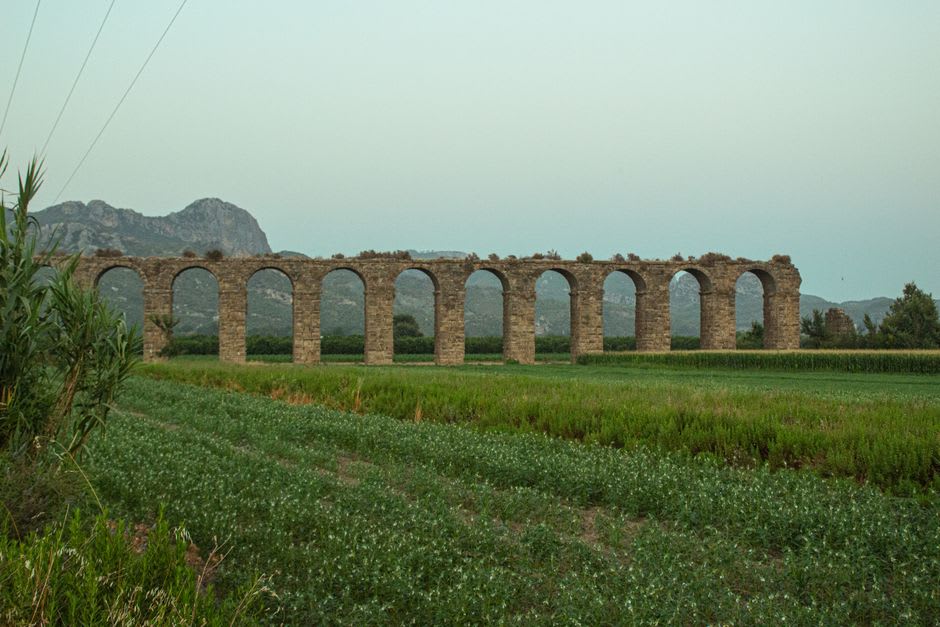
Most visitors come only for the theater and leave, which is a mistake, because a short walk uphill leads to the remains of the rest of the ancient city — an aqueduct striding across the valley on tall arches, a basilica, and views over the fertile plain that explain why Aspendos was wealthy enough to build something this ambitious in the first place. I had the aqueduct ruins entirely alone, just the wind and the arches disappearing into distant orange groves.
If you only have time for one Roman ruin on the Turquoise Coast, this is the argument for making it Aspendos rather than a more famous site elsewhere — nothing else on this stretch of coast is this complete, or this quiet.
When to go: Year-round for the ruins, but time a visit around the Aspendos Opera and Ballet Festival in June if you want to hear the theater used exactly as intended.
Keep exploring
More from Turkey
 turkey
 Assos
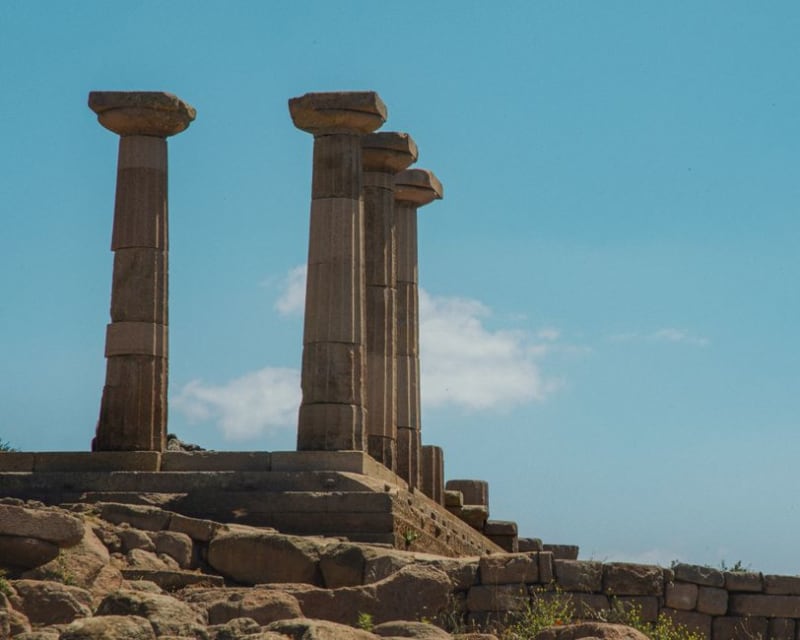
A clifftop ancient city where Aristotle once taught philosophy, its temple staring out across the Aegean toward the Greek island of Lesbos.
Explore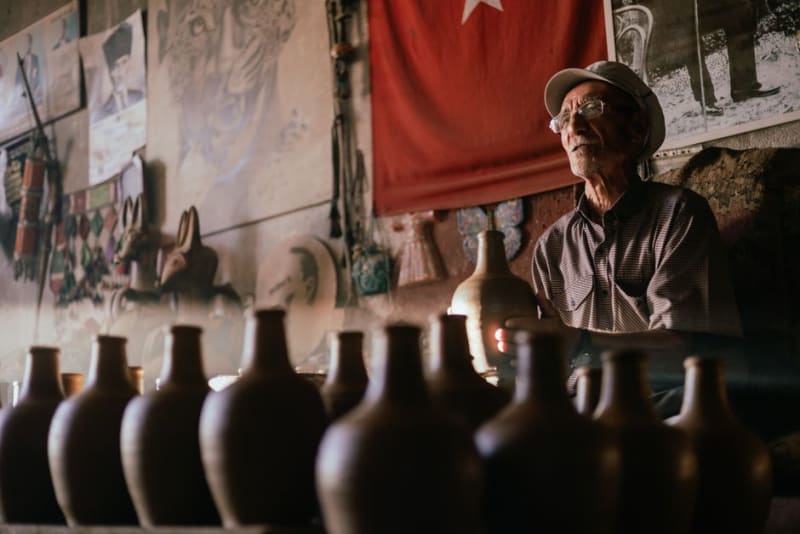 turkey
 Avanos
A red-clay pottery town on the banks of the Kizilirmak, where potters still work foot-powered wheels using techniques traced to the Hittites.
Explore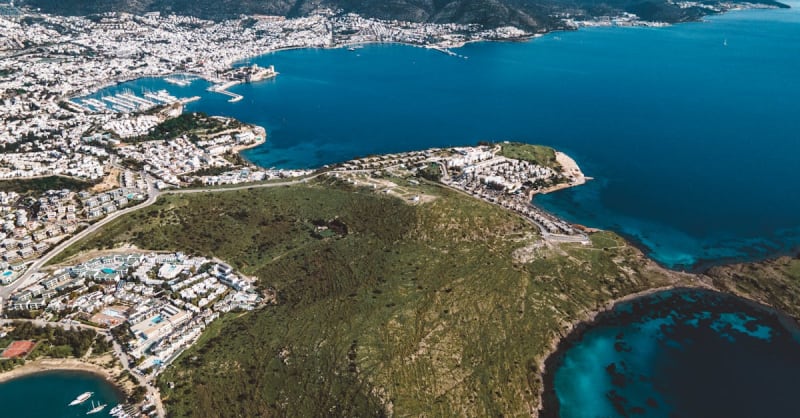 turkey
 Bodrum
A whitewashed Aegean port town built around a crusader castle, where Turkish elegance meets barefoot coastal living.
Explore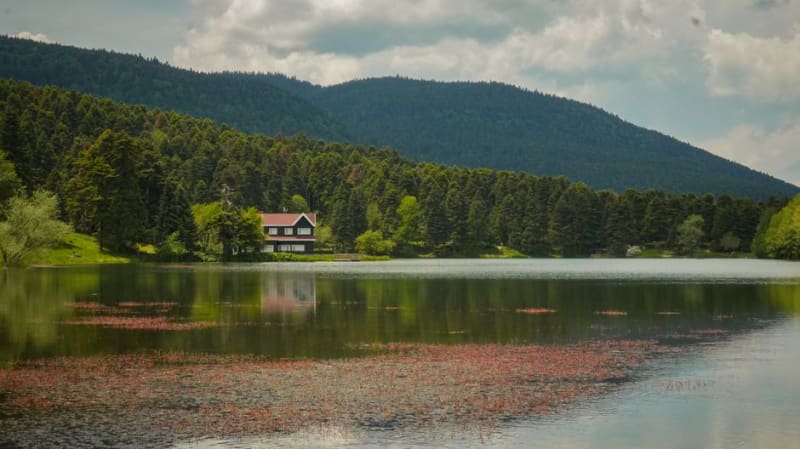 turkey
 Bolu
A forested mountain town between Istanbul and Ankara, famous in Turkish folklore for its chefs and prized as the gateway to Abant Lake.
Explore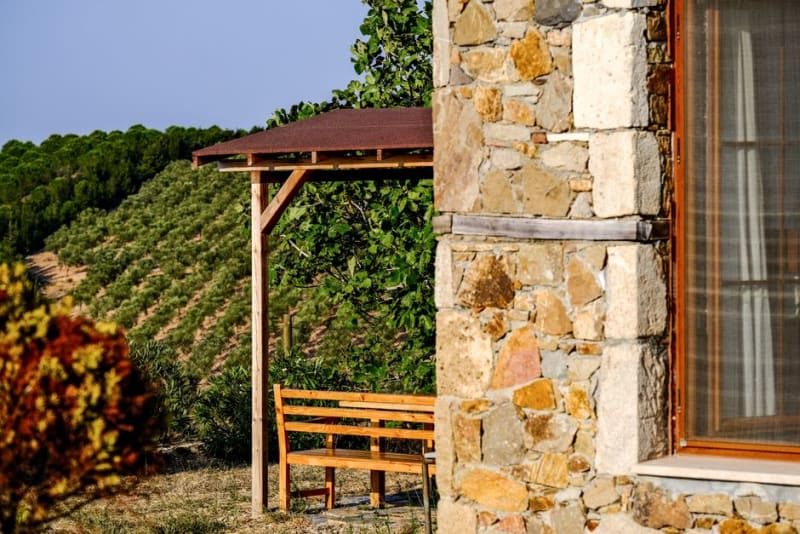 turkey
 Bozcaada
A small Aegean vineyard island near the Dardanelles, where windmill-topped hills, layered Ottoman-Greek streets, and local wine make for the slowest few days on the coast.
Explore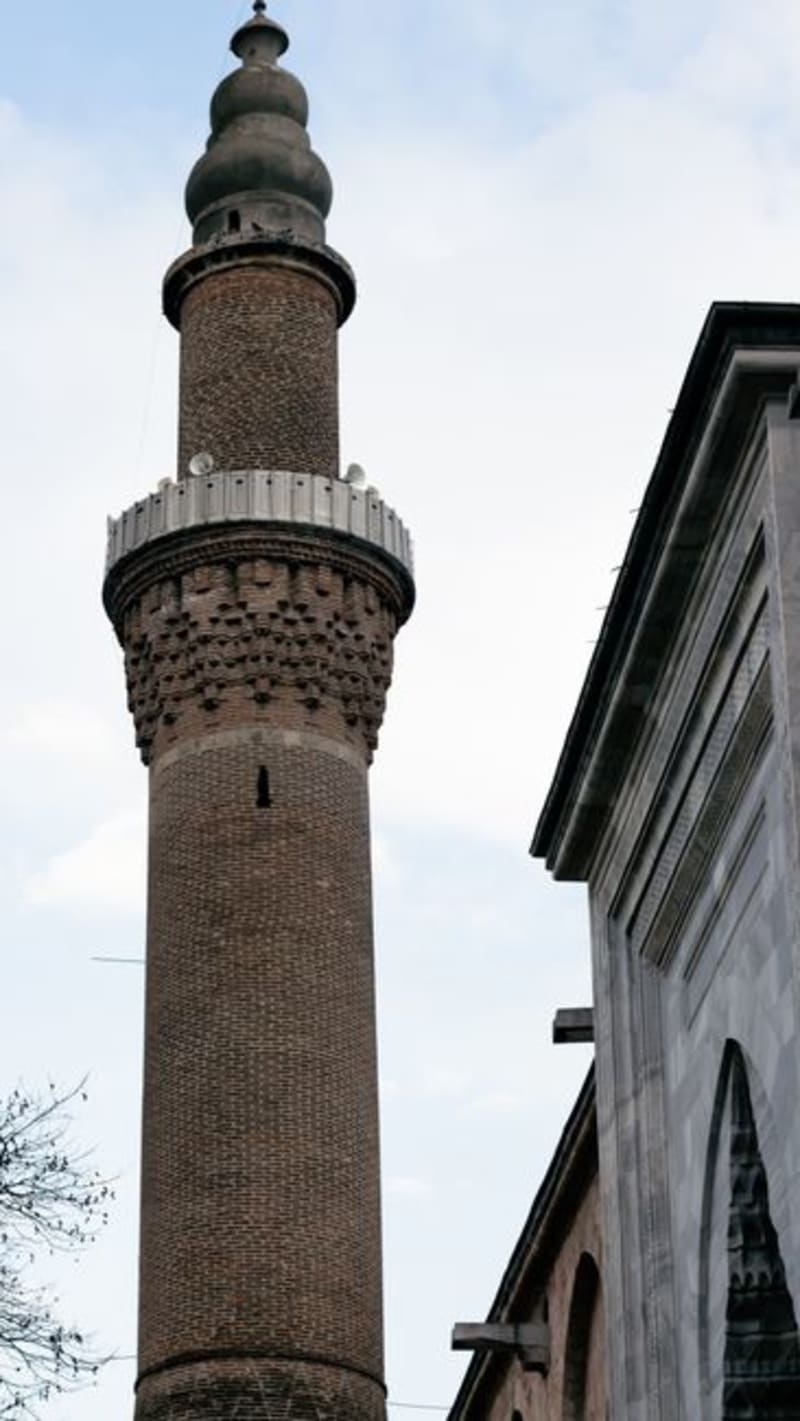 turkey
 Bursa
The Ottoman Empire's first capital sits on the slopes of Uludağ, thick with silk history, mosque courtyards, and a kebab so good it named itself after the city's most famous cook.
Explore