Ani Ruins
"Ani is the emptiest place I have ever stood, and I mean that as the highest compliment I can give it."
The abandoned medieval Armenian capital known as the City of 1001 Churches, a ghost city of empty grassland and crumbling stone on the closed border with Armenia.
Nothing had prepared me for how alone I would feel at Ani. I’d taken a taxi from Kars, thirty kilometers of increasingly empty road, and when the driver dropped me at the gate and agreed to come back in three hours, I watched his car disappear and realized there was almost no one else there — a handful of visitors scattered across a site the size of a small town, and beyond it, nothing but grass and wind all the way to the river gorge marking the closed Armenian border.
The City of 1001 Churches
Ani was, a thousand years ago, one of the great cities of the medieval world — the capital of the Bagratid Armenian kingdom, a hub on the Silk Road with a population rivaling Constantinople’s at its peak, and a religious center so dense with churches, chapels, and monasteries that it earned the name the City of 1001 Churches. It fell to Byzantine conquest, then Seljuk raids, then a catastrophic earthquake in the thirteenth century, then Mongol invasion, and by the seventeenth century it had been abandoned entirely, left to the grassland. What remains today is a scatter of roofless stone churches, a cathedral, a mosque, and fortification walls, all standing in open steppe with barely a modern structure in sight — no cafés, no gift shop, almost no infrastructure at all, which is precisely what makes it so overwhelming.
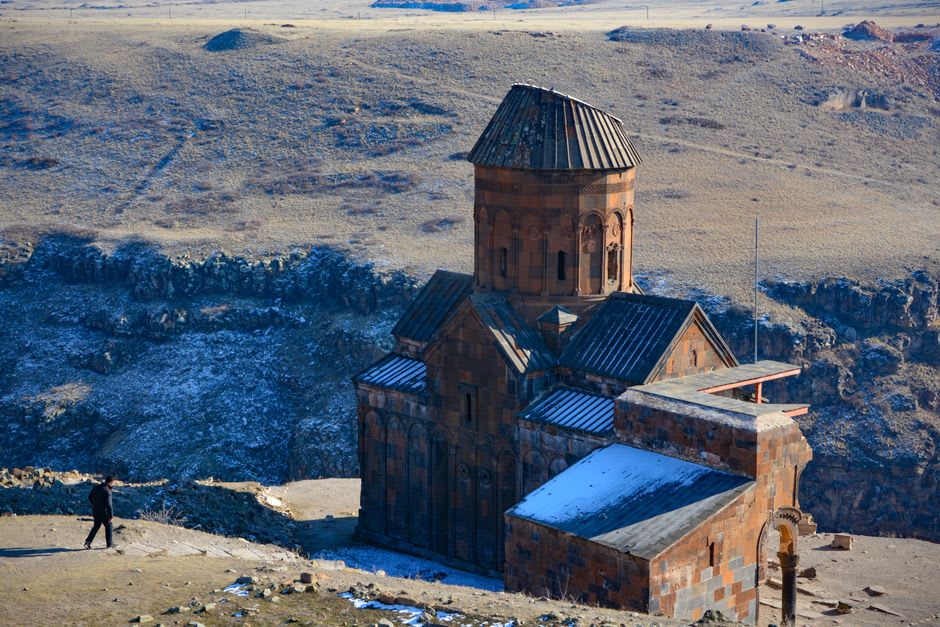
Standing at the closed border
I walked for close to two hours across the site, from the ruined city walls to the Church of the Redeemer, its facade sheared cleanly in half by an earthquake so that it now looks, from certain angles, like a stage set rather than a building, one wall standing intact and the rest simply gone. The most affecting spot, though, was the edge of the Akhurian river gorge, where Ani’s cliffs drop down to a river that marks the current border between Turkey and Armenia — a border that has been closed since the 1990s, with Armenian watchtowers visible on the opposite bank and, in the far distance, the snow-streaked cone of Mount Ararat. I stood there a long time, aware that I was looking at a landscape split by a modern political line running straight through what had once been a single Armenian capital, and that the silence around me wasn’t just the absence of people but the specific quiet of a place still waiting, unofficially, for a resolution that hasn’t come.
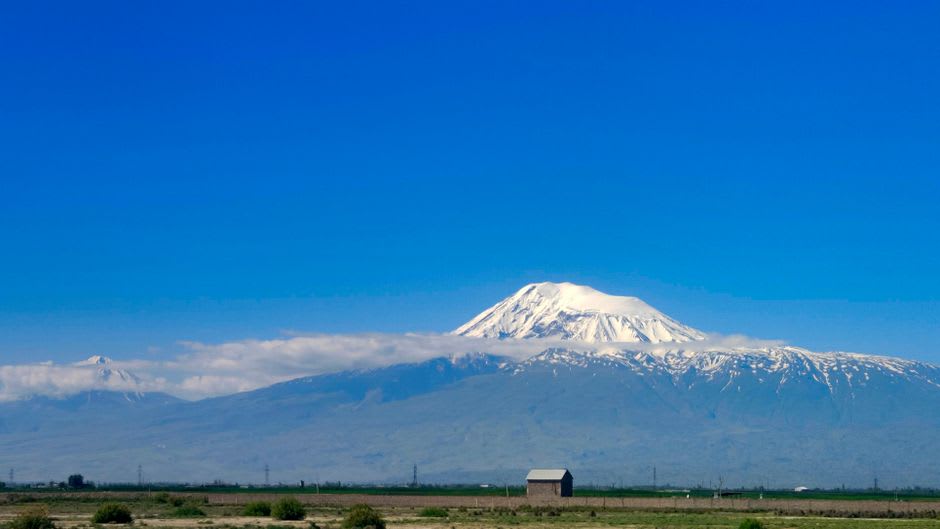
Walking back to the gate as my taxi driver reappeared exactly on schedule, I passed a shepherd moving a small flock of sheep through the ruins of what had once been a cathedral courtyard, entirely unbothered by the weight of what surrounded him. It felt like the correct final image of Ani — a place so thoroughly emptied of its former life that the land has simply resumed its older, quieter business around the wreckage.
When to go: May to September. The site is fully exposed to the elements with no shade or shelter, and the high plateau winters make it largely inaccessible from November through April.
Keep exploring
More from Turkey
 turkey
 Ankara
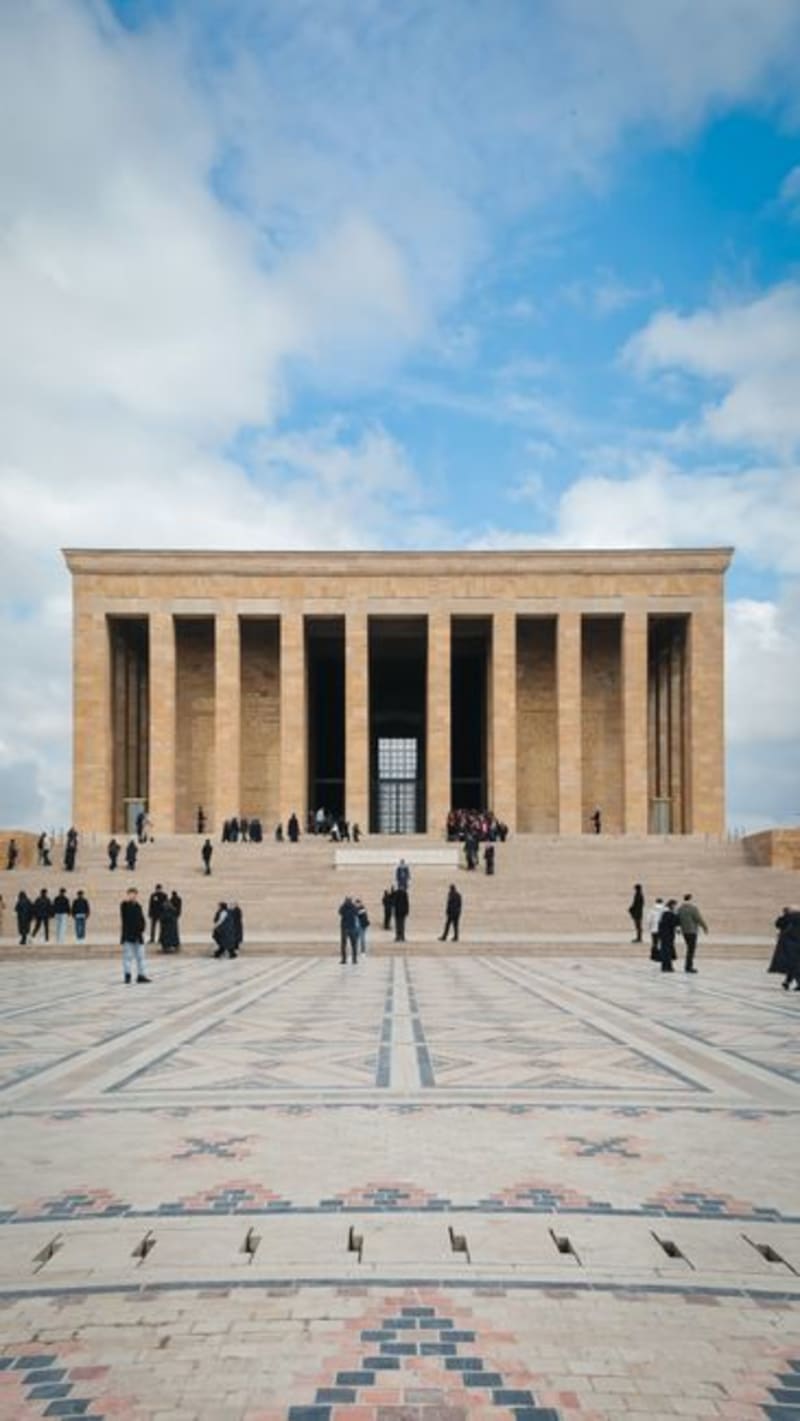
Turkey's purpose-built capital trades Istanbul's theater for something quieter and more sincere — a working city built around the memory of one man.
Explore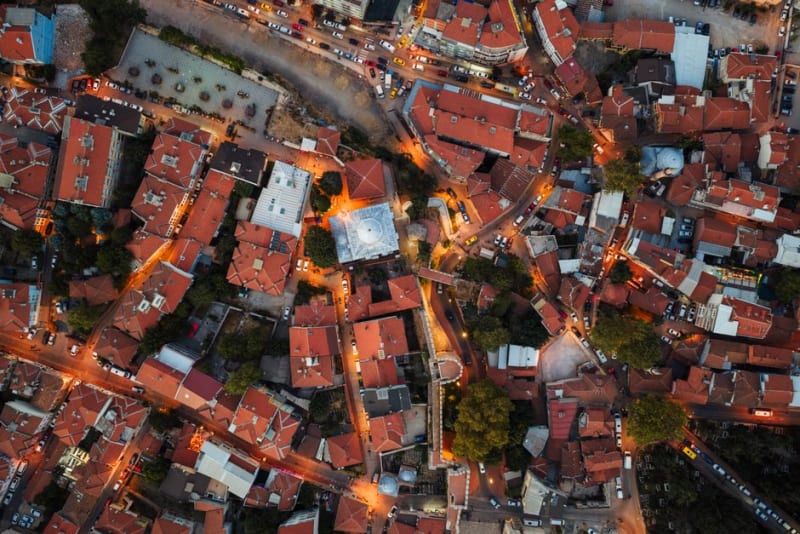 turkey
 Antakya (Hatay)
Ancient Antioch, Turkey's most religiously and culturally layered city near the Syrian border, rebuilding after the devastating 2023 earthquake with its distinctive cuisine intact.
Explore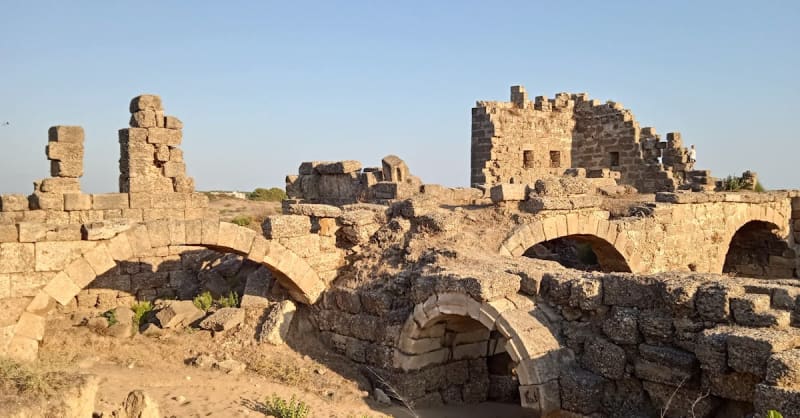 turkey
 Antalya
A turquoise coast city where Roman ruins overlook the Mediterranean and the mountains plunge straight into the sea.
Explore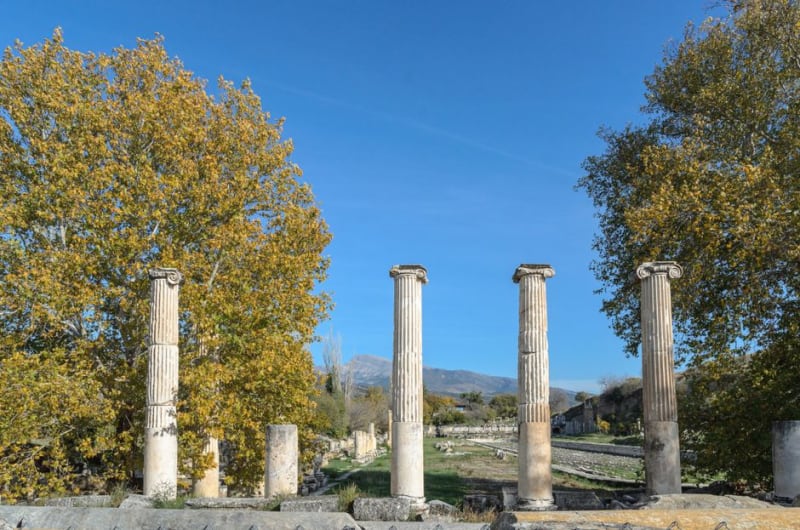 turkey
 Aphrodisias
A Roman city devoted to the goddess of love, where a marble-sculpture school shaped an empire's art and a stadium survives almost intact.
Explore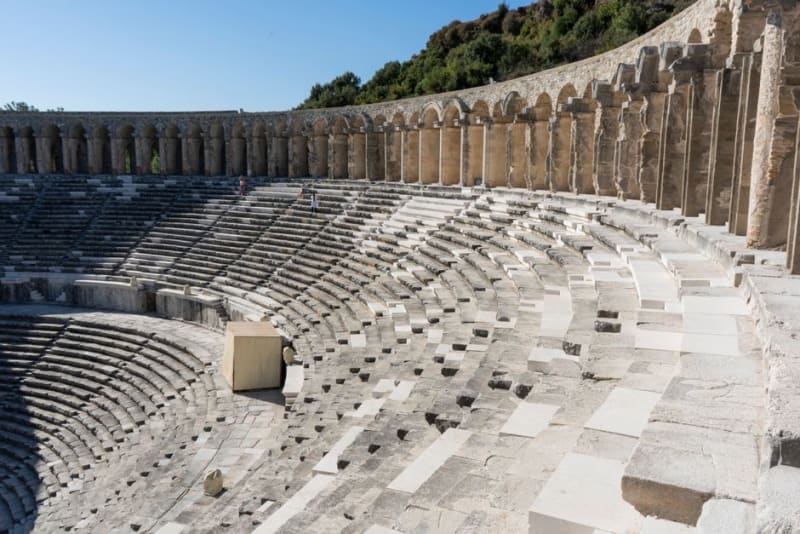 turkey
 Aspendos
The best-preserved Roman theater on earth, engineered so precisely that a whisper on stage still reaches the back row two thousand years later.
Explore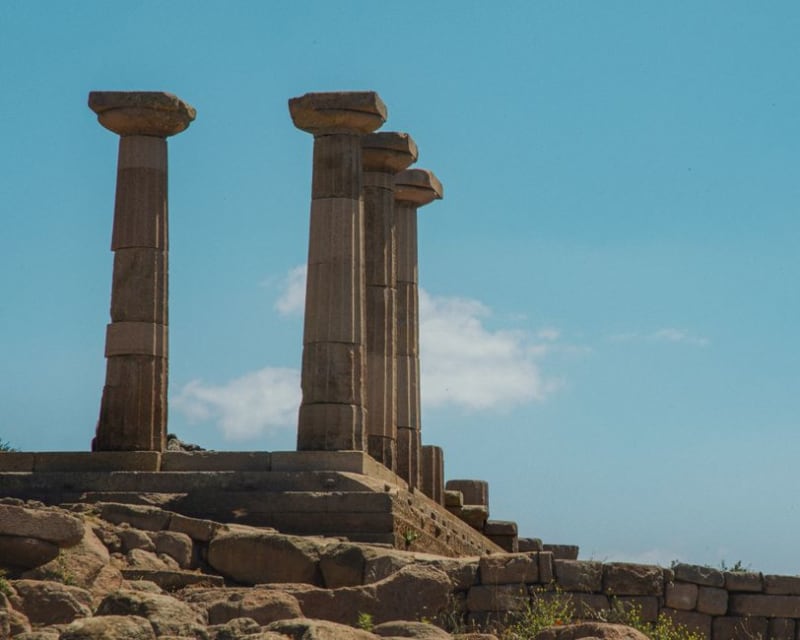 turkey
 Assos
A clifftop ancient city where Aristotle once taught philosophy, its temple staring out across the Aegean toward the Greek island of Lesbos.
Explore