Tunis
"The jasmine seller on Rue de la Kasbah handed me a bundle and refused payment. That set the tone for everything."
I arrived at Tunis-Carthage airport in early afternoon, when the light hitting the tarmac had that particular North African flatness — bleached, almost clinical. By the time the taxi dropped me at the edge of the medina an hour later, everything had shifted. The air smelled of coriander, diesel, and fresh bread. A radio somewhere played a sha’bi song at full volume. A cat the color of sand blinked at me from a doorstep and went back to sleep.
The Medina at Ground Level
The Tunis medina is a UNESCO World Heritage Site, which means very little when you’re actually inside it. What it means practically is that the souks are arranged by craft the way they’ve been for centuries — the perfumers here, the cloth merchants there, the chechia hat makers in their own narrow street, beating red felt with paddles that must have been worn down by fifty generations of the same family. I spent a full morning getting deliberately lost between the Zitouna mosque and the gold souk, letting the corridors narrow and widen unpredictably, following smells instead of maps.
The medina’s genius is its residential core. Push past the tourist stalls near the mosque and the streets turn domestic. Women hang laundry between upper windows. Kids negotiate a football game around a parked moped. An old man repairs a door hinge in his own doorway, squinting at it without urgency. This is where Tunis stops performing and just exists.
The Bardo and What Remains
The Bardo National Museum sits in a converted palace on the western edge of the city, and it houses one of the finest collections of Roman mosaics in the world. The scale of them stopped me in my tracks. These weren’t decorative fragments — they were entire floors, entire walls, room-sized compositions showing Neptune and his retinue, or hunting scenes with a perspective so confident it made me think the ancient world had nothing like the artistic crisis we’re always crediting it with. I spent two hours there and didn’t feel the time pass.
Eating and the Logic of Mint Tea
Lunch in Tunis follows rules that nobody states explicitly. You eat brik — a thin pastry fried around an egg and tuna — standing at a counter, ideally near the central market. You eat couscous with lamb sitting down, slowly, with people who know you. I managed both on the same day and felt, briefly, like I understood the city’s internal logic.
The mint tea ritual, performed at tiny marble tables in traditional cafés, is less a drink and more a legitimate claim on time. You pour it from a height to create the foam. You let it cool slightly. You are in no hurry. Nobody in these cafés is in any hurry. This is the one form of local custom I adopted immediately and without difficulty.
Getting Around the Grid
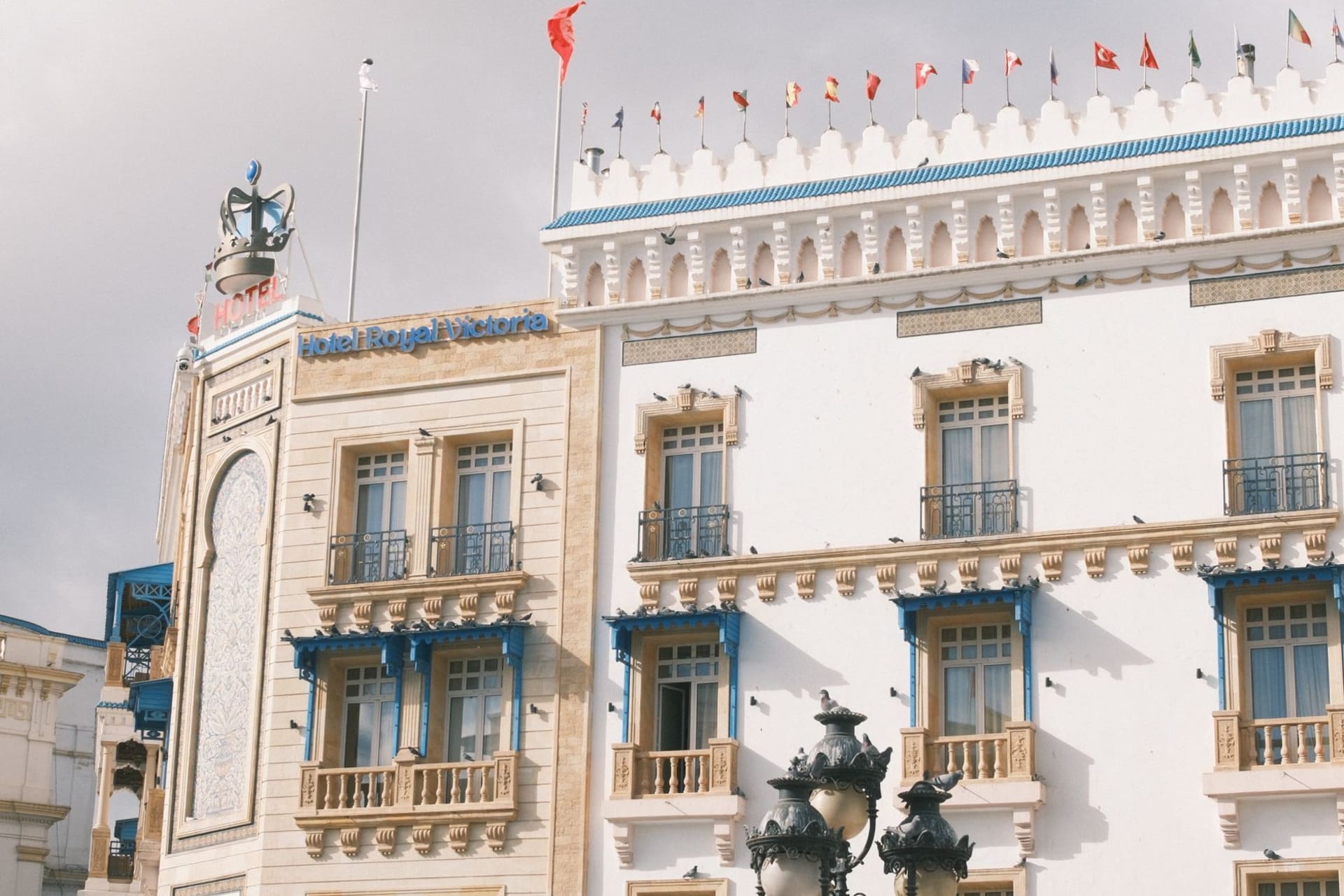
Tunis proper is bisected by the Avenue Habib Bourguiba, a French colonial boulevard of café terraces and ficus trees that connects the medina to the newer city. The contrast is stark and slightly disorienting — Ottoman archways on one end, art deco facades on the other. The metro tram runs its axis, slow and reliable. Lia and I used it constantly, riding end to end on our first evening just to get the geography under our feet before the map made sense.
When to go: March through May and September through November are ideal — warm enough to walk all day without suffering, cool enough at night to sleep with windows open. Summer heat in Tunis is punishing and the city empties out. Ramadan is atmospheric but some restaurants operate reduced hours, worth accounting for if food is your primary focus.