Africa
Tunisia
"The Mediterranean's best-kept secret, hiding in plain sight."
I arrived in Tunis on a January evening when the medina was still lit for end-of-year celebrations, and within twenty minutes of leaving the airport taxi I was sitting in a tiled courtyard café drinking mint tea strong enough to stand a spoon in, watching old men play cards under a birdcage the size of a small car. Tunisia does not ease you in. It just starts.
The old city of Tunis — the medina — is a UNESCO-listed maze of souks, mosques, and fondouks that is somehow both more authentic and less suffocating than Fez or Marrakech. Tourists exist here, but they have not yet colonized the place. The spice merchants are still selling to people who actually cook, the fabric stalls still serve neighborhood tailors, and the tiny lunch spots still fill up at noon with locals eating a bowl of lablabi — a chickpea and bread soup spiked with harissa and a raw egg cracked on top — for the equivalent of pocket change. I had three bowls in four days and I have been thinking about it ever since.
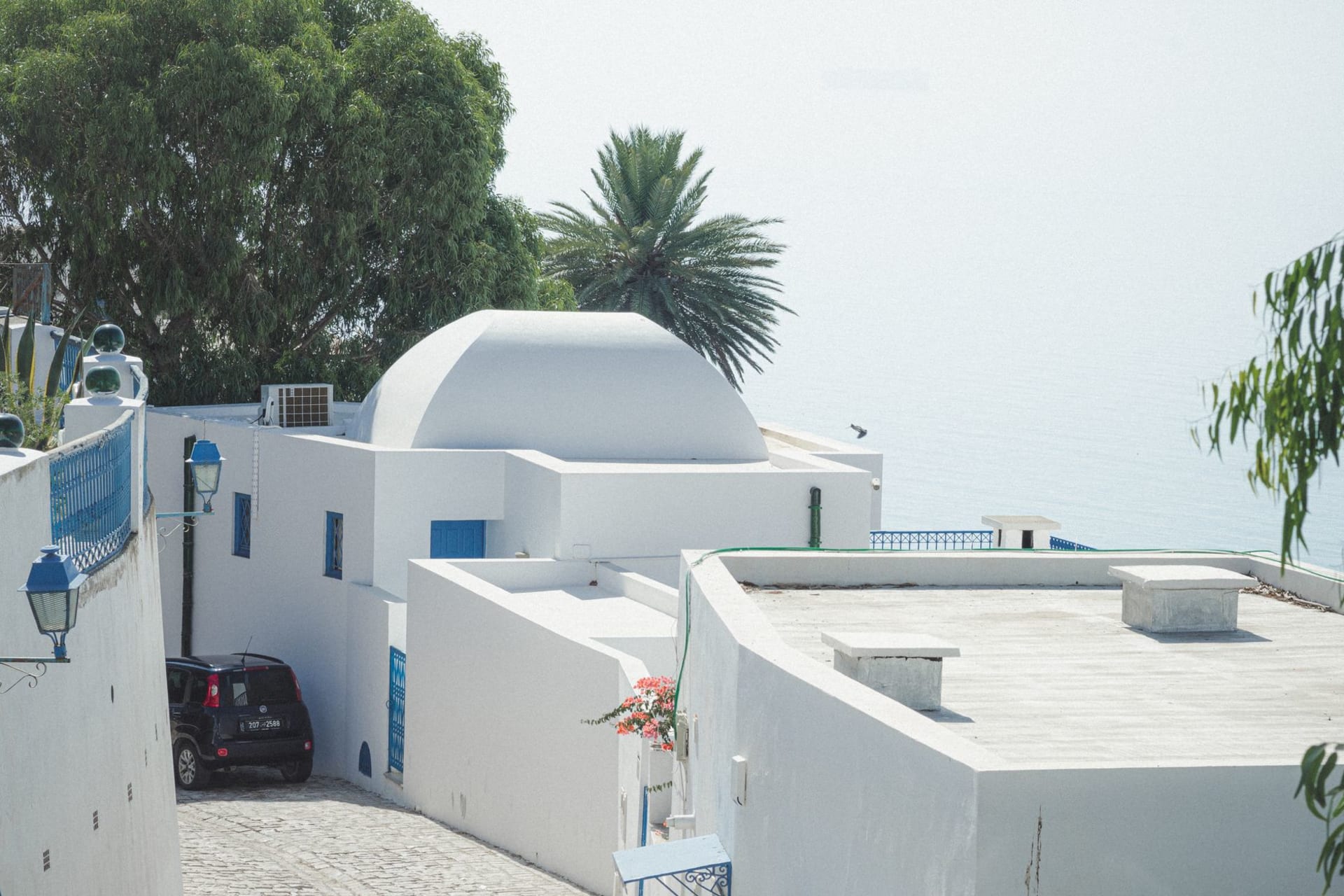
But Tunisia’s real trick is its variety. From Tunis I drove two hours north to Sidi Bou Said, the cliff-top village of blue-and-white painted walls cascading down toward the Gulf of Tunis — the one that looks like a Matisse painting and probably was. Then south, past the Roman amphitheater at El Jem (larger than the Colosseum in Rome, receiving a fraction of the visitors), into the scrubland that slowly empties out into the northern edges of the Sahara near Douz. The salt lake of Chott el-Djerid shimmers with mirages even in winter. The troglodyte villages of Matmata, where people still live in pit-houses carved into the earth, feel genuinely otherworldly — not as an attraction, but as a surviving way of life. George Lucas filmed Luke Skywalker’s home there, which means half the tourists who visit are looking for the set. The other half are simply standing in a hole in the ground, confused and delighted.
The food is the thread that ties it together. Harissa — the real thing, not the European supermarket version — goes on everything. Brik, the thin pastry envelope fried with egg and tuna, is the perfect street food. Grilled fish in the port towns of La Goulette and Bizerte arrives at the table so fresh it almost needs an apology.
When to go: March to May and October to November are the sweet spots — warm but not scorching, with manageable crowds. Summer is genuinely brutal in the south and interior, often exceeding 45°C. Winter works well for the north and coast but can be cold and rainy in the medinas.
What most guides get wrong: They treat Tunisia as a beach destination — packages to Hammamet and Djerba, a pool, a day trip to the medina and back. That version of Tunisia exists and is fine, I suppose, but it has nothing to do with the country. The real Tunisia is the road between Tunis and Tozeur, the lablabi at a plastic table in the medina, the Roman ruins at Dougga that you might have entirely to yourself on a Tuesday morning. Give it a week on the ground rather than on the sand, and it will surprise you in ways that much more famous countries stopped doing years ago.