Sidi Bou Said
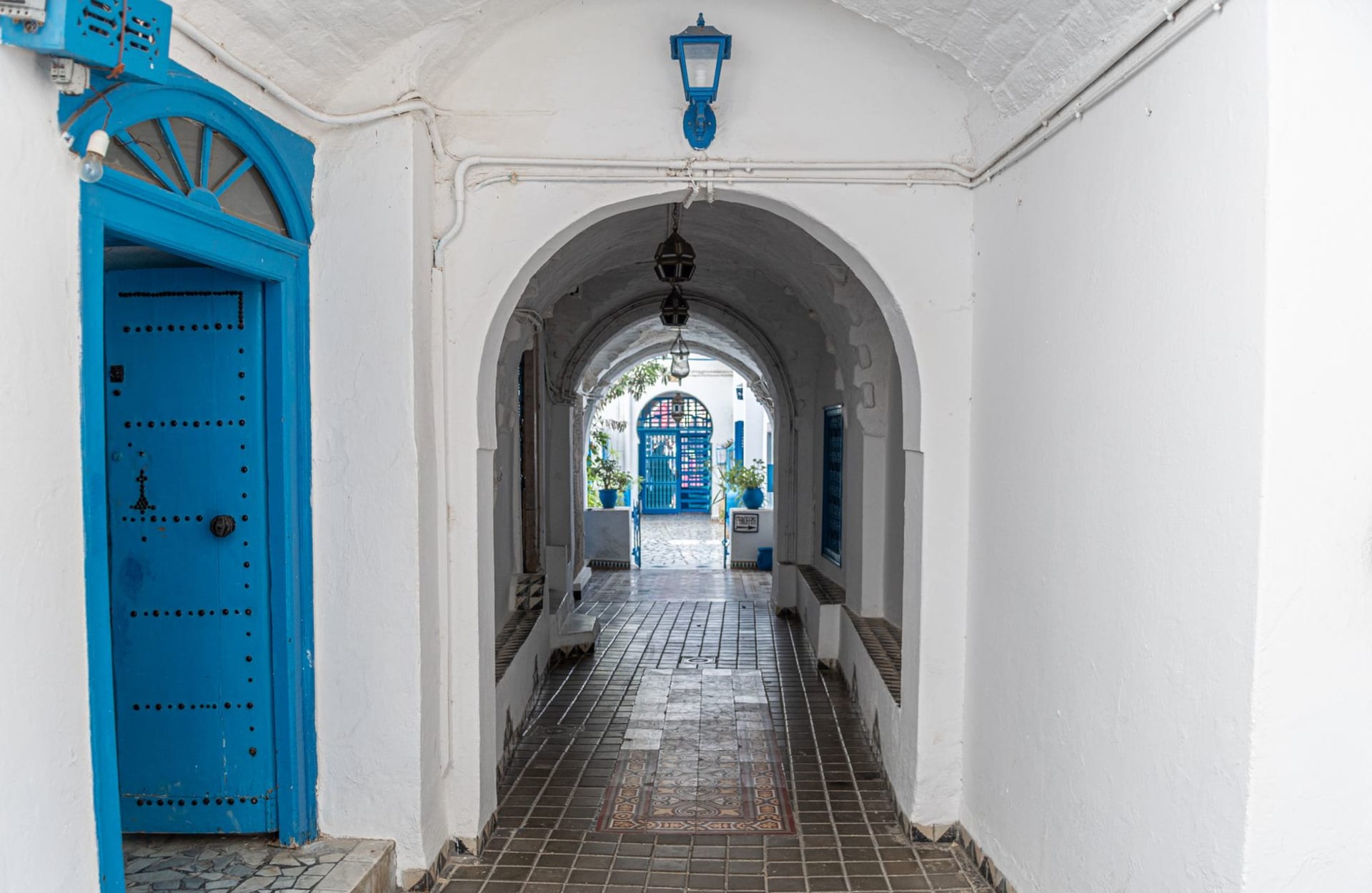
"Every surface here is either white or that exact shade of blue. After a few hours, ordinary colors start to look like mistakes."
There are places that have been photographed so many times that arriving feels almost like a false memory. Sidi Bou Said is one of them. I’d seen the images — the white walls, the iron-grilled windows painted cobalt, the bougainvillea doing its theatrical cascade over courtyard walls — so many times before stepping off the TGM train that I expected to feel nothing. I felt quite a lot, actually.
The Mandatory Colors
The strict enforcement of the blue-and-white palette is not an accident. It was codified in the early twentieth century by a French baron named Rodolphe d’Erlanger, who fell in love with the village and essentially mandated it into its current appearance. Knowing this changes nothing about the visual effect. The white catches the light in a way that makes every surface look slightly illuminated from within. The blue — not navy, not powder, but something between the two, the exact color of the deep Mediterranean in August — absorbs the glare and gives your eyes somewhere to rest.
I spent a full morning walking the main lane up from the train station, pausing at each turn where a new configuration of door and wall and vine appeared. The lane is not long. I took three hours to reach the top.
The Café des Nattes
The famous café at the top of the hill exists in a state of permanent mild siege. Its benches are always occupied by a mix of Tunisian families, French tourists, and young people from Tunis who come on weekends to sit on the elevated cushioned platforms and drink mint tea with pine nuts floating in it. I ordered two glasses — the pine nuts are the local variation and they are worth it — and wedged myself into a corner facing the doorway.
The café has been a gathering place since Paul Klee and August Macke stayed here in 1914. A brass plaque in the alley outside says so. The light they came to paint has not changed. I am not a painter, but I could see exactly what made them stop.
Above the Gulf
The village sits on a promontory above the Gulf of Tunis, and at the northern edge, a path leads out to the cliff edge where the land simply drops away to water. In the late afternoon, the gulf turns colors in a specific sequence — gold, then copper, then a deep green-blue as the sun drops behind the ridge at your back. A few fishing boats sat motionless on the surface. The ruins of ancient Carthage were visible as a faint smudge on the southern shore, less than ten kilometers away.
Sidi Bou Said is small enough to walk entirely in ninety minutes, which means the risk is spending an hour and leaving. The better approach is to arrive early before the tour groups, climb slowly, eat lunch at one of the smaller restaurants off the main lane, and stay until the light changes twice.
Getting There
The TGM suburban train from the Tunis Marine station runs to Sidi Bou Said in under thirty minutes. It’s one of the best short rail journeys in North Africa — the line traces the lake shore, passes through several quiet coastal towns, and deposits you directly in the village. No taxi required, no negotiation, no detour through the airport motorway. I took it four times and never tired of the approach.
When to go: April, May, and October are the sweet spots — the bougainvillea is at peak bloom in spring, the light is warm and low in autumn, and the summer crowds that pack the main lane have thinned. July and August are genuinely overwhelming; the narrow alleys channel heat and bodies in equal measure.