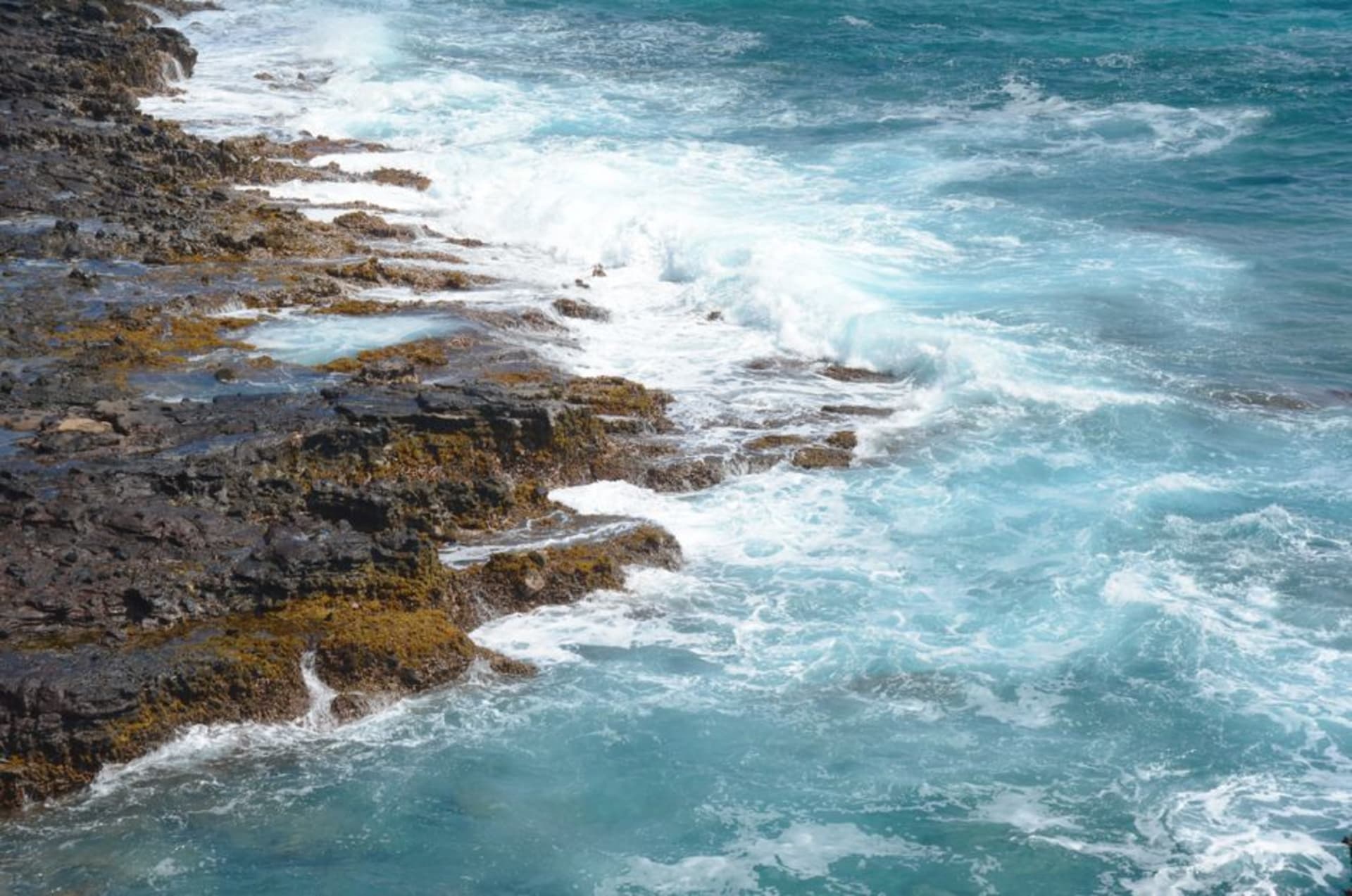
Mapu'a 'a Vaea Blowholes
"The whole coastline breathes, and every few seconds it exhales thirty meters into the sky."
A five-kilometer volcanic shelf near Houma where the ocean punches through stone in nearly a hundred whistling, roaring spouts of spray.
Lia heard it before she saw it. We’d parked the rental on the shoulder of the coast road outside Houma, and even with the windows still up there was this low, hollow whistling coming off the water, like someone blowing across the top of a hundred bottles at once. We call it Mapu’a ‘a Vaea, “Chief’s Whistles,” and honestly that’s the most accurate name I’ve ever heard given to a natural landmark. You don’t need a guide or a sign to find it. You just follow the sound.
We got there close to high tide, which I’d read was the move, and I’m glad we timed it right. The swells roll in off the open Pacific and slam into this exposed shelf of volcanic rock, and somewhere underneath all that black stone the water finds the old lava tubes and worm-holes and just detonates upward. Some of the spouts near us were maybe knee-height, playful, almost teasing. Then thirty meters down the shelf one would go off like a geyser, sending a column of white mist a good twenty, twenty-five meters up, catching the afternoon light for a second before it collapsed back into spray on the wind. Lia got soaked chasing a photo of one and didn’t even seem to mind.
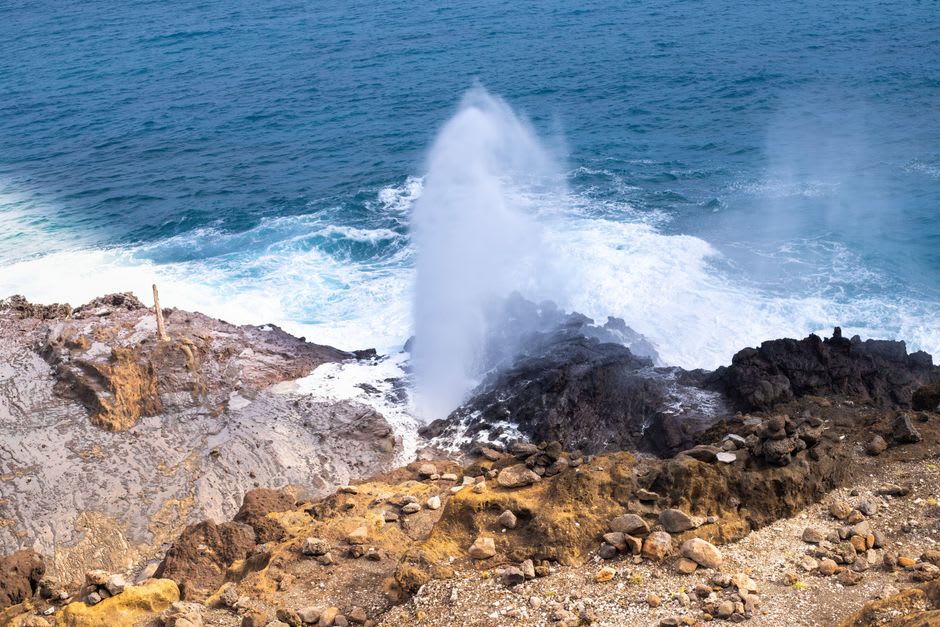
What struck me most was how unmanaged the whole place is. No entrance fee, no ticket booth, no railing system funneling you along a set path — just five kilometers of raw coastline that you’re free to wander along at your own risk, picking your own distance from the holes depending on how much salt spray you’re willing to eat. We brought a thermos of coffee and just sat on a dry patch of rock for the better part of an hour, watching the pattern of it, trying and failing to guess which hole would fire next. There’s something almost hypnotic about a hundred blowholes going off in no particular rhythm, like the island itself is breathing unevenly.
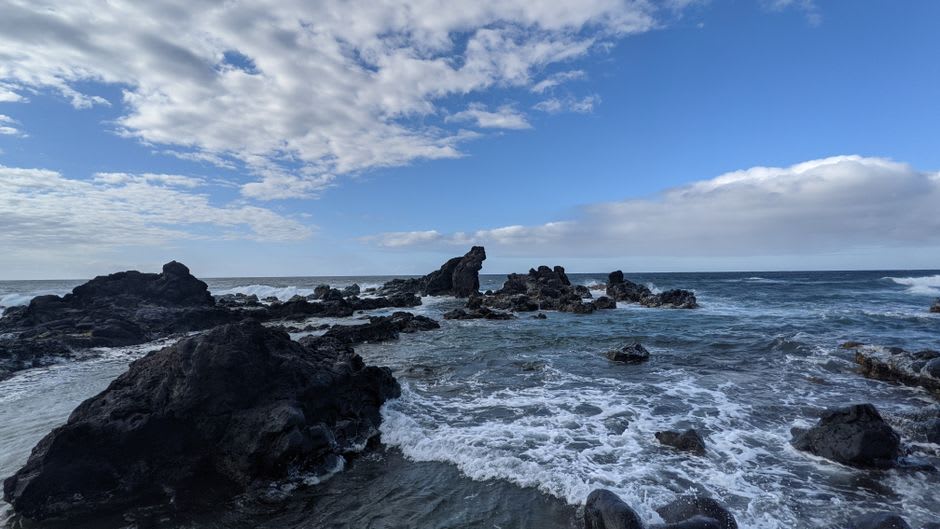
We drove back to Nuku’alofa with wet hair and sandy shoes, still a little rattled by how loud the biggest spouts had been up close. It’s a short trip from the capital — twenty, twenty-five minutes — but it felt like we’d stepped into a completely different Tonga, one defined by raw geology rather than beaches and reefs.
When to go: Time your visit for high tide if you can, and if you’re traveling between May and October, the stronger trade winds tend to whip the swells up even more, which means bigger, louder, more theatrical spouts along the whole shelf.