Pacific
Tonga
"I floated three metres from a humpback and forgot I was a person."
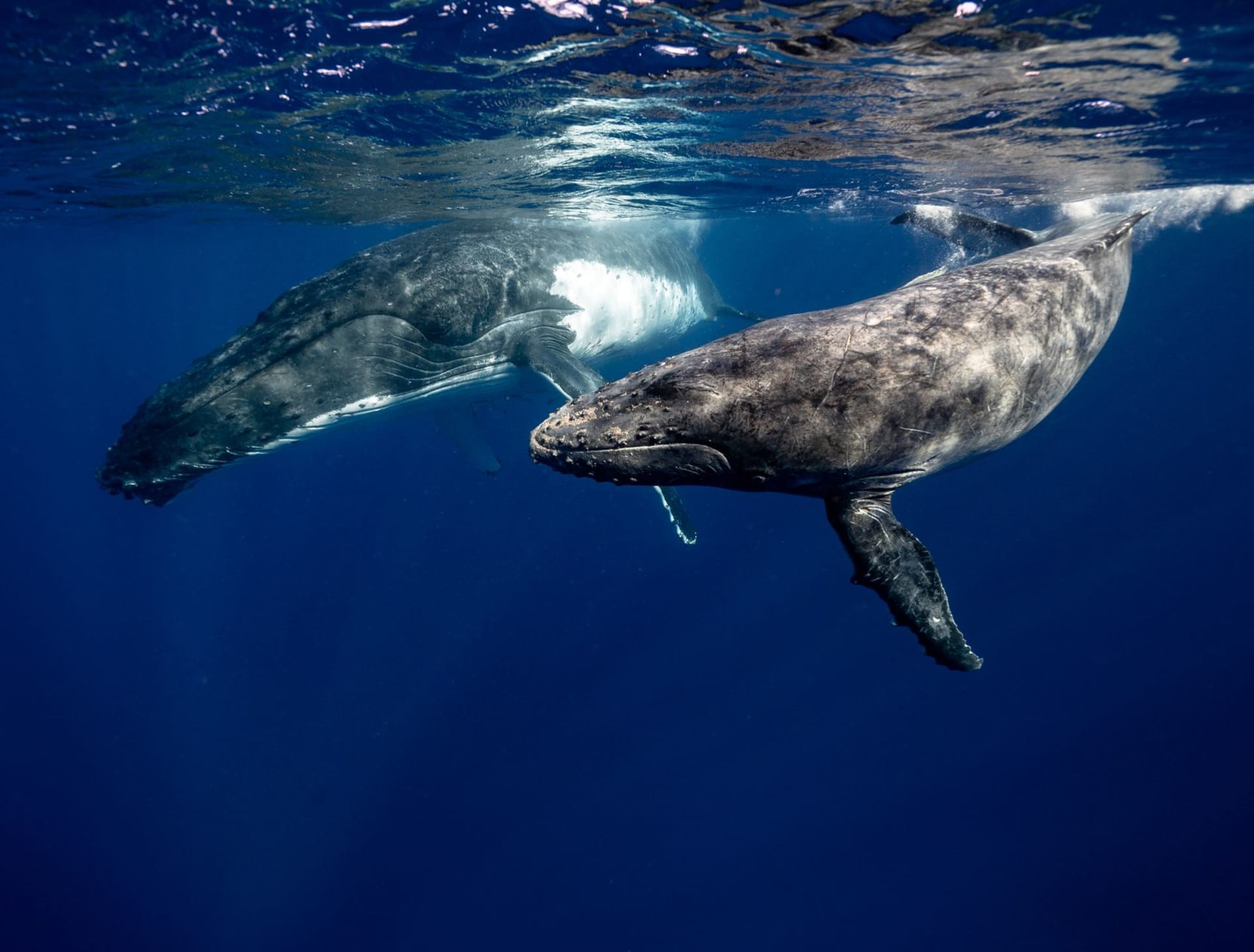
The boat engine cut and the guide said, quietly, get in the water. I rolled off the side with my mask and snorkel, and the whale was already there — not close, not far, just present, the way a building is present. A mother and calf, moving in slow corkscrews through water so clear I could see the barnacles on her fins from the surface. She was aware of me. She chose not to care. That indifference was the most extraordinary thing I had encountered in years of travel.
Tonga is the only Pacific country never colonized by a European power, and that fact has consequences you actually feel on the ground. There is no legacy tourism infrastructure built to manage your expectations, no choreographed “local experience” set-dressing for foreign consumption. The capital, Nuku’alofa, on the island of Tongatapu, is unglamorous in the best possible way — a dusty market, a royal palace visible from a chain-link fence, Chinese-run shops selling everything practical, a church on every block because Sunday here is still Sunday. Services last for hours. The whole country goes quiet. I arrived on a Sunday and could not buy water until the following morning. Nobody apologized for this.
The Ha’apai group, a scatter of low coral islands roughly in the middle of the archipelago, is where the whales come from July to October. Humpbacks winter in these warm shallows to give birth and nurse their calves before the long migration south to Antarctic feeding grounds. Swimming with them is not a metaphor. You are in the water with the largest mammals that have ever given birth on Earth, and the interaction is on their terms entirely. The guides here are careful — Tonga has strict regulations, no more than four swimmers per whale at a time, no chasing, no touching — and the whales, over years of respectful contact, have become curious rather than skittish. They come toward you. The calf especially. The mother watches.
When to go: July through October for humpback whale season in Ha’apai — this is the main event, and everything else is secondary. August and September are peak, when calves are young and pods are dense. Avoid the cyclone season from November through April. Tongatapu and Vava’u are accessible year-round, but the outer islands operate on minimal infrastructure and can be genuinely difficult outside dry season.
What most guides get wrong: They sell Tonga as a whale-watching destination, which undersells and misrepresents it. You are not watching whales. You are entering their environment as a temporary, tolerated guest. The distinction is enormous and changes how you prepare mentally for the experience. Also: the food is not interesting, and you should accept this early. Tonga runs on root vegetables, tinned corned beef, and whatever was caught that morning. The fish is exceptional. Everything else is fuel. Come for the water, not the plate.