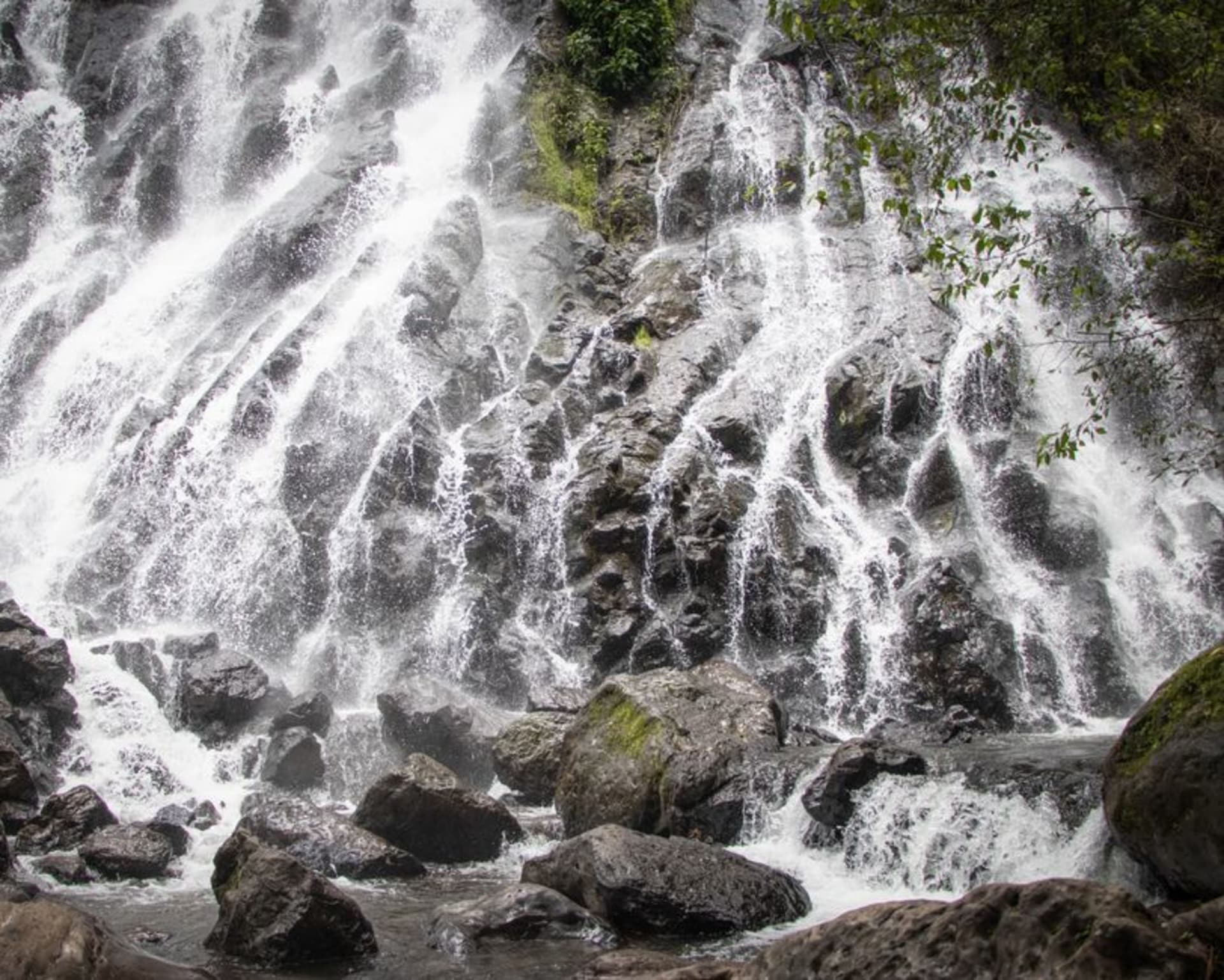
Cascade de Kpimé (Kpimé Falls)
"I heard Kpimé before I saw it, and by the time I did, I was soaked."
A three-tiered waterfall crashing down a forested cliff near Kpalimé, best seen swollen with rainy-season water and reached by a steep two-hour climb.
We heard the falls before we saw them. Lia and I had left our guesthouse in Kpalimé before sunrise, packed into a shared taxi with two other travelers, bumping northeast for about 25 kilometers toward the village of Apédomé. The road got rougher the closer we got, and then it just stopped being a road at all — our driver shrugged, pointed at a footpath disappearing into the trees, and told us the rest was on foot. Within ten minutes I could already hear a low roar under the birdsong, and I remember grabbing Lia’s arm and grinning like an idiot. That’s Kpimé for you: it announces itself.
The falls themselves are actually three drops on the Aka River, and they’re genuinely among the tallest in Togo, maybe in all of West Africa — the water doesn’t so much fall as detonate down a sheer cliff face. I’d read that the rock is a serious technical challenge for climbers, and standing at the base looking up, I believed it instantly. There’s a slick, black streak running down the stone where centuries of water have polished it smooth, and no amount of vine-grabbing looked like it would help you up that.
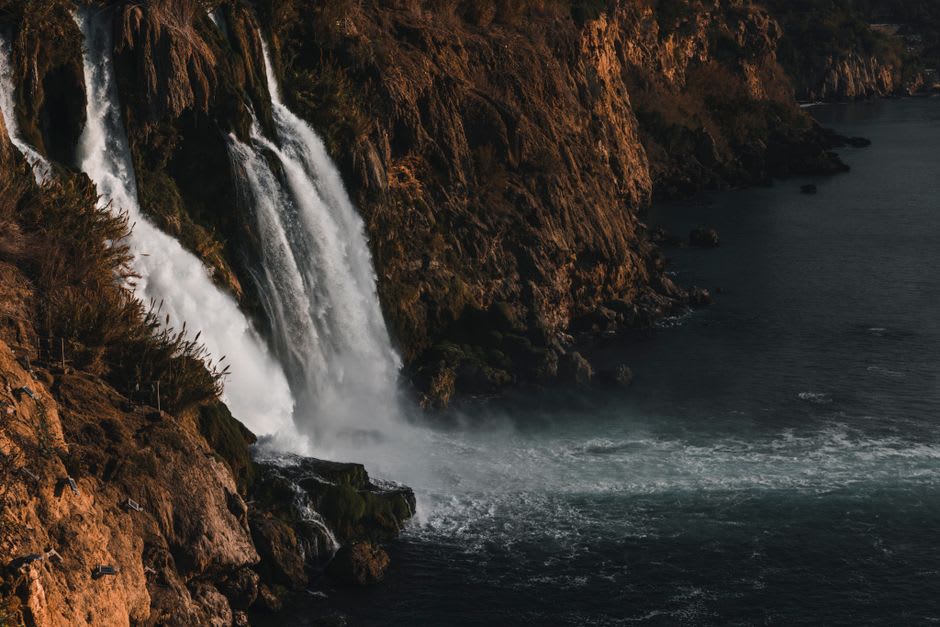
What I didn’t fully appreciate until our guide explained it was how fragile the whole spectacle is. There’s a reservoir upstream, part of a hydropower plant that also supplies Kpalimé’s drinking water, and depending on the season it can throttle the falls down to almost nothing. We’d gone in June, right in the thick of the rainy season, and the guide told us flatly that if we’d come in February we might have found little more than a trickle staining the rock. Lia and I looked at each other — we’d booked the trip almost on a whim, no real planning, and it turned out to be exactly the right month by pure luck.
The climb to the top took us close to two hours, weaving through humid forest thick with the smell of wet leaves and something sweetly rotten underneath, the kind of smell that means things are actually alive and growing around you. Halfway up, drenched in sweat and spray, we stopped at a clearing where you could see the full drop below, water breaking into mist that caught the mid-morning light. I ate a warm, slightly squashed banana I’d shoved in my bag that morning and it might be the best banana I’ve ever had, purely because of where I was sitting when I ate it.
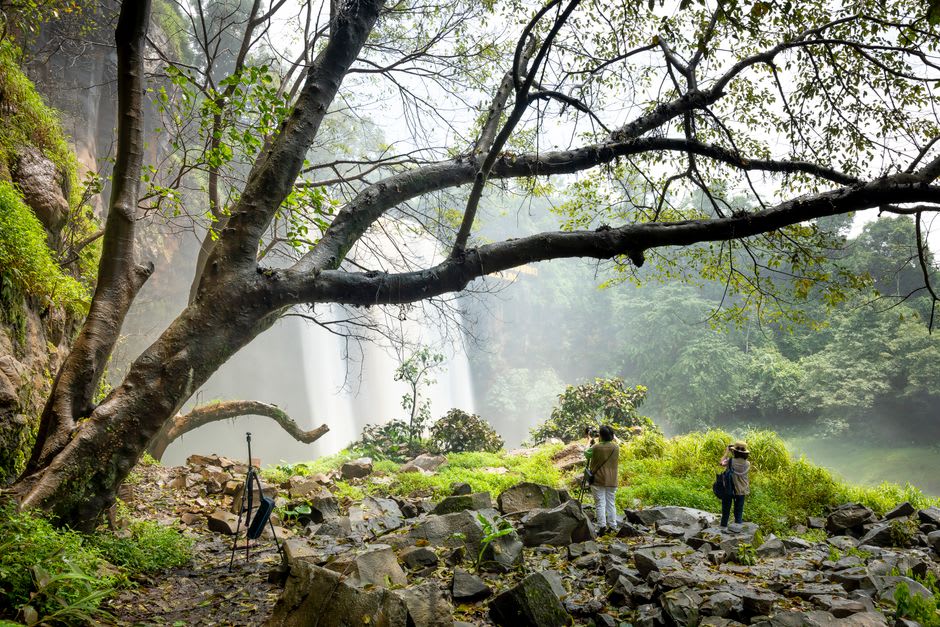
When to go: Go in the rainy season, roughly April through July, when the Aka River is running full and the falls hit hardest — outside that window the upstream reservoir can leave you staring at rock instead of water.