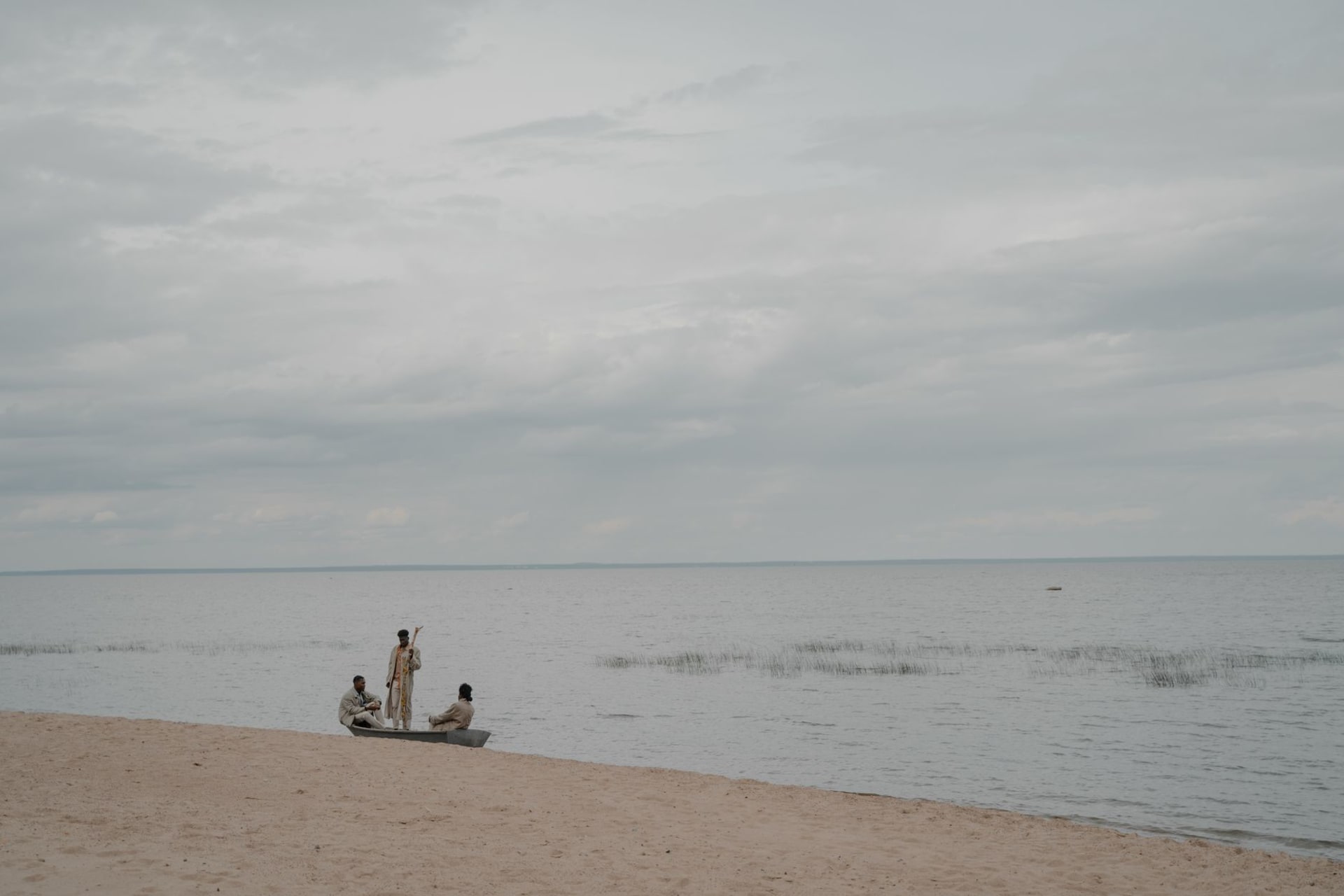
Aného is a town living quietly inside its own past, and that is exactly why I liked it. It sits near Togo’s eastern border with Benin, squeezed onto a narrow strip of land between a calm lagoon on one side and the heavy Atlantic surf of the Gulf of Guinea on the other. It was once the colonial capital of Togo, first under the Germans and then briefly the French, and the streets are still lined with the ghosts of that importance — crumbling administrative buildings, an old cathedral, faded merchant houses with shutters hanging at angles. Lia and I came down from Lomé expecting a quick look and ended up staying the day, pulled in by the particular melancholy of a place that history moved on from.
The Lagoon and the Old Town
The defining feature of Aného is the lagoon, a long sheltered lake separated from the ocean by a thin sandbar, and life here orients itself toward the calm water rather than the rough sea. We watched fishermen working the lagoon in slim pirogues at dawn, casting nets in the flat light, the whole scene almost silent except for the slap of paddles. The bar holds back the surf, so the lagoon stays glassy while the ocean pounds away just a few hundred meters beyond, and standing on the sandbar with calm water behind me and crashing waves in front was one of those small geographic pleasures I did not expect to find here.
The old town rewards slow walking. The Peter and Paul Cathedral, a solid colonial-era church, anchors the center, and around it the streets carry that layered West African coastal history — Afro-Brazilian merchant families who returned from across the Atlantic, German and French administrators, and the older Guin and Mina communities who were here long before any of them. The architecture is genuinely interesting once you slow down enough to read it: louvered shutters, deep verandas, masonry quietly losing its battle with the salt air. Nobody is restoring much, and there is a dignity in that decay that polished heritage towns lose entirely.

Voodoo, Markets, and the Coast Road
This stretch of coast is one of the heartlands of West African Vodun, and Aného wears its spiritual life openly. There are shrines tucked between houses, and the nearby beaches host ceremonies that I was careful to observe only from a respectful distance and only where clearly welcome. I am wary of the way outsiders turn living religion into spectacle, so I will say simply that the spiritual weight of this coast is real and present, and worth approaching with humility rather than a camera held aloft.
The town’s market is small but lively, and we picked through stalls of dried fish, chilies, fabric, and the small carved objects of daily devotion. Afterward we drove the coast road back toward Lomé, a ribbon of tarmac running between the palm-fringed lagoon and the long, wild, empty beaches of the Gulf of Guinea — beaches with vicious currents that locals warn you firmly against swimming in, and which are all the more beautiful for being left alone.
Practical Notes
Aného is an easy hour or so east of Lomé along the coast road, and most people visit as a day trip, though a quiet overnight lets you catch the lagoon at dawn, which is when it is at its best. Bring small cash, ask before photographing people or shrines, and do not swim in the open sea here — the rip currents are genuinely dangerous. Come for the atmosphere of faded grandeur rather than any single sight. Aného is a mood more than a checklist, and a good one.
