Río Grande
"Río Grande doesn't want your tourism. It has oil and trout and doesn't need the comparison to Ushuaia."
Almost everyone who arrives in Tierra del Fuego by air lands in Río Grande before continuing to Ushuaia. Almost everyone sits in the terminal for an hour treating it as a waypoint rather than a destination. This is understandable — Río Grande is an industrial oil town on the windswept Atlantic steppe, and it does not market itself with the southern romanticism of the city over the mountains. But it has something Ushuaia does not: the Río Grande itself, one of the finest sea trout rivers in the southern hemisphere, and around it an entire culture of fishing that is as serious and particular as any I have encountered.
The Steppe and the Sea
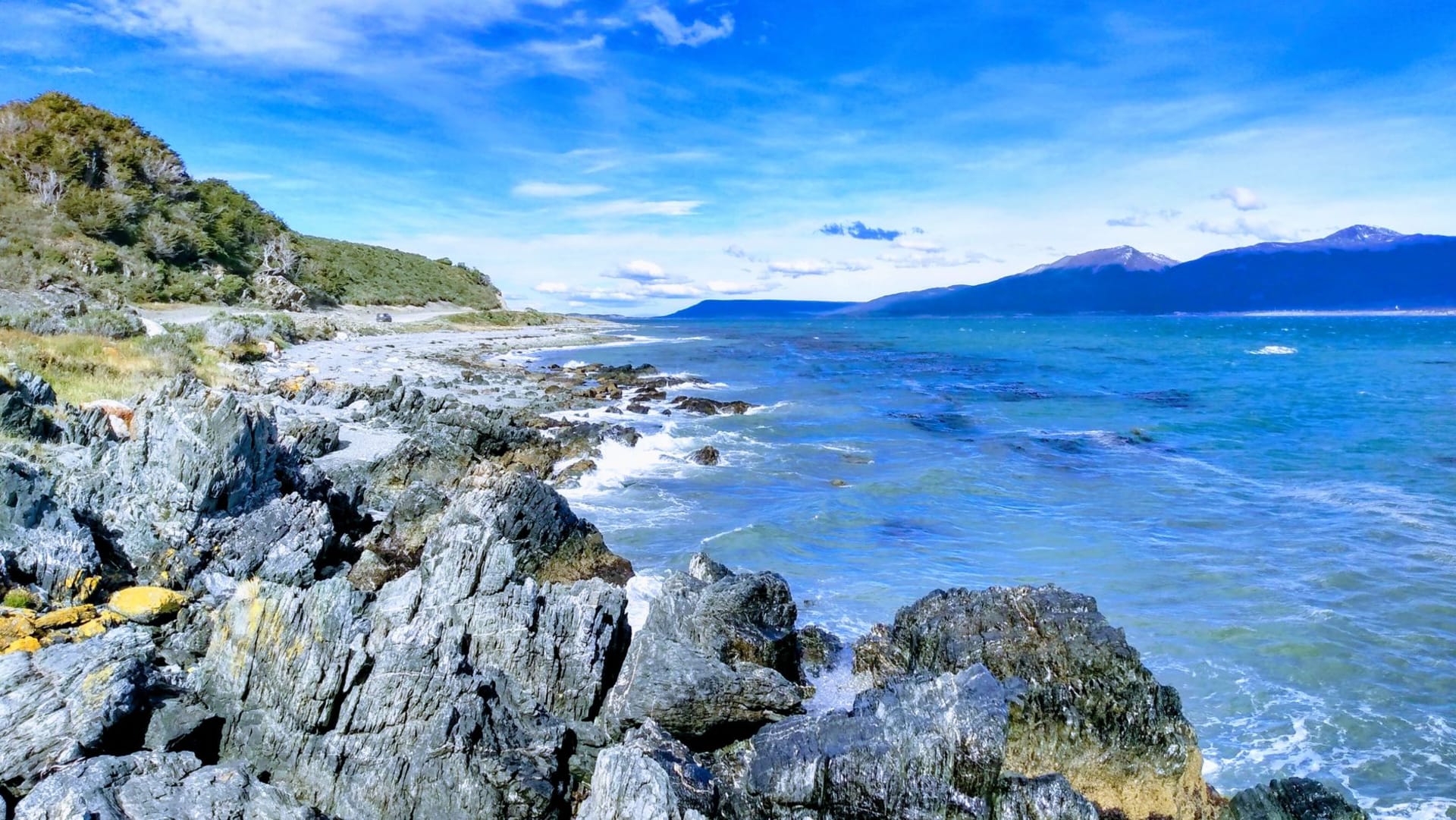
The Atlantic coast of Tierra del Fuego is different in character from the channel-and-mountain landscape of the south. The land is flat here, open to the wind in a way that the Beagle Channel region is not. The estancia grasslands run to the coast where they end in low cliffs or beach; the Magellanic penguin burrows in the sandy banks above the waterline; the wind off the South Atlantic comes without interruption from the Falklands.
I drove north from Ushuaia on Ruta 3, the road crossing the mountain pass and descending onto the steppe with a visible change in everything: less forest, more sky, the light going flat and oceanic. Río Grande appeared after three hours as a cluster of buildings on the flat coastal plain, the river estuary broad and tidal at its mouth. The town’s main street has the functional architecture of a place where work is the primary activity — oil field supply companies, electronics assembly plants (Tierra del Fuego’s tax-free manufacturing zone produced most of Argentina’s televisions for decades), hardware stores.
Trout Fishing Culture
The Río Grande is a sea trout river in the English sense: brown trout that migrate from the South Atlantic to spawn in fresh water, running to sizes that serious anglers travel from Europe, North America, and New Zealand specifically to encounter. Fish of five kilograms are not unusual; fish of ten kilograms exist and are caught. The season runs approximately December through April, with peak fishing in January and February when the largest fish are moving.
The estancias that line the river — Viamonte, María Behety, Las Buitreras — operate as exclusive fishing lodges, charging rates that reflect the uniqueness of what they’re offering. I am not a fly fisherman, but I watched the guides at one of these estancias prepare their clients’ equipment for an evening session: the rods, the waders, the careful selection of flies. The preparation had the seriousness of something that matters.
The Mission at La Candelaria
Ten kilometers north of town, the Salesian mission at La Candelaria was established in 1893 as part of the effort to convert and settle the Selknam people who had lived on the northern steppe for millennia. The museum there holds an account of the Selknam and their culture that is more honest about what happened than most missionary museums allow themselves to be. The Selknam were largely wiped out by the late nineteenth and early twentieth centuries — by settlers, disease, and deliberate violence — and the mission itself was part of a process that, whatever its intentions, contributed to the end of a way of life.
I spent an hour reading the bilingual plaques and looking at the photographs of the last Selknam elders, taken in the early twentieth century. The faces are specific and dignified. The context is a catastrophe.
When to go: For trout fishing, December through April, with January and February as the peak months for large sea trout. Book estancia lodges a year in advance for prime dates. As a general destination, Río Grande is most livable in summer (November through March) when the Atlantic winds are less relentless; winter is genuinely cold and gray and mostly for people with reasons to be there. The drive from Ushuaia takes three hours on a paved road and is worth doing at least once for the steppe landscape.