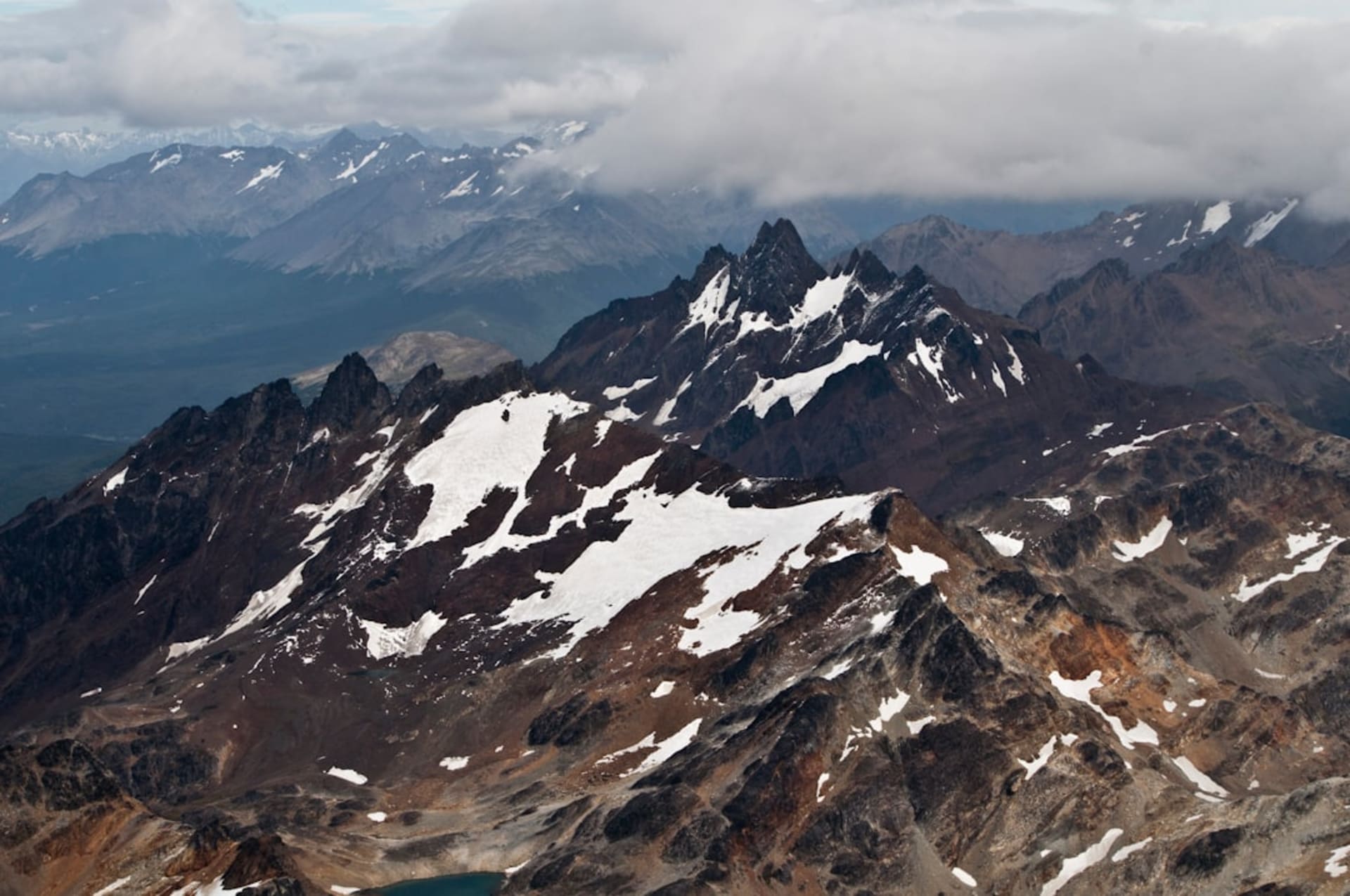
Martial Glacier
"The glacier is smaller than the postcards suggest. The view from its moraine is not."
The aerosilla — a chairlift of modest ambitions — runs from a base station above Ushuaia to a point about halfway up Cerro Martial. Above that, you hike. The trail is direct and unapologetic about elevation gain, switchbacking up through lenga beech forest that opens progressively onto views of the city below and the channel beyond. By the time the trees give way to exposed rock and alpine scrub, Ushuaia has been reduced to a colorful arrangement of tin roofs at the edge of a silver strip of water.
The Climb
I started from the base station early enough that the chairlift wasn’t running yet, which meant the steep initial section in forest that would have gone by in minutes took forty-five instead. The beeches at the lower elevation are tall and mossy; higher up they compress into twisted, wind-formed shapes that barely clear knee height before the tree line ends entirely. The trail is well-marked and considerably muddy in the sections where snowmelt crosses the path.
Near the base of the glacier, the terrain becomes a chaos of boulders deposited by the ice’s retreat — rough moraine that requires some route-finding through the cairns. The glacier itself is modest: a permanent snowfield with a small ice face visible at the upper margin, nothing like the dramatic calving walls of Patagonia’s more famous glaciers. But the context makes it arresting. Standing on ice above a city that grew around its meltwater, looking south across the Beagle Channel to Chilean mountains, east and west along the channel to where it bends out of sight — it is a view that makes the effort of getting here feel correctly proportioned to the reward.
What the Ice Shows
Photographs from the early twentieth century show the Martial Glacier extending to roughly where the middle hiking trail runs today. The retreat is legible in the landscape in a way that climate statistics are not — you can walk the distance the ice has withdrawn in living memory. There are no plaques explaining this. The evidence is just there, visible, if you know where to look.
I am aware of the contradiction in flying to one of the world’s most remote regions specifically to see signs of the climatic disruption enabled partly by the aviation industry. I thought about it on the moraine while eating a cheese sandwich and watching a condor work the thermal coming off the south face. The condor, at least, is not troubled by contradiction.
Coming Down in the Light
The afternoon light at this latitude does something to the Beagle Channel that I found nearly impossible to photograph and completely impossible to stop looking at. From the moraine in February, around four in the afternoon, the sun angles low from the northwest and turns the water into a series of overlapping silvers and golds, the Chilean peaks going dark against a sky still bright above them. The city below becomes abstract — geometry and reflection.
Lia, who had been dubious about the hike all morning, went quiet for ten minutes looking south and then said it was worth every step of the mud. I agreed. We sat on a boulder at the glacier’s edge until the cold drove us back toward the tree line, timing the descent for the last of the light through the lenga beech.
When to go: The trail is hikeable November through April; the chairlift operates the same window when conditions allow. January and February offer the warmest temperatures and longest days for summit hiking. Snow can linger at the glacier base into December. The trail becomes significantly more challenging and requires micro-spikes or crampons after fresh snowfall, which can happen any month at elevation. Sunset visits in January — starting the climb around 3 PM — give the best light on the channel.