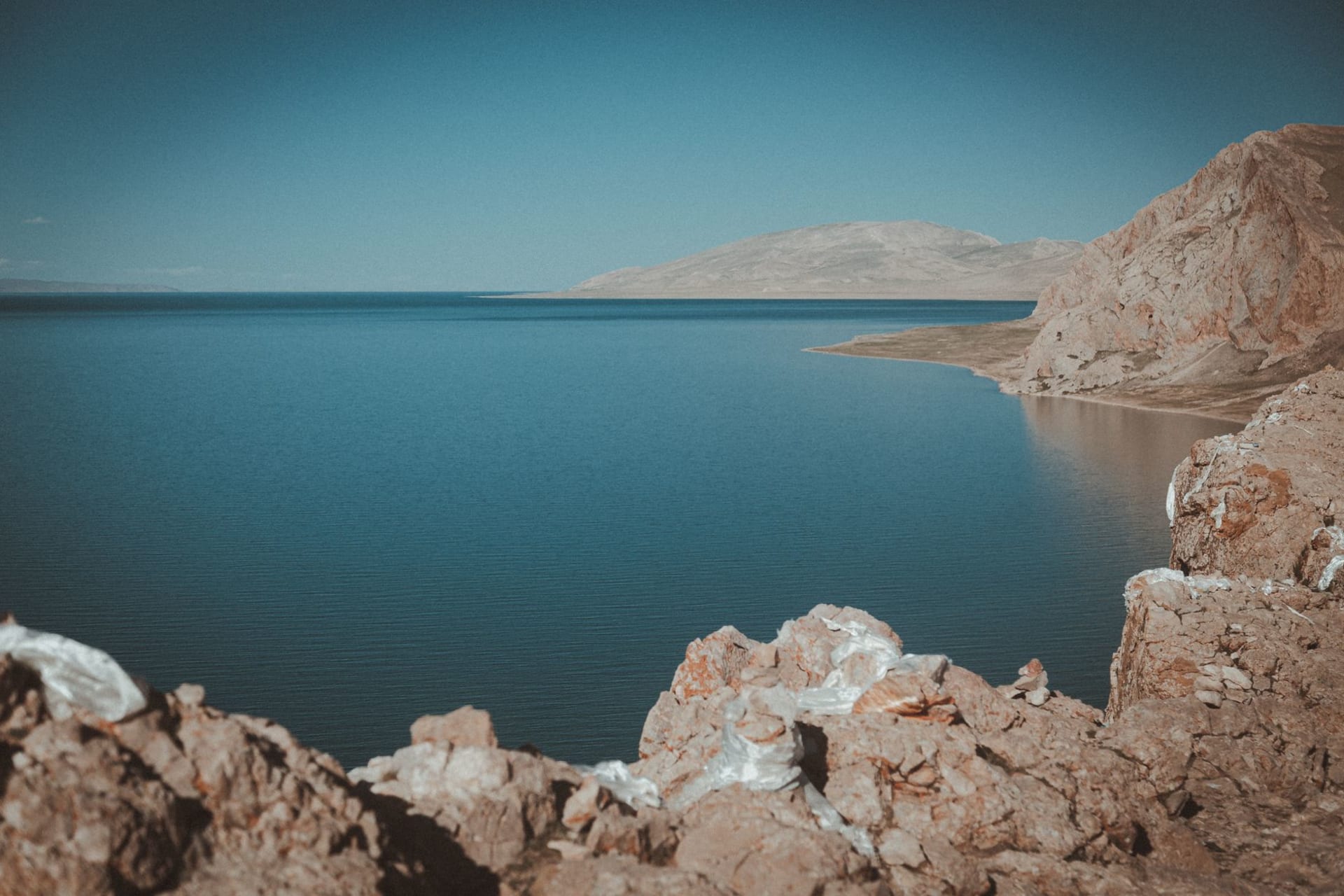
Namtso Lake
"The lake was the wrong colour for water. Too blue, too still, too obviously impossible."
Namtso should not exist. That’s the feeling you get standing at the edge of it for the first time — a lake of such violent turquoise that it looks like someone spilled it there by accident. It spreads for 70 kilometres west to east, ringed on the north by the Nyenchen Tanglha peaks, their snowfields reflecting white in the water. The sky at this altitude is a deeper blue than anywhere I’ve been. When lake and sky occupy the same frame, you start to doubt your colour perception.
The drive from Lhasa takes about four hours, crossing the Lachen La pass at 5,190 metres where prayer flags strung between poles crack and snap in the constant wind. I felt the altitude sickness warning — a low pressure behind the eyes, a slight displacement from my own body — and ate dry crackers and drank water and waited for it to pass.
Arriving at the Shore
The road descends to the lake’s southeastern shore through grassland where nomadic herders graze their yaks. The animals are tremendous and patient, moving through the pale grass with their shaggy legs and curved horns, occasionally stopping to observe you with large, indifferent eyes. The shore itself is sandy and cold. The water is too saline and too cold to swim — not that the temperature invites it — and the clarity is surreal. Looking down from the bank, you can see bottom detail at a depth that makes no intuitive sense for a body of water this large.
I crouched at the waterline and trailed my fingers in. It was shockingly cold and tasted of salt and mineral, like a watered-down ocean pressed through stone.
The Tashi Peninsula
A rocky peninsula juts into the lake’s southeastern corner and holds several cave hermitages where monks have retreated for meditation, in some cases for years. A handful of small temples and guesthouses cluster at the peninsula’s base. The walk around the headland takes an hour and requires careful breathing — the altitude at the lake surface is already nearly 4,800 metres and exertion is a negotiation rather than a given. I stopped frequently, not from laziness but because stopping gave me an excuse to look at the water, which deserved all the looking it got.
At the tip of the peninsula, a monk was hanging white khata scarves on a shrine post. He ignored me entirely and I was glad of it.
Camping Overnight
Most day-trippers from Lhasa leave by late afternoon. Lia and I stayed in one of the basic guesthouses on the peninsula and watched everyone else go. By evening the lake was ours and a handful of other overnighters’. Dinner was instant noodles and yak butter tea, which tastes exactly like warm, salted, faintly rancid butter dissolved in water — an acquired taste I have not yet acquired. The sky at night was something else entirely. No light pollution, no atmosphere to speak of, stars so dense they looked structural.
Practical Notes
The lake sits in a protected area and charges an entry fee. Guesthouses on the peninsula are basic but functional — bring a sleeping bag liner, the nights are cold even in summer. Altitude acclimatization in Lhasa for at least two days before visiting is strongly recommended; I met two people who had to turn back at the pass due to acute mountain sickness.
When to go: June through September offers the warmest temperatures and navigable roads. July and August bring some rain but also wildflowers in the surrounding grasslands. The lake is technically accessible year-round, but winter visits require serious cold-weather preparation and some roads may close. The shoulder months of May and October offer fewer tourists and dramatic light.